No new teachers for ASD Nest program?
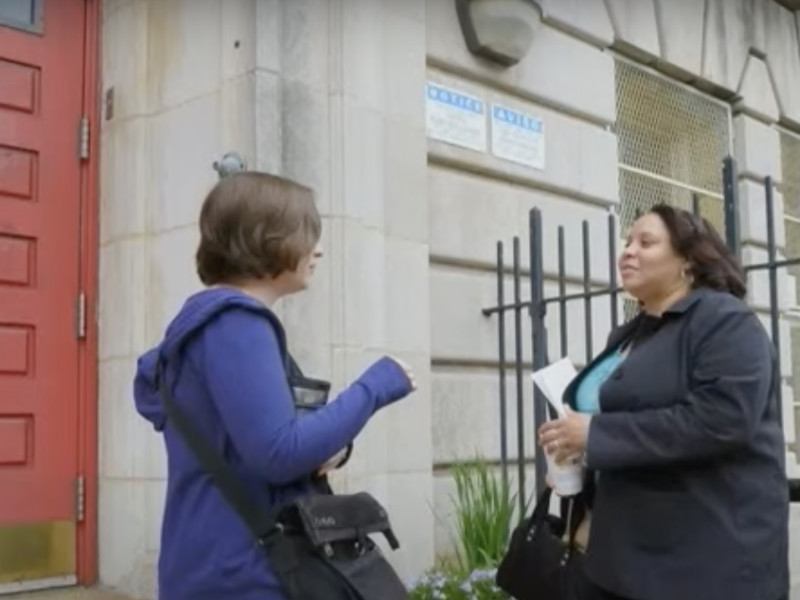
This is a picture of me, Brooks, and his kindergarten teacher. It was taken last August, when she came to my home to meet Brooks and get a sense of how she could help him overcome his challenges and ignite his love of learning. She sketched out a road map that day, one that would enable her to work alongside my son’s speech therapists, occupational therapists, physical therapists, and counselors to make him into a student. Like all good leaders, she would have to build an environment where team members could easily communicate in order to make consistent and lasting contributions to my son’s school career.
She happens to be an extraordinary teacher, but that doesn’t make her stand out in the ASD (autism spectrum disorder) Nest program. Every teacher here is extraordinary. Because they are carefully hired. Because they are extensively trained. In autism. In the sensory issues of autism, so that they can design appropriate lesson plans to strengthen my son’s emerging handwriting skills. In the anxiety issues of autism, so that they can design appropriate interventions when he starts sobbing because he misspelled a word. In the social issues of autism, so that they can create opportunities for him to play with his peers and help him find joy within those interactions.
Unfortunately, the DOE recently announced a “hiring freeze” that limits principals to an internal pool of available teachers, none of whom apparently have the early childhood special education training and experience necessary to make them viable candidates for ASD Nest.
Already, the program had no new hires to send to their one-of-a-kind Hunter training program that began yesterday, and no one has an answer about the fate of the two new classes at my son’s school (PS 178), not to mention all the other ASD Nest schools throughout the City. Who will teach these new classes?
And what about all the other special education programs that will suffer these same unfortunate consequences? For instance, will the American Sign Language School have to hire its new teachers from the pool, even if none are fluent in sign language?
Chancellor Klein has made some exceptions to this new policy, including new schools and charter schools, and the New York Times reported last month that “some hiring restrictions could be lifted by the end of the summer if there was a dearth of internal candidates in certain neighborhoods or subjects.”
Perhaps Garth Harries, in charge of special-education services review, could step in? If Harries could swiftly lift this restriction with respect to special education programs, he would earn tremendous support from parents who are eager to believe in his promises to help our kids.
There’s no question that kids with autism can succeed, that they can grow into inquisitive, compassionate, and communicative human beings, albeit often quirky ones. But they can’t do it without the support of highly specialized, smart, well-trained and devoted teachers that ASD Nest routinely provides.
Subscribe to 

One would imagine, hope, believe, given ALL the out-of-compliance areas NYC DOE has in special education services, Mr. Harries and the other folks still connected to special education initiatives would get the chancellor’s and mayor’s ears to exempt some special education requirements from this freeze. But I have no more imagination, hope or belief that this will happen unless some one sues…
Comment by Anonymous — June 3, 2009 @ 2:43 pm
With respect to ASD students, I think it is time for the DOE, in fairness to both the students and the professionals, to carefully hire and extensively train the special education teachers and paraprofessionals in ALL their autism programs not just the Nest program. It would also be interesting to learn more about the success of the Nest program, e.g. how many students have been accepted, retained and/or transferred to other programs either least restrictive or more.
Comment by Anonymous — June 3, 2009 @ 5:17 pm
The ASD Nest program is a DoE program that does everything right — trains teachers BEFORE they work with kids in methodologies SPECIFIC to these kids’ needs; hires teachers who are best suited to work with these kids (and who may not otherwise work for the DoE); provides teachers and therapists with the support from autism experts that they need, throughout the year; collaborates with parents and provides information and support for Nest parents; provides time for the entire group of therapists and teachers to meet weekly to discuss how to help individual children, so EVERYONE’s on the same page. This is the formula for educating children with autism that the DoE figured out. It costs no more than other inclusion options, but is far more successful. The overwhelming majority of the 235+ children in the program meet academic grade expectations every year, and thrive academically, socially and behaviorally. They make friends with typically-developing kids, are invited to birthday parties, and learn how to play with other children, because the problems related to their autism are addressed head-on, as Marni described in this post.
If the DoE can do this for “higher functioning” children with ASD (in regular neighborhood schools), why not do it for ALL children with ASD? Why not for ALL special needs children who are hard to include in general ed settings?
Mr. Harries, why don’t you study the ASD Nest model and see why the parents in THIS program came to PRAISE the DoE, unlike most of the parents who came to speak with you last month?
Comment by bklynlifer — June 4, 2009 @ 11:57 am
I think the Nest program is fabulous and is our best food forward in the public special needs education programs that show that our system can cater to those who are intelligent but have other challenges including social/emotional, OT and speech.
Does anyone know if there is something similar for children with severe ADHD?
Comment by Jenn Choi — June 4, 2009 @ 12:29 pm
You make good points, Marni, about the schools not being able to hire the student teachers and paras who already have experience with Nest kids. It is a shame for such experience to go to waste. Our principal is very sad to not be able to hire the student-teacher talent she has met this year; at the same time, though, she is wisely interviewing as much as she can to see if some of the “excess teachers” available would be right for her school. For now that may be the best that can be done.
Meanwhile I’ll send those emails.
Comment by janny226 — June 7, 2009 @ 9:53 pm
I cannot praise the ASD Nest Program enough. My son Kyle is finally understood and is thriving. The teachers and therapists do things every day that amaze me and provides strategies that will help exceed in school and home and for the rest of his life! There should be more programs like this. I wonder how many kids who are not in the program are struggling in their current setting and are lost as my son was before he was in the program. The Department of Education must make this a priority and find the money to keep this program running like it is and creat new programs for other children who are too high functioning for district 75 but need extra support to do their best. There are not enough schools who have this ASD nest program and it should be expanded so more children have the opportunity and are not shut out!! I cannot stress this enough! How many kids are not getting the support and appropriate free education they need?
Comment by E Gravitch — June 20, 2009 @ 10:17 am
With the NYC public school system serving over 1.1 million students and the CDC reporting 1 in 150 children diagnosed with ASD (2007), what is the recourse for the thousands that don’t make it in the currently 235 students in the nest program. It is a wonderful program, but the need is so great that there are those of us left looking in bewilderment and questioning why our childs educational needs are met according to a lottery or some waiting list that goes on forever. Of the list of host scools and contacts only one had a class for 5th grade, which my son is in. This makes it near impossible to get in. Children are not only diagnosed on the pre-school level, diagnosis can happen anytime. Praise is due to the efforts of those who have established this program, but there is MUCH work still to be done.
Comment by S Psabon — September 1, 2009 @ 3:45 pm