Recent comments
Search News & Views
Our columnists
Blogger alums
Take our poll
Will there be pre-k Wild West waitlists?
It's going to be a Wild West waiting game for anxious prospective pre-kindergarten parents this year.
Even though acceptance letters don't go out until June 11, one Brooklyn school has already created an on-line waitlist in an effort to limit the chaos.
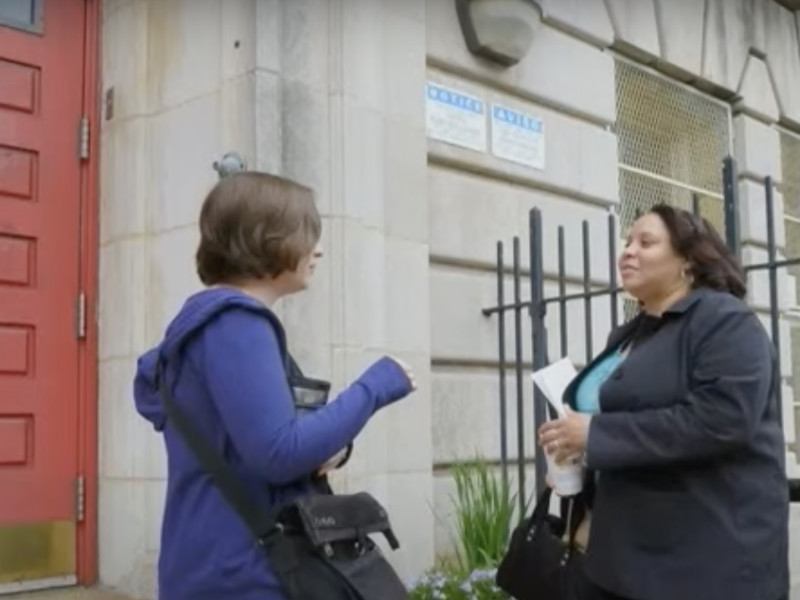
"We have not received any guidance from the DOE," said Charmain Derrell, parent coordinator at PS 9 in Prospect Heights. "We are organizing it ourselves so we're not swamped right before school lets out."
Siblings will get preference, and then it is first-come first-serve, Derrell said. But DOE officials warned that waitlists shouldn't be in place before parents know where their children have been accepted. They promised to clarify the process this week.
Will overcrowding undermine special education reform?
A change in special education enrollment will likely have some already overcrowded schools coping with a large influx of kindergarten students in the fall.
In past years, most special education students were placed in schools that had space or offered the kinds of classes that could serve them. This year, in an effort to allow more special education students to attend their local schools, most will be enrolled at their community school.
The problem is that some schools that had big kindergarten wait lists last year also had a very low percentage of special needs students, compared with nearby schools. That means the new plan for sending more special education children to their zoned schools could bring even more kindergarteners to the doors of packed schools this fall.
Get some answers at pre-k info sessions
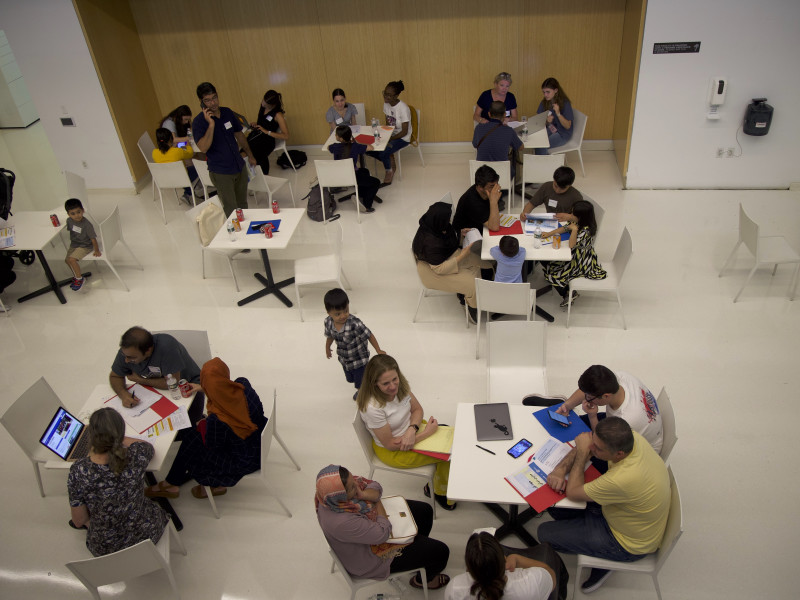
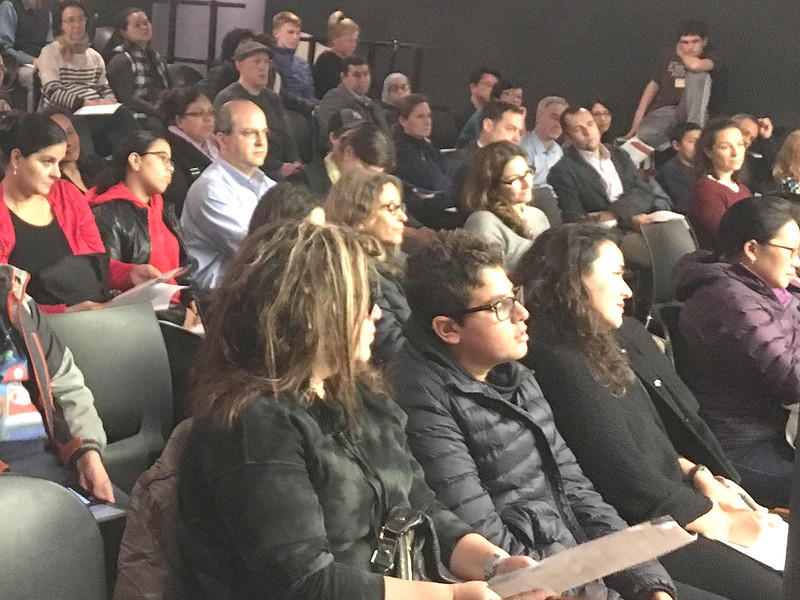
I thought I was courting disaster when I took my four-year-old to Brooklyn's two-hour long pre-k information session Monday night after a full day at pre-school. But with the assistance of an extra large slice of pizza and a cupcake-making app, we made it through without meltdown.
There are upcoming sessions in each borough -- the next one is Thursday in Manhattan -- and you will learn more at them than you can from simply downloading the directory. Officials used a Power Point presentation in a darkened auditorium at Sunset Park High School to explain what a typical day in pre-k looks like, how to apply, and they stuck around for questions afterwards.
There was, however, some jargon about "aligning to common core standards" and other policy efforts that weren't explained in a way that was easy to understand. The Power Point presentation didn't exactly explain how pre-k was "the first step to college and career readiness," but officials were friendly, knowledgeable and more down to earth when answering specific questions. And it was a relief to hear a DOE representative tell us that "when you give children lots of time to run around and play, it helps them intellectually too."
Brooklyn & SI schools that (may) have room
Kindergarten options in Brooklyn are as diverse as the borough itself. In the largest districts, schools are packed and most families attend their neighborhood schools. Others have room for students from out of zone, and even out of district. Charters crowd central Brooklyn but have little presence in northern and western Brooklyn. Magnet programs and dual language programs give parents options in some neighborhoods. In other areas, waitlists may present challenges but persistence can pay off.
In Staten Island, the city's smallest borough, there is much less school choice -- only one unzoned school and a few charters.
Here's a rundown.
District 13: Fort Greene, Clinton Hill, Prospect Heights, part of Park Slope & Brooklyn Heights
Community Roots Charter School and Arts and Letters in Fort Greene are highly sought after schools that hold lotteries and give preference to district families. PS 11 and PS 20 in Clinton Hill usually have space for out of zone children. PS 9 in Prospect Heights and PS 133 in Park Slope have gotten much more popular with local parents, but often have space, but parents may have to stay on a waitlist until August. PS 9's dual language program takes native Spanish speakers from out of zone and PS 133's French, and new Spanish, dual language programs do as well. PS 282 in Park Slope is a traditional school, with a district gifted program, that is a top pick for many out of zone parents. (Its gifted program is only open to district students, though.)
Manhattan schools that (might) have room
We’ve heard a lot of scary stories about kindergarten waitlists at very popular schools, but what about good schools that aren’t hopelessly oversubscribed? Insideschools has compiled a list of Manhattan schools that accept children from outside their immediate neighborhoods. We’ll be posting similar lists for other boroughs soon.
For this list, we have concentrated on schools that don’t require a "gifted and talented" exam. All a parent has to do is apply between now and March 2--and hope there are seats available. Call the schools directly for details. These schools fall in a couple of categories:
--Magnet programs. These schools receive federal money to develop a theme, such as science or technology. They give first preference to children who live in their attendance zone, but usually have room for children from across a district. Some also have room for children outside the district.
--Dual language programs. These programs are designed to make children fluent readers and writers of English and another language: Spanish, French or Chinese. Instruction alternates between the two languages. Typically, half the children speak English at home and half speak the other language. Zoned children get preference, but others may apply.
--Unzoned schools. These schools accept children from a particular district. A few accept children from all five boroughs.
--Good neighborhood schools. Children who are zoned for the school get preference, but sometimes there are extra seats, even though you may not find out until August.
--Charter schools. These accept children by lottery. (You have until April to apply.)
Lower East Side
In District 1 on the Lower East Side, there are no zoned neighborhood schools. Everybody has to make a choice. Preference goes to children who live in the district, but there are sometimes spots for out-of-district children, including Brooklynites.
Long-time favorites are The Neighborhood School, The Earth School, and PS 184—which will most likely fill up with District 1 kids this year. (Note: out-of-district families who are willing to wait until August may snag a seat). Out-of-district children may have a better chance at the Children’s Workshop School and East Village Community School. Also consider PS 20, which has a nice dual language program in English and Mandarin. PS 63 is gaining in popularity. The Girls Preparatory Charter School offers a single-sex option.
Downtown, the Village and Midtown
Forget PS 234 or PS 41 if you live out of zone. Those popular schools have long wait-lists even for their zoned kids. There are some other options, however. PS 150 and Midtown West are sought-after unzoned schools for District 2. PS 33 and PS 11 are zoned schools that may have room for other kids who live in District 2. A new school, Peck Slip or PS 343, will be opening in the Department of Education headquarters in the Tweed Courthouse. See the District 2 CEC website for details. New schools often have space for out-of-zone kids in their first year.
Upper East Side
The good news: the Upper East Side will have some new buildings, easing overcrowding. PS 267 and PS 59 are moving into new buildings in the fall, and PS 267 may have room for out-of-zone kids. A third school, PS 527, will open in the former parochial school, Our Lady of Good Council, at 323 East 91st Street. It, too, may have space for out-of-zone students. See the District 2 CEC website for details.
Ella Baker is a progressive K-8 school that has long accepted children from all five boroughs.
Upper West Side
PS 199 won’t have room for out-of-zone kindergartners, but other District 3 schools may. Consider English-Spanish dual language programs at PS 84, PS 87, PS 163 and PS 75. In addition, PS 84 has a French-English dual language program. These schools mostly limit admission to District 3 students, but French-speakers from out of district may be eligible for PS 84.
Manhattan School for Children accepts children from across District 3.
PS 145, which has a federal magnet grant, has room for out-of-zone children, as does PS 165.
As for charter schools, people seem to either love or hate the Harlem Success Academy Charter School and its sister school Upper West Success Academy. Both give preference to District 3 residents.
East Harlem
The birthplace of school choice, District 4 in East Harlem has welcomed out-of-zone and out-of-district children for decades. Central Park East I, Central Park East II and River East are small progressive schools. The Bilingual Bilcultural School, PS 57 and PS 171 are also popular choices, but they give preference to kids who live in the zone.
Central Harlem
Thurgood Marshall Academy Lower School, Harlem Success Academy 2 , and Harlem Success Academy 5 are good unzoned options in District 5.
Upper Manhattan
District 6 offers a number of choices for parents who want to look beyond their neighborhood school, including Muscota New School, Amistad Dual Language School, Hamilton Heights School, Washington Heights Academy and PS 178, The Professor Juan Bosch School.
For more on these and other tips on how to apply to elementary school, attend the Insideschools workshop in Manhattan on Feb. 7.
New steps to (maybe) ease crowding
The Education Department is taking some steps to address the city's annual pile of nightmare stories about kindergarten enrollment. But the underlying issue of too many kids for the number of seats in some neighborhoods will persist.
First up, the DOE may close "non-mandatory" programs at schools that cannot find spots for all of their zoned students. "It is the primary obligation of zoned schools to serve zoned students," the proposed wording reads. While no specifics are offered, it is likely that gifted and talented programs and dual language programs may disappear from some packed schools. This year PS 153 in Maspeth, Queens, which had close to 30 kids on its kindergarten waitlist last March, is no longer accepting kindergarteners into its G and T program.
Packed schools say: "No more kids!"
Nine schools in Manhattan's District 2 and 11 schools in District 10 in the Bronx are so overcrowded that they cannot accept incoming zoned students in some grades. In all, the Department of Education approved capping enrollment for 73 elementary and middle schools as of mid-October, according to data released by the DOE. In schools where there is no room, zoned students may be bused to nearby schools.
Kindergarten was the grade most frequently capped, but at MS 80 in the Bronx, there was no space left on any grade, 6-8. PS/IS 194, a K-8 school in District 11, was similarly affected with all grades but 1st capped.
Elementary Dad: Overcrowding? Charters? Development? Solved! (You're welcome)
I finally came up with solutions to New York’s vexing problems regarding school overcrowding, pitiful educational planning, charter school "co-location" and rampant growth in residential development. It took me all afternoon, but I did it.
Like most problems in New York City, these big issues boil down to neighborhood disputes. To understand how these problems intersect, consider what’s happening on Manhattan’s Upper West Side (or “Stroller City,” as it’s known these days), which has all the components of NYC’s larger malaise.
Good neighborhood schools are full, and last year’s debut of a new elementary barely dented most kindergarten wait lists. Manhattan is experiencing a baby boom, and parents are flocking to nabes with good public schools. Former chancellor Cathie Black (oooh, how I love to type those four words) suggested folks use birth control, but her advice arrived five years too late. No “morning after” pill can erase a kindergartner.
A new Success Academy charter school was allowed to open on the Upper West Side, but many are furious the charter was given space amid high schools within the Brandeis campus on West 84th Street. Such co-location arrangements spark the fiercest battles in the fight over charters, as competing institutions instantly begin fighting for limited space in classrooms, cafeterias and gyms.Now, things are about to get worse: Developers want to build a 20-story residential tower at 77th and Broadway. If the past gives a hint of the future, this tower will be full of families with young kids long before Department of Education planners realize an increase in two- and three-bedroom apartments means a commensurate increase in children needing classrooms.
These problems seem to defy solution, yet one decisive move could solve everything: Force the tower’s developers to include a home for the new charter school.
Any developer will howl at such an idea, but I have little sympathy for folks who earn millions by adding family residences in neighborhoods already unable to satisfy the educational needs of the existing population. But after the howls subside, a smart developer will realize that including school space within a residential tower provides immediate benefits (not least among them governmental power of eminent domain to forcibly buy out balky property owners) while also fostering political good will.
Besides, involving private developers in the construction of public schools is hardly a revolutionary idea. In 2010, exactly this type of public-private partnership created East Side Middle School, the first new public school built on the Upper East Side since 1962.
But should the charter get its school space for free? No. Eva Moskowitz’s expanding Success Academy charter network needs to start building new schools rather than elbowing its way into existing public spaces. Other charter schools (notably Harlem’s DREAM Charter School) are raising money for bricks and mortar. Let Success Academy’s impressive fund-raising corps tackle a new project: construction of the first K-8 campus it will have all to itself, forever. Start now, and your new classrooms will be ready about the time Success Academy outgrows its contentious Brandeis home, which it inevitably will.
The developer will add classrooms, not deplete them. A charter school will create its own home, not steal space. Parents will have more options to meet children’s needs. Best of all, this solution can be tailored to any NYC neighborhood where new development outpaces existing classroom space.
The downside? More strollers on New York sidewalks. To solve that problem, allow me to outline my plan for a stroller-only subway …