Recent comments

Search News & Views

Lindsey Whitton Christ

Lindsey Whitton Christ

Chancellor Klein and UFT president Randi Weingarten announced this morning that more than 6,000 elementary and middle schools educators will receive cash bonuses in reward for their schools’ performances on the progress reports. Faculty at 89 schools, slightly more than half of the 160 elementary and middle schools that elected to participate in the pilot program, qualified for the bonuses. The schools decided how to distribute the bonuses among full-time union members (either equally or based each individual's contribution). Most schools chose to divide the money equally, sending teachers home with either $3,000 or $1,500 each, depending on the school’s progress report turned out. (Principals were awarded up to $25,000; for more details on the methodology and results, see the DOE’s breakdown.)

The bonuses for elementary and middle schools this year totaled $19.7 million (cash awards for teachers and administrators at high schools will be announced later). All of the money was privately donated. Next year, however, the program becomes publicly funded. Since there is no cap on how many schools can qualify for the cash, if the progress report grades continue their upward trend, the bonus-program could take a big bite out of the shrinking DOE budget. Yesterday, Helen rounded up several concerns about the progress reports, and today, Insideschools alum Philissa Cramer analyzed apparent methodological errors in the progress reports. Chancellor Klein and Randi Weingarten stressed that the pilot bonus program would be studied by an independent consultant – but will the progress reports, which the bonuses are based on –undergo the same scrutiny?

In this first year, the program was both an experiment in implementation and a welcome reward for hard-working educators; whether the 'carrot' of a bonus actually inspires better teaching or contributes to hiring and keeping qualified teachers is still left to be tested because schools opted into the program too late last year for the cash incentives to have substantially affected this year’s progress reports. It will take many years, and no doubt many independent consultants, to determine whether the carrot-aspect of the plan actually works and whether that means even more stress on test prep.

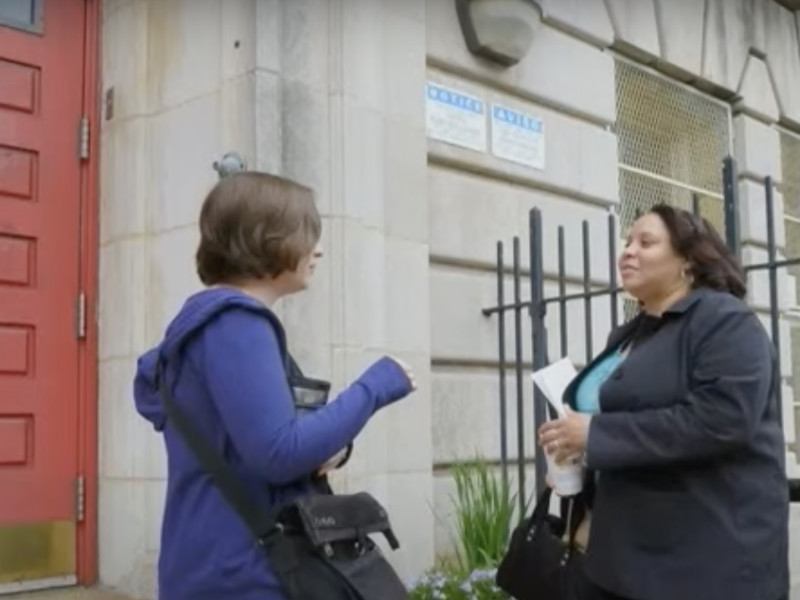
Like so many official school announcements, the Washington Heights location of the press conference was strategic; everyone hiked uptown to the Mirabel Sisters campus, formerly the site of one of the city’s worst-performing middle schools and now the home of three small schools, two of which received As on their progress reports and cash bonuses for their faculty and staff. The teachers and principals from those schools talked about a moral imperative to help students succeed, collaborative work among the staff, and using data to drive instruction, barely mentioning the windfall they had just received. “The money is very nice,” Janet Heller, one of the two principals, eventually acknowledged with a smile. “We aren’t working for it, but it recognizes that we did it.”

Special education students are facing even more significant problems than the busing issues  that continue to keep them spending almost as many hours en-route to school as in the classroom. Despite such snafus, the Times editorial board endorsed the reinstatement of mayoral control, only with the changes recommended last week by the Public Advocate's commission of experts. Meanwhile--as the future of mayoral control hangs in the balance--a  former New York City chancellor is being fired from his new job, and the DOE is investing a million dollars in its own think tank, hoping that the schools can teach each other a lesson. Several NYC lessons have leaked down south where schools in Washington D.C., called the "worst" in the country by Education Week, have seen significant changes with Klein-protege Michelle Rhee at the helm. 

Obama laid out his education plan and the Times analyzed McCain's school policies while advertisements (mis)claiming that Obama wanted to teach sex ed. to kindergarteners hit the airways. The good news: Education issues have suddenly moved to the forefront of the national race. Kindergartners in New York may not have sex ed. class, but many of them will have the Big Kid experience of sitting for standardized tests this year--principals have gone gaga over the proposal. And on Tuesday, the Post ran a glowing profile of PS 8 principal Seth Phillips, just two days before the news broke that his school would receive an F on its report card this year. 

New York students who want to learn about international politics can no longer visit the United Nations on a field trip--at least until the mayor feels confident that they won't be in immediate danger while on international property.  A more likely menace, however, rears its very ugly face on the pages of the Daily News, as well as in classrooms and on heads across the city. 


Wednesday, 10 September 2008 06:33

Public school versus private school

Insideschools founder Clara Hemphill weighed in on the debate between public and private education in the current issue of New York Family magazine. The article has good advice for parents grappling with the decision -- we only wish they'd identified our new book correctly in the introduction. (For the record, it's "New York City's Best Public Middle Schools: A Parents' Guide.")   

"Middle schools have traditionally been the weak link in the city public school system,"  Hemphill tells New York Family, which makes the new book particularly relevant -- and the DOE's stated goal of revamping middle schools particularly urgent.  (Have a look here  for more on middle-school reform and initiatives like the International Baccalaureate Program.)

Monday, 08 September 2008 13:37

Weekly news round-up:

To herald the new school year, the news last week was filled with first day of school stories. Articles spotlit new schools, new charter schools, and charter school networks new to New York; others described overcrowded schools, school enrollment issues and school scheduling issues; yet more explored poorly performing schools, projected shortages of schools in the future, and traffic problems around schools.

Even in this maelstrom, a significant amount of conversation swirled around mayoral control of the Department of Education and whether it would be renewed, especially in light of the recommendations made by the Public Advocate's commission of experts. Despite the commission's support (with caveats) for mayoral control, Bloomberg slammed their suggestions, saying he "can't take it very seriously." But just one day before his harsh outburst, the Mayor held a press conference decrying school bullies and introducing new anti-bullying regulations.

Although term limits most likely mean a Bloomberg exit from City Hall, some movers and shakers want to put Chancellor Klein up for the job. Parents, meanwhile, are taking school reform into their own hands - in both in legal and illegal ways.


Talk of testing dominated the news this week. Whether it was the mayor’s new plan to test kindergarten, first, and second grade students or the results of the SAT exam, the testing debates continued to take up ink. New York students' comparatively poor performance on the SAT prompted both the Post and the Sun to question the validity of rising state test results. NPR had a different angle on the story - they featured a public school that churned out students with perfect SAT scores. Some New York teachers, meanwhile, are about to benefit from the higher state test scores when they receive their first bonuses, and certain teachers are going to be paid more than others.

While many kindergarteners in New York will start taking tests, the Times reports that the decade-old promise of universal pre-k is far from being realized. Education may be falling off the docket in general, warns the head of the Harvard Graduate School of Education. Our chancellor, however, is keeping education in the local news, and this week, he talked to some budding young reporters.

Once-anonymous education blogger Eduwonkette unveiled herself dramatically, via a profile in New York Magazine. But a whole different kind of concealment is happening in a small Texas town, where teachers came to school this year with concealed guns. And the whistle-blowing Post exposed illegal activity and ethics violations all over the school system .

Low performing middle schools will get another burst of attention and funds after last year's influx of cash seemed to boost test scores in the most of the targeted schools. Cash has also been spent on 18 new school buildings opening next week, although the Mayor says he's lowered construction costs. And 10 city elementary schools are going to try out the Core Knowledge literacy curriculum - a content-based program that represents a departure from Bloomberg's Balanced Literacy program.

It's Friday, which, according to way too many city students, is apparently the day of the week to play hooky! Most of the little truants probably don't have parents who are as on-top of their education as these parents claim to be. Involved parents or not, every student could benefit from a better physical education program, read more the Riverdale Press.

Enjoy the long weekend and don't forget to pack backpacks and sharpen pencils, it's almost school time.

As parents and students begin gearing up for the new school year, the news this week was dominated by the standard – yet colossal and complicated – contemporary education debates, including charter schools, standardized testing, and incentives.

Mayor Bloomberg kicked off the week by announcing that 18 new charter schools would open in the city this fall. The Times opened a Q and A between readers and James D. Merriman IV, the chief executive of the New York City Center for Charter School Excellence. The Sun editorialized in favor of charter schools and private school vouchers. The Daily News wrote about Bay Ridge, Brooklyn parents who oppose a charter school moving into public school buildings.

A Newsday reporter who set out to prove that the Regents exams were easy by taking the U.S. History test unprepared scored a 97 and made his point. Meanwhile, students’ scores on the Advanced Placement tests were released, and the apparently mixed results of pay-for-scores programs vaulted the issue of monetary incentives back into the papers. Employees of the Princeton Review, a high-profile national testing company, made a serious computer error that resulted in 34,000 Florida public school students' private information available to anyone online.

Several disheartening stories involved special education students: allegations of abuse in one city school, asbestos in another, and concerns over special education bus service for the fall. A disabled teacher sued, claiming his epilepsy cost him his job, and a national story about corporal punishment (legal in schools in 21 states but not New York) found that special education students – as well as minority and low income students – disproportionately felt the paddle.

And a couple of journalists used the end of the summer to ask key questions about the future. What will happen to No Child Left Behind, now that Bush is on his way out and a new president is on his way in? Will mayoral control be renewed by the state legislature, especially since Klein and Bloomberg have largely ignored politicians’ education opinions? And where does Obama really stand on education, as supporters of several different ­– and sometimes competing – initiatives claim to be in alignment with the candidate? Education mysteries abound.

More money woes this week: city funding for pre-K programs run by community groups was cut in half, leading to the overnight evaporation of about 300 seats. Yet Obama accepted the endorsement of the national teachers union (AFT) union, vowing his commitment to "quality, affordable early childhood education for all our children,” and McCain announced his intention to fully fund No Child Left Behind, offer private school vouchers and put tutoring funds directly in the hands of parents. Ambitious plans on all sides, given the current economic climate.

Meanwhile, NYC education bigwigs are going national: Joel Klein is hoping to advise the next president and UFT President Randy Weingarten was elected head of the AFT. She says she's staying in New York for now (and announcing fresh lawsuits on behalf of city teachers) but just might be grooming a successor. Klein, who claims accountability as his hallmark reform, might want to explain why it apparently took a newspaper article to stop the city school bus system from “losing” parent complaints.

Children's health came under fresh scrutiny: A new report confirms what parents have known for eons -- that America’s active kids morph into sedentary teenagers – and documents health risks that have led others to recommend cholesterol meds for kids. And each successive scandal that the Administration for Childrens Services (ACS) faces tragically impacts the city’s most vulnerable citizens.

Too many teens are stuck in middle school , according to a report released by Advocates for Children. While some kids in the Bronx are apathetic about keeping their neighborhood clean, juvenile offenders are helping restore and reopen classic American diners. And the Times celebrated high school theater geekdom at its best, which seems a lot more wholesome than the current crop of product-infused teen novels. But for now, ditch the screen, shut the book, and get out! It's summer.

Monday, 14 July 2008 11:19

Weingarten moves up but not out

This morning Randi Weingarten, president of the UFT, was officially elected head of the national teacher’s union, the American Federation of Teachers. Weingarten has wielded enormous influence over the past decade as head of the 200,000-member New York union, where she plans to remain, although some question whether anyone can handle leading both unions at once – even a work-horse like Weingarten.

Weingarten speaking in June with Mayor Bloomberg and Chancellor Klein.

In New York, she secured a 43 percent raise for teachers, fought for smaller class sizes, and railed against high stakes testing. Weingarten’s relationship with the mayor depends on the issue: she’s not afraid to make a joint announcement with him in the morning and then blast another of his initiatives later that afternoon. And although she has generally been very popular among New York teachers, her tentative support of charter schools (she has even opened two of them) and support for merit-based pay is controversial among union members.

In her acceptance speech today Weingarten – the daughter of a teacher and a former part-time social studies teacher herself – argued that schools should become multi-service community centers, offering a lot more than just classroom instruction. That does sound better than test prep, but what's her plan to make such a dreamy vision actually happen on a large scale? And how will Weingarten stay focused on New York, now that she has vaulted to the national stage?


Do-gooders are building 11 new playgrounds at Bronx elementary schools this summer, but parents of leaf-picking toddlers just might face summonses, like one unlucky mother in Chelsea. Five public school students, who grew up playing on city fields, were picked in the Major League Baseball draft and face a tough choice -- go pro or go to college -- while students at the Bronx Early College Academy, who'd hoped to earn college credits in high school, now learn that there may not be space for their high school at all come fall.The DOE and NYPD both report that crime is down in city schools, but a college-bound recent graduate was tragically shot and killed on the street in Rockaway yesterday. Brooklyn teens who gave their teachers a laxative-laced cake had their charges reduced while truly disturbing charges were filed against a teacher accused of abusing a disabled student.

Just when public hearings were scheduled on mayoral control of the schools, there is a bid for two new unions – one for public school parents and one for the students. Hard questions should be raised about bad record-keeping at the DOE and the ask-questions-later mentality of ACS workers. Outraged New Jerseyans questioned a superintendents’ golden retirement parachute, and some worry that questions about potential score inflation of New York standardized tests may never be answered.

Quiet week at Tweed and City Hall? Time for Times stories about higher education, like this one, this one, this one, this one, this one and this one. The Sun’s Elizabeth Green wrote about a well-regarded anonymous education blogger and the DOE’s “truth squad,” which monitors education blogs for net-speed inaccuracies.

Skewing to the summering-away crowd, the Times counsels parents not to worry if teens complain about the isolation of the family summer house -- once the kids go to college, they'll begin to enjoy the second home again. (Whew!) And in town, it seems that more parents are building mini-teen centers in their homes to keep their kids off the streets (and mini would be the operative word for most NYC apartments). But kids who created their own suburban summer fun are wrangling with lawyers instead of shagging wiffle balls. One, two, three strikes and we’re out! Have a great weekend.

Early round-up this week -- our attempt to get to the news before we get to the grill.

Yesterday, we looked at No Child Left Behind and the second annual Learning Environment Survey results. Even though results were generally positive, three out of four students didn’t take an art class!

Good news for science in Harlem: Millions poured in for middle schools (as first reported on this blog), and hundreds of high school science students found worthwhile (and paid!) summer work in labs. PS 229 in Queens may grow their own environmental scientists – students there are certainly learning how to act green.

Bloomberg’s expensive Leadership Academy will now be added to the taxpayers’ bill, while a lauded principal (not an Academy grad) faces allegations of test score fraud. A few of his teachers might be yanked from the classroom and thrown into the rubber room, but they might not be there that long, according to a new agreement between the UFT and DOE. Is there a rubber room where we can stash daycare providers who have been stealing from the state? Or the students behind anti-Sikh hate crimes?

While the Times lauds a program to help students stay in school, the Daily News publicizes parents’ concerns over older and under-credited students sharing a school building with younger kids. The News also covers public schools that have been closed for good, and the Times showcases the last American high school for would-be Catholic priests.

Guess what? Pre-k admissions was a mess this year, and even paying top-dollar for private school doesn’t guarantee Junior will get into Harvard/Yale/Princeton. But a story about a pre-k program that appears to work wonders and Christoph Niemann’s charming illustrations celebrating his sons’ love of the subway system kick-off the holiday weekend on an aptly joyful note.

Page 6 of 7