
New Explorations into Science, Technology & Math
Grades: K-12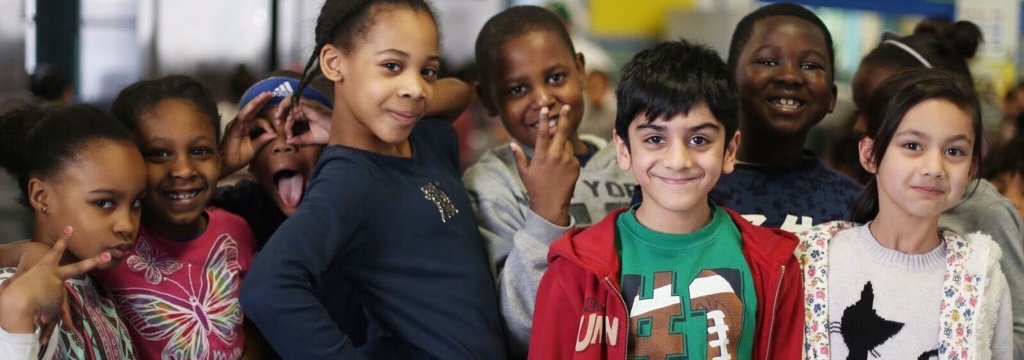
Our Insights
What’s Special
Fast-paced instruction for advanced students
The Downside
Friction between principal and staff
2020 UPDATE: In July 2020, Meaghan Lynch was appointed the school's interim-acting principal.
2018 REVIEW: One of five citywide gifted programs, and the only one to serve children in grades K-12, New Explorations into Science, Technology & Math (NEST+m) has a demanding curriculum, hyper-involved parents, and children who love to come to school.
New students are admitted in kindergarten, 6th grade, and 9th grade, with a handful admitted in other grades. Although some students stay for the entire 13 years, many leave to attend the large specialized high schools and other competitive schools so there are a significant number of seats for new 9th graders. While most of the children in the early grades are white and Asian, more black and Latino children enter in high school.
The elementary grades mix progressive and traditional techniques. Kindergarten classrooms emphasize academic skills, rather than dramatic play: they don’t have dress-up corners or play kitchens that more progressive schools have, for example. A super-active PTA pays for assistant teachers in the lower grades.
NEST+m uses Singapore math in grades K-5, a fast-paced, thoughtful curriculum that combines quick recall of arithmetic facts with a deep understanding of math concepts. About 50 children in grades 2-8 take part in a math team that meets at 7 a.m. several times a week; these children take part in competitions with other schools.
In social studies lessons are woven around interdisciplinary themes such as Central Park (how to read maps or build bridges, or what kind of wildlife lives there). The school takes part in the Teachers College Reading and Writing Project, in which children write multiple drafts of essays before “publishing” a final copy.
Mark Berkowitz, who became principal in July 2015, has implemented significant changes, particularly in the middle and high school grades. He replaced desks in rows with small tables to encourage class discussions and group work, rather than lectures by teachers. He broadened reading lists to include more black and Latino authors. He worked with staff to foster “culturally responsive” education, that is, teaching techniques that better reflect the experiences of non-white children.
In the fall of 2018, William Kamkwamba, an African author and inventor, visited the school to talk about his book, The Boy Who Harnessed the Wind, the story of his experiences creating a windmill to bring electricity to his village in Malawi. Berkowitz said this book and visit are examples of the kind of education he wants to foster; work that draws on different disciplines, such as literature and science, and that exposes children to different cultures.
Perhaps the biggest shift in the school’s philosophy is its approach to students with disabilities. In the middle and high schools grades, Berkowitz added team-teaching classes, with two teachers, one of whom is certified in special education, that mix students with disabilities and general education students.
While students from both groups must be high-achieving to be admitted, the standards are slightly more flexible for those with disabilities. (The shift has not affected the elementary school, which has more limited special education services. Admission to the elementary school continues to be based on the city’s gifted exam.)
There’s been a mixed reaction to the changes. One mother said it’s “a warmer, happier place.” She said the principal knows every child by name and seems to enjoy talking to students. Another said “kids take their work seriously” but the teachers “manage to make it all fun.” Other parents praise the teachers and the college office.
But some parents and teachers criticize Berkowitz’s management style and say he is unresponsive to their concerns. A significant number of teachers mistrust the principal, according to school surveys. Some maintain that the changes have come at the expense of academic rigor and that the new focus on English and history has come at the expense of math and science.
Berkowitz replies that standards are as high as ever, pointing to the robust Advanced Placement offerings and admissions to highly selective colleges and universities including MIT, Wesleyan, Swarthmore, Yale, Columbia, Brown and Cooper Union. He was formerly assistant principal at NYC Lab School for Collaborative Studies, a school that prides itself on serving high-achieving students with disabilities.
SPECIAL EDUCATION: In the elementary school grades, children with disabilities such as dyslexia and ADHD receive SETSS (special education teacher support services). Occupational, physical, and speech therapists assist children, and a psychologist is on hand two days a week. The middle and high school grades have ICT, or team-teaching, classes for students with a range of disabilities.
ADMISSIONS: NEST is open citywide. No test is required in the lower and middle grades. However, as families seek a good fit for their child, the parent coordinator stressed that the school remains focused on accelerated learning.
There are about 30 new seats in 6th grade, when the school adds a class; there are 10-15 new seats in 7th grade, when some students leave for Hunter College High School. There are more than 100 new seats in 9th grade.
High school students are admitted based on an essay prompt found on the school website plus grades. Priority to continuing students and to applicants eligible for Free or Reduced Lunch (FRL) for 66 percent of seats in the upper grades.
Current elementary students are guaranteed admission into middle school; current middle school students are guaranteed admission into high school. Free yellow school bus service is provided for children in grades K-6 living in Manhattan, within a 5.5-mile drive of the school. Parents in other boroughs and other parts of Manhattan may pay for private bus service. (Clara Hemphill, September 2018; admissions update 2022)
Get more from InsideSchools
School Stats
Is this school safe and well-run?
From the 2024-2025 NYC School Survey
From this school's most recent Quality Review Report
From the 2024-25 School Quality Report
How do students perform academically?
From the New York State 2024-2025 Assessment Database
From the 2024-25 School Quality Guide
Who does this school serve?
From the 2024-25 Demographic Snapshot
From the 2024-25 School Quality Guide
How does this school serve special populations?
From the 2024-25 School Quality Report
From the New York State 2024-2025 Assessment Database
Programs & Admissions
From the 2024 High School DirectoryNew Explorations into Science, Technology & Math (NEST+m)
Offerings
From the 2024 High School Directory
Read about admissions, academics, and more at this school on NYCDOE’s MySchools

Contact & Location
Location
111 COLUMBIA STREET
Manhattan
NY
10002
Trains:
 ,
,  ,
,  ,
,  to Essex St
Buses: B39, M14A-SBS, M14D-SBS, M21, M22, M8, M9
Contact
Other Details
This school is in its own building.


Comments