September 29, 2007

View from the citywide high school fair

Written by Admin @ 1:45 pm
   

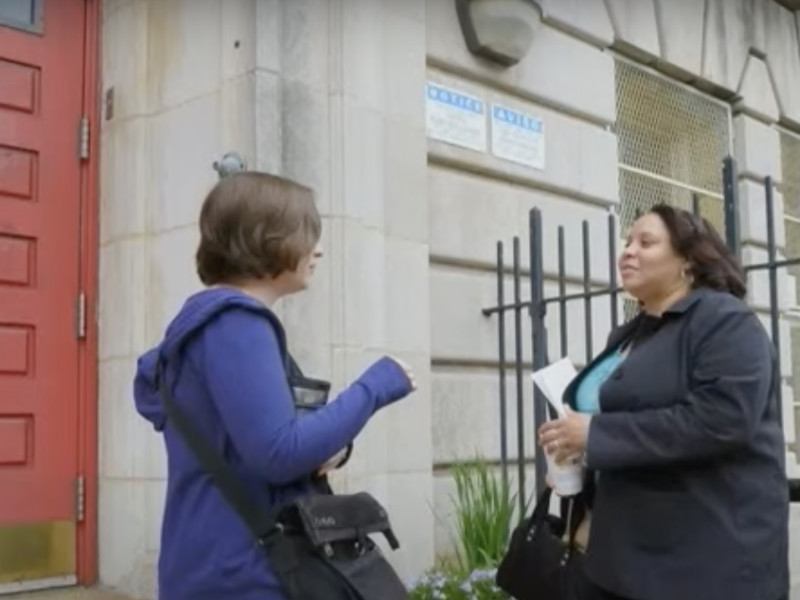
Above: Parents check out a schedule of events at the high school fair. Philissa Cramer/Insideschools

I just got back from the high school fair, where I spent three hours talking to kids and school officials and collecting open house information from schools. Brooklyn Tech was as much of a zoo as I expected it to be — when I arrived at 10 a.m., when the fair started, families were lined up dozens deep for the elevators — but I thought the fair was a little better organized than in the past, and it’s always fun to hear enthusiastic kids sing the praises of their schools. At the very least, the mild weather made for a pleasant temperature, not the norm at the overcrowded fair — and the conditions should hold up for those of you planning to visit tomorrow. If you stop by tomorrow, you’ll be able to buy a copy of New York City’s Best Public High Schools from author Clara Hemphill herself!

September 28, 2007

Citywide HS fair this weekend

Written by Admin @ 11:12 pm
   

Don’t forget that this weekend is the citywide high school fair. Find out about open houses, meet representatives from the high schools you’re interested in, and learn more about new schools at the fair at Brooklyn Tech. It’s always a bit of a mob scene, so it’s a good idea to get there early and have some kind of plan for what you’ll try to see. There are workshops throughout the day; schedules will be available at the fair. If you come on Sunday, you can also stick around to enjoy the nearby Atlantic Antic street fair.

Saturday and Sunday, 10 a.m.-3 p.m., Brooklyn Tech in Fort Greene. Map

Math coaches: are they good at math? coaching?

Written by Admin @ 5:10 pm
   

The DOE touts math coaches as an effective way for one “expert” to provide instructional support to many schools. But just how good are the city’s 400 math coaches? That’s the question CCNY dean Alfred Posamentier frets about in a guest column in yesterday’s Daily News. There are no clear standards for what’s required to become a coach, and coaches are hired at principals’ discretion. So while CCNY has a privately-funded training program for teachers that builds on what Posamentier terms their “proper mathematics background,” it’s possible that many coaches don’t have the math skills — or even the teaching skills — to be telling others how to teach math.

When I graduated from college, the DOE’s Teaching Fellows program offered me a position as a high school math teacher. If they’d let me teach math, chances are there are math-deficient teachers making their way toward coachhood. Now that’s scary.

Middle school task force money to go a long way

Written by Admin @ 4:14 pm
   

Remember when the DOE announced that 51 failing middle schools would be sharing $5 million in special funds, per the recommendations of the City Council’s Middle School Task Force? The principals of those schools met earlier this week to learn about the cash and how they may spend it. The Daily News reports that principals are thrilled to get a little extra cash, but can someone tell me how far an average of $100,000 per school can move schools toward “reducing class size, retaining math consultants and hiring more counselors”?

Student Thought: Real student representation

Written by Admin @ 8:04 am
   

Just a (sort of) quick note from Wednesday’s MSNBC Democratic presidential debate. About an hour and a half into the debate Rep. Dennis Kucinich said that he believed 16 year olds should be allowed to vote.

While this idea sounds radical, it should really be considered, especially on a municipal level. In the spring of 2006, the New York City Youth Congress proposed that New York City’s voting age should be lowered to 16. Following this, the Future Voters of America Party lobbied the City Council on lowering the voting age and Councilwoman Gale Brewer introduced a bill that would do just that. I failed to find any news on how that’s doing.

When one of my friends who was active in Future Voters told me about the issue, I was a little unsure about it. Now I believe that lowering the voting age to 16 could be a very important step for NYC and it would have the greatest impact in education, since around one third of high school students would be able to vote for the politicians who they felt best represented their concerns in improving their education system.

Students are clamoring for a voice in the decisions made on their education. That desire is one of the reasons for the founding the NYC Student Union and why last year he New York City Youth Congress voted for a resolution calling for the creation of a Student Senate whose opinions would have a weighted effect on DOE decisions.

Generally, simpler is better. It seems to me that the simplest way to give students a voice in their education is to give 16 year olds the right to vote. This will let the people in charge know how students feel, giving them a more clear and informed view of how our schools are run and more insight into the city’s educational successes and failures. It also might serve to get more students interested in how city decisions affect them and give them some reason to believe that their schools are really serving the students.

September 27, 2007

What happened to the P-school students?

Written by Admin @ 12:24 pm
   

The DOE closed its special schools for pregnant and parenting teens in June amid revelations that many were providing little in the way of substantive instruction. The 300-odd young women enrolled in those programs were instructed to enroll in other high schools, usually the ones they left when they became pregnant, and take advantage of the supports there. But according to a recent article in Women’s E-News, this arrangement isn’t ideal for some of the moms affected.

The article isn’t totally clear about the specific problems facing pregnant students, and the young woman featured sounds slightly misinformed (she says metal detectors are dangerous to pregnant women; they aren’t), but it does seem obvious that traditional high schools aren’t great at meeting the specific emotional and academic needs of pregnant and parenting students. It also sounds like some schools are less tolerant of rules permitting maternity leave than others, forcing young women into tough decisions between attending the school of their choice and being as good a parent as they’d like to be. Given the DOE’s track record of ignoring these students’ needs, it’s hard to trust the department to carve out special solutions for them.

The Brooklyn Young Mother’s Collective (formerly the Brooklyn Childcare Collective) is tracking 20 students who attended P-schools when they closed. Let’s hope they find that young parents are able to stick it out in regular high schools or, if they don’t find that, propose solutions to help these students that the DOE is willing to implement.

A new reason to email Chancellor Klein

Written by Admin @ 10:14 am
   

Chancellor Klein has always said you can email him directly (jklein@schools.nyc.gov) with difficult questions or complaints. But now, thanks to President Bush, he could start getting emails from school officials nationwide who want to find out just how the DOE has managed to close the achievement gap in New York City. Speaking in New York yesterday, Bush suggested that people “email” the DOE to learn its success secrets, the Sun reports today. Whether the improvements are real is another story. Either way, members of the Chancellor’s Strategic Response Group have their work cut out for them.

The Money Mom: Are these grants for you?

Written by Admin @ 12:12 am
   

If your school has a high needs population and you can think of something to buy that would improve teaching and learning, you stand a good chance of getting your idea funded.

The start of the school year is a time when education foundations send out notices asking people to apply for their grants. In the past week or so I’ve received at least three grant announcements from the family engagement office in my district. The NEA Foundation for the Improvement of Education is looking to give away $1,000 worth of books to schools with 70% or more students eligible for free or reduced price lunch (deadline: 11/12). Lowe’s, the home improvement store, offers a grant called Toolbox for Education, worth up to $5,000 for schools doing building or renovation projects, such as gardens and community rooms (10/12). The third grant notice that came my way was New York’s perennial Parents as Arts Partners, which funds programs aimed at getting parents and families involved in school arts education, such as visiting artists and art shows for parents mounted in school hallways (pre-application deadline: 10/19).

I will be submitting a proposal for the Lowe’s grant, for a small but important improvement that my principal would like to build. I won’t be applying for the other two this year because my children’s schools are not high-needs enough to be chosen. But especially if your school has 70 percent or more high needs children, small grants like these are a great way to fill gaps in your funding. Many are quite easy to apply for. The hardest part about the NEA book grant, for example, is getting someone to take the time to make a list of $1,000 worth of books that meet the school’s needs.

September 26, 2007

Stuy kids riled up by new restrictions

Written by Admin @ 12:58 pm
   

An article in the Sun today takes a look at tension between students and the administration at Stuyvesant High School, which has been percolating for years and has reached a new high this fall. Kids are upset that they must now swipe their ID cards when they enter the school and leave for lunch and that the school is now assigning lockers and locks to students, instead of allowing them to select their own. Students have started StuyWatch.com to protest these policies and monitor students’ rights at the school; one user complained of “a general air of mistrust from the administration with regards to students,” the Stuyvesant Spectator reported. The site, which doesn’t appear to be public right now, has hundreds of registered users, the Sun reports, but Principal Stanley Teitel isn’t taking it too seriously; he says the new policies are necessary for safety reasons.

The situation at Stuyvesant is like those that Seth and the other members of the NYC Student Union are working on citywide. Across the city, kids must contend with policies that include random scanning and a cell phone ban. I’m guessing that even reasonable changes in this climate feel disrespectful to students.

September 25, 2007

Student Thought: So, what do STUDENTS think about "Cash for Kids"?

Written by Admin @ 8:28 pm
   

It’s been months since the liBloomberg-Klein Complex introduced Opportunity NYC, a program that would pay students for academic achievement, specifically: standardized test scores. This story has been covered by all the major media outlets, the vast sea of NYC edublogs and even the Colbert Report. Still, no one has asked: “What do real fe students think about ‘Cash for Kids’?” At Monday’s NYC Student Union meeting, students voted unanimously in disapproval of the program. Here are some student opinions from the press release:

“It insults hard-working, low- income students by conveying the message that they could not possibly value education in itself and must need some sort of incentive in order to perform better in school.” — Laura Johnson, 17″A student that tries to earn the money but barely misses the cut off score to earn the money will only become frustrated and give up.” — Hasanur Rahman, 16

“[Opportunity NYC] propagates the test prep culture and detracts from other important aspects of education.” — Shauna Fitzgerald, 15

“The cash being used in this program could better be used to solve citywide problems affecting all students like class size and school resources.” — Ben Shanahan, 15

I tend to trust the opinion of my peers and was one of the students who eventually voted for the resolution disapproving of the program. Still, I personally believe there might be some benefits to the program:

  • As my friend and fellow Student Union member Ashu Kapoor said: “It’s nice to know that the city is coming up with new and creative ways to help New York City public school students.”
  • A lot of students just don’t care about school and this might encourage them to get involved in school. (However, as other students at the meeting noted, that involvement would be temporary and wouldn’t bring the longterm results that we need.)
  • It just might work.

Unfortunately, “it just might work” is not a good enough rationale for a program on this grand a scale. The DOE needs to come up with incentives for students to get into their education but this program has too many holes in it. Maybe instead of Cash for Kids, the DOE could add money to a college fund to be managed by the city and given to these students once their high achievements have made the dream of a college education more realizable. That would turn this short-term program into one capable of longterm successes.

Check out two great posts on the issue by NYC Student Union members Ben Shanahan and Hasanur Rahman over at the NYC Students Blog.

What Bush and Klein talk about when they talk about schools

Written by Admin @ 4:42 pm
   

President Bush and Chancellor Klein are spending time together today, the Daily News reports. The meeting is a chance for Bush to congratulate Klein on the Broad Prize and talk up the upcoming No Child Left Behind reauthorization. The Washington Post noted yesterday that NCLB might be in for a name change; perhaps Donna Shalala’s (I think sarcastic) suggestion of “Children First!” is more likely than she thought. (Via TAPPED)

MacArthur "genius grant" winner a hero to NYC kids

Written by Admin @ 3:55 pm
   

The MacArthur foundation announced its latest group of $500,000 “genius grant” winners today, and among them is Deborah Bial, the founder of the Posse Foundation, which cultivates groups of talented city kids to attend elite colleges on full scholarships. Bial was inspired to start the program by her work in New York City schools, where kids told her they’d be more likely to go away to college and to stay there if they went with their “posse” from the city. Since 1989, the foundation has sent hundreds of New York City students to college. I’ve been in schools the day kids hear that they will be going to Vanderbilt University or Middlebury College for free, and you just can’t put a value on their happiness and relief.

An anniversary today; panel discussion tomorrow

Written by Admin @ 11:43 am
   

Today marks the 50th anniversary of the first day black students successfully attended the all-white Central High School in Little Rock, Ark. Amid harassment and threats of violence, the students were escorted by soldiers whom President Eisenhower had deployed to Little Rock to do battle with the segregationist governor, the state militia he controlled, and the many ordinary Arkansans who opposed the Little Rock school board’s vote to integrate. Although none of the Little Rock Nine graduated from Central (and in fact the governor closed all of the city’s high schools the next year rather than integrate), their attendance was a watershed moment, at least emotionally, for Little Rock and the rest of America.

But now the nation’s schools are as segregated as they were in the late 1960s, districts are trying to rejigger school zones in racially suspect ways, and black students are disproportionately punished and referred to special education. And of course in June the Supreme Court struck down voluntary integration programs that considered students’ race in assigning them to schools.

At 4:30 p.m. tomorrow at Long Island University’s Brooklyn campus, a panel of education experts will grapple with this troubling reality in a symposium titled “The U.S. Supreme Court vs. Equality in Education.” Several of the panelists are New York City principals and parents, and I’ll be there to hear what they have to say. I just hope some of the news is good.

More good news for fans of public health

Written by Admin @ 10:50 am
   

On the heels of last week’s news that New York State would stop accepting federal abstinence-only sex education funds comes singer Elton John’s announcement that he will donate $300,000 to support HIV/AIDS education in the city’s middle schools. The donation will allow the National Urban Technology Center to lead computer-based health classes in 60 middle schools, doubling the number of schools the organization is serving. John’s donation comes at a time when HIV infection rates are rising, especially among minorities and the poor, and the time schools spend on health and sex education is falling. It’s just too bad that kids in only 60 middle schools will get to benefit from improved AIDS education.

September 24, 2007

TONIGHT (9/24): Panel for Educational Policy meeting

Written by Admin @ 2:15 pm
   

You can tell the chancellor what you think at tonight’s Panel for Educational Policy meeting (6 p.m. at the DOE. Map). On the agenda are military recruitment in the schools and the learning environment surveys, among other issues. You can sign up for the public comment portion of the night beginning at 5:30 p.m. Check out the Insideschools calendar for more events.

In Brooklyn, advertising HS (probably) in; progressive MS out

Written by Admin @ 12:16 pm
   

Brooklyn may be getting an advertising-themed high school next year, the Daily News is reporting. Borough President Marty Markowitz is leading the push for the school, which will have the American Association of Advertising Agencies as its lead partner. The DOE says the idea of the school — which Markowitz hopes will attract more minorities to the overwhelmingly white advertising field — is “very interesting” but that it hasn’t yet been approved.

The advertising high school would join the Ghetto Film School’s cinema high school in the Bronx in 2008. One school not opening next year? The parent-proposed District 15 middle school, Brooklyn Prospect Charter School, whose proposal the SUNY chartering board recommended not move forward after the first round of charter school applications. Organizers are confident they’ll be able to secure approval for a fall 2009 opening date.

September 23, 2007

Middle school choice process to begin in December

Written by Admin @ 8:40 pm
   

If you’re applying to middle school this year, you’ll want to read Insideschools‘ newest article: Starting this year, the middle school application process will be on the same schedule citywide, and districts won’t start distributing directories until December. Read more.

September 21, 2007

State rejects abstinence-only sex ed funds

Written by Admin @ 11:56 am
   

After yesterday’s exhausting experiment in liveblogging, I’m going to take it a little easier today. But I do want to direct your attention to some important news: New York State has decided to turn down federal funding for abstinence-only sex education. Previously, the state received the second largest number of federal dollars for abstinence-only sex ed, which studies have shown to be ineffective. Many health advocates were pushing the state to abolish abstinence-only sex ed, even though it meant giving up federal funding. Because the state doesn’t actually require sex ed, this change won’t necessarily bring comprehensive sex ed to schools, but it does at least diminish the incentive for districts to misinform their students.

September 20, 2007

Liveblogging the City Council hearing: Community members testify

Written by Admin @ 3:24 pm
   

Wow. A ton of people came out to testify today. We’ll be here all afternoon. I’ll try to summarize most folks’ main points:Joan McKeever Thomas, UFT parent liaison for Staten Island: “If the DOE’s proposed changes [to the regulation governing School Leadership Teams] are institutionalized, many SLTs — which show and continue to offer so much promise — would become rubber stamps for the principals.”Randi Herman, first vice president of the Council of School Supervisors and Administrators: “A meaningful role for parents and the community cannot be left merely to the discretion of this mayor or any successive mayor. It must be part of the law. … Even then, vigilant oversight is needed by [the City Council] to ensure that the spirit as well as the letter of the law is being carried out.” (From written testimony)

Patrick Sullivan, Manhattan representative on the Panel for Educational Policy: “The changes DOE is proposing will result in parents being more reluctant to participate since decisions about how to allocate their school’s budget will be made before they are engaged by school administrators in the development of the [Comprehensive Education Plan]. Ultimately, the proposed changes to A-655 threaten to weaker rather than strengthen SLTs.”

Kim Sweet, Advocates for Children’s executive director: “District Family Advocates and their supervisors have no authority whatsoever over the principals; they are not even in the same chain of command. … We have no objection to District Family Advocates, to the extent that they may help parents work their way through the often impenetrable bureaucracy. Our objection is that parents with complaints are being funneled to the District Family Advocates, rather than to DOE officials who have the authority to respond to their concerns. This structure does not promote parent engagement; it promotes parent disenfranchisement.” Shana Marks-Odinga, Alliance for Quality Education: “Without sufficient details, parents and other stakeholders at the school-based level were unable to participate in the [Contracts for Excellence] planning process in a substantive, meaningful way. In this first year, we were operating under a short timeframe, but this process did not allow for real deliberation. … Public engagement around the 2008-9 Contract for Excellence should begin in October 2007 to ensure a meaningful process.”Jim Devor, acting president of the Association of CECs: Under the proposed SLT regulation, “most of the major decisions will already have been made” by the time parents enter the process.

[At this point, the meeting had run so long that we had to move so another committee could use the Council Chambers. That space was internet-less which is why this entry is so late!]

David Quintana, member of the Chancellor’s Parent Advisory Council: “Most parent coordinators serve a function as ‘principal coordinators’ … they are overinflated [and are] not serving the purpose they were intended to.”

Tim Johnson, CPAC chairman: “To parents, [the parent engagement initiative] looks and feels like yet another reorganization. … It doesn’t change anything on the ground for parents. … We haven’t seen the commitment from the chancellor that our issues are as important as those of other stakeholders.”

Leonie Haimson, Class Size Matters and NYC Public School Parents blog: One reason for the chain of command issue Kim Sweet described is that “district superintendents are no longer in district offices. Now, they’re working with schools outside their districts and are not empowered to intervene” in the schools they supervise.

Susan Shiroma, president of the Citywide Council on High Schools, to Robert Jackson: “I implore you that the voice of high school parents not be lost. … I can’t find president’s councils that represent high schools.”

And to finish the (very, very long) hearing, Robert Jackson: Is the DOE “really trying to eliminate the coordination of parents’ voices? Sometimes I wonder.”

Whew. Whatever improvements come out of the initiatives Martine Guerrier discussed earlier, all the testimony I heard today suggests it will take time and hard work for the DOE to earn back the trust of the most involved parents.

Liveblogging the City Council hearing: Council members react

Written by Admin @ 12:21 pm
   

Council Member Lew Fidler nailed the central parent engagement issue this morning when he pointed out about Guerrier, members of the Office of Family Engagement and Advocacy staff, and parent coordinators, “There is a huge fatal flaw. Each is hired and answerable to the DOE, not parents. … You [Guerrier] felt the need to defend the rigid position of the DOE, not advocate for parents, and that’s a problem.” Fidler got applause for this statement, and he deserved it.

While being questioned by council members, Guerrier gave a few more details of the precise role parent bodies will play this year. They will help decide “how school closures happen” and where charter schools and new schools are sited based on community needs. She agreed with Council Member Vallone’s characterization of those discussions in the past as “a dog and pony show.”

Guerrier wants to train School Leadership Teams and help Parent Associations do better outreach to get more parents involved. Guerrier also revealed that one reason the DOE’s new parent engagement website is not up yet is that developers are working on allowing parent associations to disseminate audio and video of their meetings online. In general, she said, parents should be making the decisions “that impact students directly.”

Coming up: testimony from community leaders, including Advocates for Children’s Kim Sweet

Liveblogging the City Council hearing: Cell phone furor

Written by Admin @ 11:33 am
   

Council Member Peter Vallone just got angry about cell phones, an issue that’s important to many, many parents.

Vallone: Have you consulted with parents about the cell phone ban?
Guerrier: OFEA doesn’t actually manage cell phone policy.
Vallone: 99 percent of parents oppose the cell phone ban.
Guerrier: “It’s unfair to deny the feelings of parents who oppose cell phones.” I’ve heard from families whose kids were terrorized by other students using cell phones. But I think some families have issues that require phones. If I polled five parents, I might find one who opposes cell phones.
Vallone: Would it be safe to say that the parents you’ve communicated with on the issue of cell phones, are the majority in favor of kids carrying cell phones?
Guerrier hems and haws but settles on yes.
Vallone: … If parents are against this ban, wouldn’t it be part of Ms. Guerrier’s job to help them?

Guerrier was right that cell phone policy isn’t under her purview — Vallone pushed her pretty far on the issue and I have a feeling she’ll be getting a reminder from Mayor Bloomberg soon, as Chancellor Klein did when he made the mistake of suggesting the possibility of a compromise back in May 2006. The mayor has made it clear that no matter officials’ duties, they aren’t to make concessions on cell phones.

Update: Council member Lew Fidler asks Walcott, “Can we — council representatives and parent representatives — sit down with the mayor’s office and come to a policy we will all support … that fosters respect for the rule and those who make it?” Walcott says, “I’m always open to dialogue but … we will always be at odds.” Fidler: “Deputy Mayor, we will see you in court.”

Liveblogging the City Council hearing: Q+A

Written by Admin @ 11:00 am
   

Robert Jackson’s fired up, as always. He has OFEA CEO Martine Guerrier on the hotseat.

What’s the chain of command for parent engagement?
Everything starts with the parent coordinator. Then to the DFA, then the borough director, then Guerrier herself. Deputy Mayor Walcott interjects: “When all else fails, we receive calls at City Hall.”

Is OFEA fully staffed?
Yes at the borough level. There are a few vacancies at the district level. Every district has at least two DFAs.

Where is the list of district family advocates?
“It’s online, but our page has not gone up” — want to include information from parent groups, to make it engaging. (I just poked around to find the link Guerrier mentioned — it’s not as apparent as she made it out to be, though I did find the inactive link to the misnamed office of “parent engagement.”)

Now Jackson says he can’t find “the substance” of the policy changes. Guerrier: “The substance comes through discussion” with Klein. Sometimes Jackson plays dumb when interrogating his witnesses — but as a result, he exposes how confusing the DOE’s structure can be.

How are changes being disseminated to leaders at the local level?
Presentations were made to PAs and PTAs; CECs received emails in August. But that was summertime, Jackson points out. Guerrier: “Email doesn’t take a vacation.”

What elected officials have you briefed? Because you and I have not sat down to discuss the structural changes and policy changes.
Guerrier: “We did meet.” She notes that Jackson was at a meeting with Speaker Quinn where she (Guerrier) outlined what her plans for OFEA. Guerrier is listing tons of community organizations and governing councils she’s met with — sounds like she’s been busy. Still, I wonder whether her idea of meetings falls into line with the DOE’s illusion that a presentation counts as collaboration.

Why doesn’t the name family guide include DFAs’ names?
Guerrier doesn’t want the guide to be out of date as the DOE undergoes its inevitable turnover.

What’s the status of the Parent Engagement task force?
It has submitted findings but recommendations have not yet been finalized. They will be published when they are. Guerrier says she’d like to see the recommendations published by the end of October, when the new SLT regulations are finalized. The task force met for the last time at the end of August.

Why did you wait until this week to release the family guide?
“If you think about it, it takes a long time to make a book like that.” She denies any connection between the timing of the guide and today’s hearing. She wanted it out the first day of school, but there were problems with translation. Walcott backs her up. Every parent will have a guide within the next few weeks. It’s online now.

Liveblogging the City Council hearing: Martine Guerrier

Written by Admin @ 10:45 am
   

Martine Guerrier’s up and she sounds sincere. She says was concerned she would have to give up her role as a parent advocate when she took on her position as chief family engagement officer, but that hasn’t been true. Instead, she says, she’s convinced of the “sincerity on the part of the administration to change the tone” of interaction with parents. Of course, she has to say things are getting better, but her willingness to admit the flaws of the past — untimely and poorly explained information, parents having to travel to regional offices to get help, etc. — is refreshing and gives me hope that these flaws will be remediated.

Guerrier’s talking about forging a “broader definition of parent engagement that goes beyond training and supporting parent coordinators.” She’s going to be holding parent nights all year to take discussion about schools to parents’ homes, neighborhoods, and community organizations. Public forums will also be conducted in foreign languages.

The Office of Family Engagement and Advocacy has a broad range of responsibilities: training and overseeing parent coordinators, engaging Community Education Councils, managing translation and interpretation unit, making sure all schools have a functioning School Leadership Team (a fact that will factor into principals’ grades — but by how much, I don’t know).

Guerrier says the “relationship between schools and families is a key determinant in whether kids can take advantage” of resources provided by schools. Parents want more communication of academic progress — short conferences not enough and some families only find out about kids’ progress when there isn’t any. That’s where OFEA will collaborate with the office of accountability.

Next up: questions. Here’s a taste:

Jackson: What is your opinion on parents? Are they full partners in their kids education?
Guerrier: Yes.

Liveblogging the City Council hearing on parent engagement

Written by Admin @ 10:32 am
   

Education Committee chair Robert Jackson opened today’s proceedings with some familiar complaints: why don’t people know what’s going on at the DOE until after decisions are already made? how do you know who to call at the DOE when you need help? what’s wrong with 311?

Now Deputy Mayor Dennis Walcott and OFEA CEO Martine Guerrier are testifying. Walcott has gone over the familiar litany of efforts the DOE has made in the last few years to formalize parents’ voice — and they’re nothing to shake a stick at. Walcott also notes that “the Mayor’s doors at City Hall are and always have been open to parents.” I had no idea — has anyone ever tried to meet with the mayor in his City Hall office?

Walcott has just said “probably 95 percent” of parent coordinators originally hired are still employed by the schools that hired them. There’s no way that’s even close to being true. Does anyone want to fact check? Still, the creation of the parent coordinator position was a huge step forward for the DOE and the best of the parent coordinators are tremendous assets to their schools.

Read The Story of Ferdinand today to help kids

Written by Admin @ 7:59 am
   

If you’ve never read the famous children’s book The Story of Ferdinand, today’s a good day to do so. That’s the featured book this year for Read for the Record, a national event designed to bring attention to Jumpstart, an organization that promotes early childhood education for low-income kids. Readings are taking place all day in various locations throughout the city; for details on locations in Manhattan and Brooklyn, check out the event’s website.

September 19, 2007

State audit: schools underreport violence

Written by Admin @ 6:29 pm
   

Via the New York Times’ City Room blog comes a report released today by the state comptroller showing that schools often fail to report major violence. The report, based on analysis of 10 large schools data from the 2004-2005 school year, found that an average of 21 percent of violent incidents went unreported at some schools. At Boys and Girls High School in Brooklyn, officials even sat on information about a rape that happened on campus rather than bring down the school’s numbers!

UFT head Randi Weingarten’s response was perfectly on point: “With data driving all education decision-making, this audit couldn’t have come at a more important time. We have to ensure that schools are safe the old-fashioned way, namely because they are and not because incidents are going unreported. Making schools seem safer than they really are does a disservice to parents, students and educators because those schools don’t get the attention and resources they need to be made safer.”

For its part, the DOE isn’t concerned about reporting issues, because the tracking system the city now uses is “incredibly sophisticated,” the Times reports. Of course, we all know that better data doesn’t mean safer schools, but I guess now that the DOE’s got data management under control, it can turn its attention keeping its students and teachers safe.

2007-08 the year of parent engagement?

Written by Admin @ 3:03 pm
   

We can hope so. If recent experience with the DOE is any guide, though, it’s more likely to be merely the week of parent engagement.Today, Chancellor Klein, along with Office of Family Engagement and Advocacy CEO Martine Guerrier, Brooklyn Borough President Marty Markowitz, and Alonta Wrighton, principal of PS 11 in Brooklyn, held a feel-good press event to announce the DOE’s newest family engagement efforts. The highlights: the creation of District Family Advocates to replace the old Parent Support Officers; Guerrier’s office’s “year-long, citywide public information campaign,” soon to be found on subways and buses; expansion of access to translation services; and better support for the Community Education Councils.I hope these much-needed improvements make a difference for parents who have felt for years that the DOE doesn’t adequately address their questions and concerns. But how will the DOE make sure that these engagement efforts pay off? Remember, as the press release points out, “principals will be evaluated in part based on the effectiveness of their School Leadership Teams, half of which is comprised of parents.”Oversight is a central issue at two meetings tomorrow focusing on the DOE’s parent engagement initiatives. The City Council’s education committee is holding a hearing on the initiatives starting at 10 a.m. (Map) and the Chancellor’s Parent Advisory Council also has parent engagement on the agenda for its 10 a.m. meeting in Tweed, where Guerrier and Klein are expected to appear (Map). We hear there may also be some kind of press event on the steps of City Hall at 11 a.m. It looks like it will be a busy morning for the DOE’s parent engagement guruswe’ll let you know what we find out from those meetings, but if you are able to go, please let us know your take as well!

Student Thought: Contracts for mediocrity

Written by Admin @ 8:00 am
   

Yesterday, the New York Sun reported that the “Contracts for Excellence” money has been delayed because the state is wary of the city’s highly contested plan. Many say that the plan, which devotes the money to five categories which can be determined principal by principal, has given no clear plan on how to reduce the City’s ginormous (I hope my English teacher isn’t reading this) class sizes (but then again she’d know that it’s hard to describe NYC’s class sizes as anything other than ginormous) nor has it given enough money to be devoted specifically to that purpose. This great backlash, coming from students, parents, teachers and politicians, has resulted in a “standoff” between New York City and the state.

Last year, the NYC Student Union, having some sort of odd premonition of the city’s future plans, lobbied Governor Spitzer’s office about setting aside a good portion of CFE money to lower class sizes in New York City. Representatives of the Union also testified at the mandated DOE hearings on the issue and even blogged about it at the NYC Students Blog.

Class size is definitely an important issue (for reasons so numerous I’ll have to write another post about it). But in shorter terms my main argument for more class size money has been this: whatever programs we have to better our classrooms, be they improving teacher quality, creating new and innovative curricula, or even working for more “time on task,” will fail if smaller class sizes aren’t realized. Even if they are good and well designed programs (which we definitely need), there is just something inherently impossible about teaching or learning in our current class size conditions. How can you really keep a class of 34 “on task”?

It seems that the DOE is honestly trying to fix a lot of problems with this new funding. I personally think its leaders have really good intentions. In NYC, however, none of those problems can be solved until we can remedy the class size crisis.

September 18, 2007

8th grader Izzy: How much stress is too much stress?

Written by Admin @ 3:16 pm
   

Eighth grade has certainly started out with a bang! I have a few teachers that are new to my school, and therefore unaware of how things generally run, so class time has been a little hectic. We’ve been absolutely bogged down with homework, and on top of that, I have started my weekly tutoring sessions to prepare for the specialized high school test. There is also a little homework to go along with that, but it isn’t that stressful.

However, the stress that some of my friends are going through far exceeds what I’m talking about. I have one friend who comes home directly after school to study, and who is no longer allowed to spend time with his friends because his parents are so determined to get him into a good high school. He also attends the Specialized High School Institute, an after school tutoring course, once during the school week and once on Saturday, and he devotes a lot of time in between to completing the homework that the institute assigns. Yet he isn’t even sure that he wants to go to a specialized high school, even if he passes the test!

Tales from the cell phone trenches

Written by Admin @ 2:51 pm
   

When I wrote last week about the cell phone ban, I didn’t know that random scanning and cell phone seizures were happening at the time at Forest Hills High School — not a school that has a reputation for having students who carry weapons. As the Queens Times-Ledger noted, the scanning happened on the anniversary of Sept. 11 and a day after the City Council overrode Mayor Bloomberg’s veto of a bill that would permit kids to carry cell phones to and from school. The day after the raid, NYC Public School parents blog had the damage: most kids were late to class, some skipped school altogether, and kids could choose whether their cell phones or iPods were confiscated. Commenters on that blog include Forest Hills parents and a teacher, who writes, “Parents in the suburbs and in private schools would not tolerate being unable to reach their child when necessary.” All of this, in the best city school system in the country.

The secret lives of 17 year olds

Written by Admin @ 1:24 pm
   

Last weekend’s City section in the Times featured New Yorkers who are 17. The Times feature includes oral histories from nearly a dozen teenagers. Some attend private schools and one dropped out of Dewitt Clinton High School in the Bronx, but many others talk about their public schools. A boy waxes ecstatic about Brooklyn Academy of Science and the Environment, where he notes “you get to go out into the field and study different types of plants and a lot of environmental stuff,” and a girl who goes to Talent Unlimited in Manhattan describes her packed extracurricular schedule. Other pieces take a look at kids’ college plans and their memories of Sept. 11.

I love getting a view into the personal lives of the kids who attend the city’s schools. They are always so much more interesting than a test could possibly show.

BREAKING NEWS: City wins Broad Prize

Written by Admin @ 11:52 am
   

In just a few minutes the Broad Foundation will announce that New York City is this year’s winner of the prestigious Broad Prize, given annually to an urban school district that has improved the test scores of its poor and minority students.

We knew this was coming, both because the word has been on the street for the last few days and because when philanthropist Eli Broad created the prize in 2003 he basically told Joel Klein the prize was Klein’s to win. (Since then, the New York Sun notes, Broad has given Klein and Bloomberg non-prize cash to support their school reforms.)

The prize comes with $500,000 for scholarships, but the bigger reward is bragging rights. New York City has been a finalist each of the last three years, and winning now gives Klein and Bloomberg a big thumbs-up for their reform efforts. The folks over at NYC Public School Parents sent a letter to philanthropist Eli Broad urging him not to give the prize to New York because the DOE’s reforms have systematically excluded parent input.

Update: The press release is up at the Broad Foundation’s website. Eli Broad: “If it can be done in New York City, it can be done anywhere. The strong leadership by the mayor, the chancellor and a progressive teachers union has allowed a school system the size of New York City to dramatically improve student achievement in a relatively short period of time. Other cities can look to New York as a model of successful urban school district reform.”

Selective cinema high school on the horizon

Written by Admin @ 10:48 am
   

An article about Ghetto Film School in today’s Times says the Bronx program for teens interested in cinema may be the progenitor of a film-themed high school to open in 2009. The program, whose name does not always sit well with the famous directors who give it money, already provides support for teachers at New Explorers High School, but organizers want a school of their own to rival LaGuardia. According to the article, the new school will be selective, have 600 students at full capacity, and offer electives in screenwriting and film production. All that remains is for the DOE to approve the proposal — and for the school to come up with a new name. The Bronx High School for Cinema, Excellence, and Scholarship, anyone?

September 16, 2007

8th grader Izzy: A voice from the top of the middle

Written by Admin @ 9:06 pm
   

Hey everyone! I’m Izzy. I’m an eighth grader, and I go to a small middle school in Manhattan. I have a ton of interests, but music –playing it, listening to it, and occasionally writing it– is my biggest passion. I also love to write, ballroom dance, and sometimes study life science. I’m also applying to high school.

Now that the specialized high school admissions test steadily looms nearer (it’s on Oct. 27), I have decided that I would either like to focus on literature, the arts, or science. I’m going to look into several different high schools until I find the one that best fits my needs. I’m looking for attentive, interested students, a clean facility, and plenty of materials and instruments available for student use. At the end of this experience, which I’ll be blogging here, I’m determined to have found the perfect high school for me.

September 15, 2007

Contracts for Excellence update

Written by Admin @ 9:56 am
   

It’s been a while since we took a look at what’s going on with the Contracts for Excellence. You know, the city’s plan to spend its education dollars that, if approved by the state, would mean more money for its schools? The plan that was presented in urgent public meetings back in July because the process was moving so fast? The plan that had some education advocates up in arms because it inadequately addressed class size and other issues that were the reasons for seeking more money in the first place?

The word from the state is …. nothing. The state hasn’t yet announced whether or not the city’s proposed Contract for Excellence has passed muster, and so new money hasn’t yet started to make its way to the city. NYC Public School Parents blog has a letter from a parent asking the state not to release the money until the DOE revises the plan to include class size reduction. But whether or not you think the Contract for Excellence as the city proposed it ought to be approved, it would be nice to know the status of the process, wouldn’t it?

Update: Here’s the link to NYC Public School Parents coverage of the letter from Ivan Lafayette that Patrick references in the comment.

September 14, 2007

Klein and Colbert: fun, but truthiness* questionable

Written by Admin @ 4:02 pm
   

If you haven’t seen Joel Klein’s “Colbert Report” appearance yet, you can check it out on ComedyCentral.com. Klein had a big smile on his face and was quick on his feet; the DOE evidently is proud of his performance because it was included in the department’s email newsletter today. The New York Times’ City Room blog has the transcript, and commenters there are having a field day poking holes in Klein’s plan to pay students for their grades and suggesting alternatives. Klein’s defense sounded strong on TV, but it needs to be fact-checked — has anyone ever heard of a study finding that financial incentives for abstinence actually work?

*No, I know that truthiness isn’t a real word. But don’t tell that to Colbert, or to Merriam-Webster, which gave it “word of the year” honors last year.

High school newspapers in decline

Written by Admin @ 6:41 am
   

Fewer schools than ever have formal school newspapers, and those that do aren’t terribly robust, according to an article in City Limits. “Black and white and forgotten all over?” explores the reasons for the decline in the city’s school newspapers and takes a look at whether community organizations and new media may be stepping up to fill the void in student-generated news and commentary.

According to the article, schools newspapers in the city have been decimated by budget cuts, increasing emphasis on Regents exams, and the breakdown of large high schools, which could support a newspaper program. (One of the successful newspapers the article discusses is the Hilltopper at Jamaica High School, which looks like it could be heading toward restructuring.) But some schools are turning to the web to create lower-cost, instant news outlets. If all goes as planned at the new Arts and Media Preparatory Academy, kids will write personal blogs and contribute to an online newspaper, which sounds like lots of fun, if not quite as thrilling as getting to see one’s name in newsprint.

High school journalism is a particular interest of mine, because my own experience on my high school newspaper shaped my life in college and my work since graduating. It’s a shame that more kids can’t have that opportunity. Kids who want to write news but don’t have newspapers at their schools can volunteer for New Youth Connections or Children’s Pressline, two non-profit organizations located in the city. And low-income students who are active in journalism can apply to the selective, all-expenses-paid Princeton University Summer Journalism Program. Five of the 22 participants this summer came from New York City schools.

September 12, 2007

NYC kids eating a little more locally in cafeterias

Written by Admin @ 2:48 pm
   

Have you taken a look at the puff pieces the DOE is running on its new site? Some of them are silly but others are pretty interesting. I don’t think the stories are archived anywhere, but the piece up right now is about the heads of the SchoolFood program showing off the “healthy, locally grown food” that school cafeterias are now serving. Schools are serving some fruits and vegetables grown in New York State, as well as yogurt produced in the state. Eating locally is better for the environment and can help kids establish healthy eating habits, so I hope kids are learning why canned corn has been replaced by “Confetti Corn Salad” on their styrofoam trays. Now if only the schools can figure out how to get rid of the environmentally unfriendly styrofoam altogether, as parents at PS 154 in Brooklyn are calling for.

Insideschools covered the planned improvements to school lunch program back in December 2005, when we also highlighted some of the best lunches around the city.

School buildings going up all over town

Written by Admin @ 1:32 pm
   

The DOE’s capital plan doesn’t call for too many new schools in the next few years, to the dismay of parents and advocates for small class size, but the DOE announced groundbreaking on two new buildings this week. In Manhattan, East Side Middle School is getting a new building of its own in 2009, after sharing space with PS 158 for years. And Cypress Hills Community School in Brooklyn will also get its own building in 2009, complete with multi-purpose room, cafeteria, “community room,” and library.

The DOE was eager to emphasize that the East Side Middle School building is being constructed without public funds, through a public-private partnership with the developers of a new residential building. Mayor Bloomberg is hot on public-private partnerships, for good reason: they let wealthy companies buy the city things it can’t afford. In the case of the school, the developers will rent air rights from the city in exchange for paying for the school, allowing them to construct a 34-story residential tower that would otherwise have been prohibited. (Perhaps this is the kind of deal developers seeking to construct a view-obscuring building in DUMBO are angling for?) While the city should be willing to foot the bill for building schools, this sounds like a great solution to the DOE’s pressing space needs. But this particular fix is likely to work in areas with lots of new construction by wealthy development companies. I wonder what the city has planned for overcrowded schools in neighborhoods that will never need or want a skyscraper.

TONIGHT (9/12): Joel Klein on Colbert Report

Written by Admin @ 6:31 am
   

Joel Klein is the featured guest tonight on Comedy Central’s satirical “Colbert Report.” While Stephen Colbert is not known for conducting hard-hitting interviews, it should be fun to see the chancellor get a kind of question he’s not used to. The Post reports that Klein’s new PR guru Kerri Lyon, who is charged with getting more positive stories about the DOE into the press, asked “Colbert Report” producers for the slot.

“Colbert Report,” 11:30 p.m. on Comedy Central (Channel 45)

September 11, 2007

City Council overrides mayor’s cell phone bill veto

Written by Admin @ 11:36 am
   

Yesterday the City Council voted almost unanimously to override Mayor Bloomberg’s veto of the bill it passed last month permitting students to take their cell phones to and from school. But the mayor says the council’s move “doesn’t mean anything,” because he controls what happens inside the schools, and he is set on not allowing any phones to ring. It’s ironic that this saga is coming to a head six years after the Sept. 11 terrorist attacks, when cell phones proved an absolute relief to parents and kids citywide. And the news about the administration at Jamaica High School prohibiting school staff from calling 911 even in emergencies seems like yet another argument for kids to be able to bring cell phones to school.

At Jamaica, data-driven school staff ignore student needs

Written by Admin @ 11:00 am
   

Kids and teachers at Jamaica High School were surprised last week to find that the school had a new principal; now, they have a clue as to why Principal Jay Dickler was yanked from the school just days before the beginning of the school year, besides the fact that the school was recently added to the state’s list of “persistently dangerous” schools.

Yesterday, the Daily News reported that an assistant principal issued a directive last year ordering school staff not to call 911 “for any reason,” which might have contributed to the fact that an ambulance was not called for more than an hour when a Jamaica student suffered a stroke in April. One wonders how much more quickly the student would have gotten medical attention if she or her friends had cell phones, which students cannot smuggle into Jamaica because it has metal detectors.

The situation also adds to persistent questions about whether schools suppress information about violent incidents to improve their statistics. “This is a tragic result of what happens when everything comes down to data,” UFT President Randi Weingarten told the Daily News.

Chancellor Klein said the DOE would investigate the situation, although both Dickler and the assistant principal who wrote the memo are no longer at the school. Dickler has been reassigned as the head of a suspension center and the assistant principal is now a teacher at Hillcrest High School, the Daily News reports.

Today, the Daily News notes that a student at a Brooklyn elementary school died in 2003 after suffering an asthma attack; staff members’ reluctance to call 911 may have contributed to his death. That child’s family filed a lawsuit against the DOE early this year. Shortly afterward, Chancellor Klein sent a memo to principals telling them to call 911 in emergencies. The directive at Jamaica came out after Klein issued his reminder.

As of today, Jay Dickler’s name is still on the Jamaica’s DOE website. The interim principal, Walter Acham, was most recently the safety administrator for the Queens Integrated Service Center. My suspicion — and I hope I’m wrong — is that the DOE sees Acham as a warden to shepherd Jamaica until it is restructured.

Student Thought: Khalil Gibran and the purpose of public education

Written by Admin @ 8:47 am
   

Today, on the sixth anniversary of 9/11, it is fitting that I offer a student perspective on a story relating to the relationship between American and Arab culture. Coincidentally, that story has also been the biggest education issue of the summer.

The Khalil Gibran controversy has gone from a local story to one with full on international press coverage. Outlets from CNN to BBC to Al-Jazeera have all covered the story. As a student, I believe this story has gained importance because of its depiction of the relationship between Arab and mainstream American culture and its implications for the meaning and purpose of public education in America.

The word “Madrassa” has been thrown around a lot in the media over the past year. At first it was mainly used in articles about a school that Sen. Barack Obama attended when he lived in Indonesia as a child. Although it turned out the school was actually a public school serving students of diverse cultures and religions and the teachers even dressed in Western clothing, the mainstream media still questioned whether the American people could trust a president who went to kindergarten at a school in an Muslim country.

When a similar, public, non-religious school with a focus on Arabic and Arab culture was set to open up in Park Slope, it raised just as much controversy. Even though the school was named after a Christian, led by a woman who was a strong interfaith leader and located in a very liberal neighborhood with a visible Arab community, it was attacked by a parent group, the Stop the Madrassa Coalition.

Over the summer the story has shifted to the attack on its original leader and Principal Debbie Almontaser. The New York Post began to attack Ms. Almontaser on a nearly daily basis and she was eventually forced to resign under the pressure. This is a woman who has tons of experience in public education as a teacher, is an influential leader of her community, had a son who served in the National Guard and four nephews and cousins who fought in Iraq, and even gave the Rosh HaShana Sermon at the Brooklyn Synagogue Kolot Chayeinu a few years ago! To say that this woman is a separatist extremist is a blatant lie.

In response to all this controversy, one must ask: “Why create such a school?” For that answer I must turn to my own experience as a Park Slope elementary school student at PS 321. From kindergarten through 5th Grade, I cannot recall having a class without any Muslim students. Many of them came to school wearing traditional Muslim clothing. Many of them were my friends. We would play basketball in the playground behind the school during lunch and recess. In fifth grade when we were applying to middle schools, my Muslim friends were going through an entirely different process. While I was applying to MS 51, a Park Slope middle school, the majority of them were sending off applications to Muslim private schools like Al-Noor and Medina. I have since lost contact with most of my friends who went that route.

With KGIA, it appears that Ms. Almontaser was trying to create an environment in which the large population of students like my friends could go to a public school with a normal curriculum but could obtain a deeper understanding of their culture while doing so. It would be a school attractive to students and especially their parents.

In middle school I watched an old School House Rock video: “The Great American Melting Pot.” My teacher then told us about how that view was outdated, we were now supposed to look at America as a tossed salad, full of many different cultures that retained their individuality but were a still a part of the whole. KGIA is an integral part of the salad. It is bringing students from a community that is not fully integrated into mainstream American culture, and judging from the media and community controversies, is often maligned and feared in America, into a closer relationship with (you guessed it) America, without completely giving up their culture.

In a school system as diverse as New York City’s, isn’t a large part of its mission to add ingredients to this “tossed salad”? From the controversy over KGIA and Barack Obama’s education, we see that America is not comfortable with the Muslim and Arab communities of our country or the world. Through the creation of a small Brooklyn school, which now has only 60 students, the New York City school system is helping to ease this discomfort in the same way that it did previously for America’s Jewish, Russian, Latino, West Indian, African, and Asian communities. If the mass local, national and international press coverage that this story has attracted tells us anything, it is that it’s important to our city, our nation, and from the looks of it, our world that Khalil Gibran International Academy succeeds. Let’s hope it does. I leave you with the words of educator Maria Montessori:

Preventing conflicts is the work of politics; establishing peace is the work of education.

Cross-posted at NYC Students Blog

September 10, 2007

TONIGHT (9/10): TV documentary about kindergarten admissions

Written by Admin @ 6:52 am
   

The stressful kindergarten admissions process is the topic of “Getting In … Kindergarten,” a one-hour documentary airing tonight on the Learning Channel. The documentary, produced by Pamela French, follows three families through the process, revealing their anxieties while also taking a look at the negotiation process preschool directors engage in to place their students in top elementary schools. The families range in wealth and composition; one family takes long weekends in Paris; another is black and middle-class; a third mother is single and living in Harlem, where her zoned school can’t be considered a fallback option.

Most of the focus is on private schools, but two of the three families also have two selective public schools, Hunter College Elementary School and the Anderson School, on their lists; one father is a Hunter grad himself. I was pleased to see that the kid with the most visible personality — a charming, caring child — ended up in public school, but I won’t spoil for you which kid it is and where he started school last week.

The show itself is delicately produced and doesn’t make the parents out to be crazed monsters, unlike other books and movies depicting the unique challenges of New York City parents. Instead, we see parents who simply want the best for their kids and who are able to laugh when their kid draws a gun at a play session for a prestigious private school, even though that means he’s less likely to get in. It’s worth a watch. And if your kids are past kindergarten age, you can watch with a sense of been-there-done-that relief — or schadenfreude!

“Getting In” airs at 7 p.m. today on the The Learning Channel. In New York City, that’s channel 52.

September 9, 2007

Only the Blog Knows Brooklyn goes back to school

Written by Admin @ 11:39 am
   

Louise Crawford over at Only the Blog Knows Brooklyn has school on the brain after delivering her daughter to PS 321 for 5th grade. Although she admits that she didn’t read New York City ’s Best Public Middle Schools on the beach over the summer, she is quickly bringing herself up to speed on middle school options and how to investigate them. She used Insideschools to generate a list of schools to look at more closely, and, on behalf of a friend, she asks her readers for more information about Brooklyn Latin, the new specialized high school in East Williamsburg.

Crawford also notes with alarm that to reserve space on middle school tours, “the time to call the schools is NOW“; a friend of hers reports being number 89 on MS 51’s reservation list — and the school hasn’t even scheduled dates yet! It’s good advice to start calling schools early, but don’t panic. Many schools are still getting settled in for this year and aren’t yet taking calls about next year’s enrollment. Insideschools will launch its annual open house database this week.

September 7, 2007

Student Action: The first NYC Student Union meeting of the year

Written by Admin @ 6:55 pm
   

The first NYC Student Union meeting of the school year will be held on Monday at 5 p.m. at the UFT (United Federation of Teachers) offices at 50 Broadway (between Exchange and Morris), on the 2nd Floor, in Room B. (Map) If you want to learn more about the union, check out this post from last week.

As always, there will be pizza and snacks. All public high school students are welcome! Email union@nycstudents.org if you need more info, want to add an agenda item or just want to let us know that you are dropping by.

AFC report: DOE not readying special ed kids for life after school

Written by Admin @ 6:18 pm
   

A report released today by Advocates for Children takes aim at the DOE’s approach to preparing special education students for life after they finish school. The report, titled “Transitioning to Nowhere: An Analysis of the Planning and Provision of Transition Services to Students with Disabilities in New York City,” finds that the Individualized Education Plans of the more than 13,000 students with disabilities who leave the city’s public schools every year don’t always address how the students will begin to live and work independently.

AFC reviewed IEPs for more than 250 transition-age kids (transition begins at 15 and ends at 21, when kids are no longer eligible for public education) and found that 26 percent had no evidence of any transition planning at all. In addition, AFC found that students were involved in crafting their own plans only 30 percent of the time, and parents were involved only 70 percent of the time. Community organizations and outside agencies, who are required by law to be a part of the transition planning process, were used in only 4 percent of the IEPs reviewed. The DOE agrees that it needs to work on complying with IEP requirements in general.

AFC recommends that the DOE actually start planning kids’ transitions when they’re 15 and reevaluating the plans yearly to make sure kids are making clear progress toward measurable goals, something that often isn’t done for kids in special education. The report also calls for better tracking of what students do once they leave public school and for better vocational training programs to prepare kids to work once they’ve transitioned out of school. Following these recommendations would make a world of difference for kids with special needs, but better tracking efforts and improved vocational offerings would also be terrific for kids in general education.

Influential children’s book author dies

Written by Admin @ 4:43 pm
   

Sad news today that Madeleine L’Engle, author of many novels including the classic A Wrinkle in Time, has died. In the age of Harry Potter, do kids still read L’Engle? They should. Her characters are inspirational, especially for girls, and no less magical than Harry and his friends. A Wrinkle in Time came out in 1962 and it was one of the first books I read that my mom read when she was my age. Kids can’t say that about Harry Potter yet.

Independent research board to audit DOE data

Written by Admin @ 12:51 pm
   

Following up on its revelation that increasing test scores might have more to do with easier tests than smarter kids, the Daily News now reports that Chancellor Klein is setting up an independent audit bureau to review test data, which historically have been reported by the same city and state education departments being judged by the tests.

The independent Research Partnership for New York City Schools has been in development for the last year, according to its website, which lists members of the bureau’s working groups but hasn’t been updated in months. I’m pleased to see the DOE taking seriously criticisms that cut to the core of its recent reforms, but Sol Stern of the conservative Manhattan Institute is wise to question whether the bureau’s members will be able to evaluate the data impartially, given that many of them have “an interest in what the research will show.”

The bureau, which is being supported with private money, will hold a conference Oct. 5 but is likely to take the entire school year to get fully up and running, the Daily News reports.

"Small Steps" a no-show on TV

Written by Admin @ 11:52 am
   

Did anybody catch “Small Steps,” the PBS program about the High School for Contemporary Arts? Instead of airing at 10 p.m., Channel 13 showed it at 12:30 a.m. I caught a few minutes of the opera on at the original time, but I couldn’t stay up late enough to see the program about the school. It’s too bad few will likely get to see the program; it looked interesting.

Older Posts »

Powered by WordPress