March 31, 2008

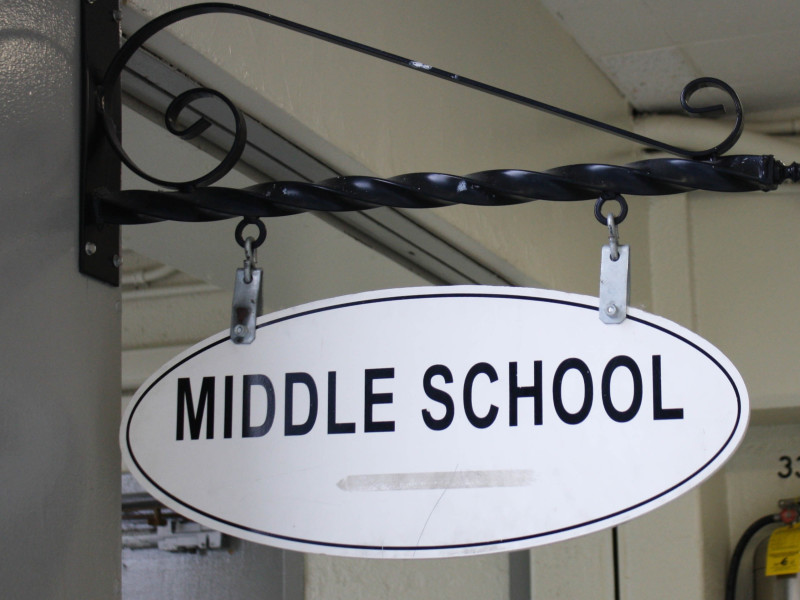
Middle School Muddle: As the wait begins, the mystery mounts

Written by Liz Willen @ 12:55 pm

When the public middle school search began this fall, I was not going to be one of those anxiety ridden parents, whispering rumors and comparing notes and test scores of kids who get in.

After all, we are talking about 10-year-olds here. There is plenty of time to get hysterical about high school admissions and getting into college in the years to come.

My kids attend schools in Manhattan’s District Two, I reasoned, where there are plenty of good choices that parents in other parts of the city only wished they had. My older son survived the process two years ago, got accepted into his first choice and is (mostly) thriving in his middle school, as are most of his friends and former elementary school classmates.

I still want to believe everything will work out fine. But now that tours are done and applications in, I see anxiety etched on the faces of 5th-grade parents. Kids are whispering about their tests and interviews and saying things like, “I’m sure I didn’t make it.”

Some of us will have to explain to our kids why, if they didn’t get their first choice but their friends did, it they should not be unhappy or feel rejected.

We won’t be able to say exactly why, though, because we’re all a bit confused. The middle school process started later this year than it did in the past, and while many of us have posed questions to principals, staff at our elementary schools and parent coordinators on tours, we haven’t always received clear answers.

We’ve all been told many different things, some with a warning that all is subject to continuing changes in the middle school process from the Department of Education.

Parental chatter on tours and at tests makes for more confusion. For example, several parents told me they listed their child’s first choice school as SECOND on the middle school application, believing they’d have a better chance in the second round.

Some other unanswered questions:

  • How seriously do middle schools really take the fourth grade tests? Can your child simply not get into certain schools if they didn’t score a four on both the ELA and the math? Is there really an absolute cut-off? It seems to vary from school to school. Should you not even apply to certain middle schools even if you really liked them because of lower test scores?
  • Do schools really have time to look at report cards? If the report cards have just checks and no grades, how will these schools know anything about my child?
  • Will middle school officials really have the time to evaluate hordes of first choice candidates, in addition to getting through an already packed day and taking care of the kids already in their charge?
  • If they give a test, how much does it count?
  • Will my child be interviewed and tested more than once? At first we were told they would be only be tested and/or interviewed at their first choice. Then we were told they’d go to both. Then we were told they’d only get a call from school two or three if the child did not get into school one.
  • Will my 10-year-old be assigned a numerical rating, and get accepted or rejected on that basis?
  • Should we prepare a portfolio? Letters of recommendation?
  • If we don’t get our first choice, do we have much of a chance on appeal?

Understandably, selecting an entering class is tough on popular schools that are overwhelmed with first choice applicants.

Parents for the most part truly appreciate the unique offerings and the opportunity to choose the best school for our children. We know it’s time consuming for everyone involved.

A bit more clarity would make this easier for all.

Read all of Liz Willen’s Middle School Muddle

Brooklyn high schools taken over briefly by gun, knife last week

Written by Admin @ 7:44 am

Last week was a scary one for two Brooklyn high schools.

On Thursday, John Dewey High School was locked down for three hours after a student dropped his gun in class, then picked it up and fled. Dewey doesn’t have permanent metal detectors, although the roving detectors recently made an appearance. An insightful student wrote on the Times’ City Room blog, “First they manage to take all of our phones away but when someone brings a gun to school they cant find it.” Check out the comments there: students are mixed on whether they would like to see metal detectors installed, but there doesn’t appear to be any division on the subject of whether Dewey has grown less safe and why. The reason for the decline, commenters say, is an influx of students from Lafayette High School, which is phasing out due to poor performance.

Paul Robeson High School in Brooklyn does have metal detectors, but that didn’t stop a student from being stabbed during a fight there on Friday; this weekend, he was in critical condition and his attacker had not been arrested. Officials say the attacker may have used scissors as a weapon, but students say the school has so many doors it’s possible to sneak illicit items inside.

March 28, 2008

What’s going on with the Discovery Program?

Written by Admin @ 6:49 am

For many years, the city’s specialized high schools have operated a summer program for disadvantaged students who score close to their admissions cutoff on the Specialized High School Admission Test. Successfully completing the program earns those students admission to the city’s most selective schools — and helps keep those schools socioeconomically diverse.

State law allows the schools to operate such a program but does not require them to. And so although this year’s specialized high school directory promoted the program, called the Discovery Program, we’re hearing rumors that most specialized schools could be axing the program this year. We’ve heard that only two schools, Brooklyn Tech and Brooklyn Latin, are contemplating accepting students through the Discovery Program.

But we can’t figure out who in the DOE can verify — or quell — the rumor. We can’t seem to find out the details of why this change is happening, and we don’t know whether any students have been invited to apply. Does anyone have any information about the 2008 Discovery Program? Let us know in the comments.

March 27, 2008

At PS 154, an environmentally sound switch in the cafeteria

Written by Admin @ 7:47 am

For the last year, parents at PS 154 in Windsor Terrace, Brooklyn, have been looking for ways to replace the styrofoam trays in their cafeteria with something more environmentally sound — something that takes less than 10,000 years to degrade. This week, they finally rolled out their solution: trays formed out of bagasse, a fibrous byproduct of sugar extraction. The new trays are designed to break down after 45 days in landfill conditions — but I hope parents at PS 154 know that won’t happen if the trays are shipped off to landfills in plastic bags. And it looks like the PS 154 parents may be at the vanguard of a food service revolution in New York City — Bill de Blasio, the City Council member who represents PS 154, has sponsored a bill to ban the use of styrofoam by city agencies!

March 25, 2008

Student Thought: Massive

Written by Admin @ 7:07 am

That’s probably the only word I can use to describe last week’s protest: Massive.

Students, teachers, parents and administrators lined Broadway right next door to City Hall and the DOE, temporarily creating a new branch of our education system, one that was based on the needs and concerns of the real constituents of our community instead of the impractical ideas of the Klein-Bloomberg complex.

We called for a restoration of the city’s education budget, with signs reading, “Don’t Cut the Future Out of Your Budget!”, “Budget Cuts are Nuts,” and “It’s our Budget, Don’t Fudge it!

We called for a refocusing of our educational priorities: a shift from tests and worksheets, consultants and computer systems to project-based learning and a rebuilding of the relationships between teachers and students around our city.

Most of all, we called for respect.

We brought out the numbers, guys! Take heed!

In my time as a student activist, I have never seen so many students up in arms, taking to the streets. The NYC Student Union alone brought out over 500 students, thanks to the online organizing of freshman Rebecca Morofsky of Brooklyn (special shout out to her for a great job).

Students realize the direct impact these cuts are making on our schools and on our lives. We feel the powerful disrespect when the government fails to recognize that the future is at stake here. We have spoken.

Cross-posted at NYC Students Blog

March 24, 2008

Gov. Paterson’s son, a public school student, is Beacon-bound this fall

Written by Admin @ 7:33 am

You’d think Post education reporter Yoav Gonen would know better. Last week, Gov. Paterson announced that his son, an MS 54 8th grader, will attend Beacon High School this fall. This weekend, the Post accused the selective Upper West Side school of giving special attention to Governor Paterson’s son in the admissions process, noting that “acceptance letters haven’t been mailed out yet — and student-school matches haven’t even been made.”

But 5,391 students have found out where they’ve been accepted — the 5,391 students whose scores on the specialized high school exam earned them spots in one of the city’s seven specialized schools. In February, those students got to find out which non-specialized school was offering them a seat as well. If Governor Paterson’s son wasn’t among these students, then Gonen is right to suggest that he got special treatment in the admissions process. But most students at Alex Paterson’s middle school do take the test, and many of them head on to Beacon, where Alex’s older sister went. If Alex learned of his admission through normal channels in February, that would make Governor Paterson’s disclosure not a “leak,” as the Post claims it is, but a sigh of relief from a proud parent who has made it through a second bout of high school admissions.

The rest of the city’s 8th graders will find out where they’ve been accepted sometime late this week.

March 19, 2008

Thousands turn out for Keep the Promises rally

Written by Admin @ 7:20 pm

Thousands of people braved the cold rain today to rally against the budget cuts outside City Hall. Tomorrow we’ll all have pneumonia but today we can relish the thought of parents, students, teachers, and principals united to call for sustained support for the city’s schools and their children. I didn’t pay much attention to the various firebrand speakers — with their presence and creative signs, members of the crowd made the strongest statements.(All photos Philissa Cramer/Insideschools)

TODAY (3/19): Rally against the budget cuts

Written by Admin @ 2:26 pm

I’m about to head down to City Hall for a briefing on next year’s school budget and then to the Keep the Promises rally against the budget cuts. There’s been so much information floating around in the last few weeks, not to mention the leadership shakeup in Albany, that it’s hard to know what’s really going on with the budget. But as each day brings more bad news about the economy, we can assume the school funding picture won’t be ideal. I’ll blog later on whether parents, teachers, students, and advocates turned out in the gloomy March weather for the long-planned mass rally — but I hope they do. You still have time to make it to the rally, which starts at 4 p.m.

March 18, 2008

Middle School Muddle: An outsized outrage — will middle schools become the land of the giants?

Written by Liz Willen @ 12:49 pm

The city’s new social promotion policy scares me. I keep imagining corridors filled with giant sneakers and puny 6th graders bumping into their bearded, muscular classmates who are repeating 8th grade.

It brings me back to our first tour of a middle school two years ago, when my then 5th grader had a funny reaction to the size of kids lurking in hallways.

“Mom,” he whispered urgently. “I can’t possibly go to this school. These are Middle School Giants!”

It happened that the 8th grade boys who spoke on that day’s tour were particularly huge. Their voices had lost the high-pitched, pre-adolescent cadence. It seemed pretty intimidating.

But just imagine what middle schools are soon going to look like by the time my 5th grader graduates and the new social promotion policy takes hold. (Assuming he never bombs a major class or standardized test and gets left back, that is.) I predict huge improvements in the basketball teams.

The policy approved 11-1 by Mayor Bloomberg’s rubber stamp education board ensures that untold numbers of 8th graders are going to repeat the grade. The panel’s 11-1 vote came on Monday night as angry parents and protesters shouted “Shame on You,” according to the New York Daily News.

In support of his new policy, Chancellor Joel Klein says it makes no sense to send students “wholly unprepared into a high school environment,” and he’s right.

But it also makes no sense to turn middle schools into the Land of the Giants.

What about focusing our energies on helping struggling kids long before they face a fourth middle school year?

PEP approves 8th grade promotion plan almost unanimously

Written by Admin @ 8:26 am

At the Panel for Educational Policy last night, parents from the Coalition for Educational Justice did raise such a fight against the DOE’s 8th grade promotion policy that the rest of the agenda had to be jettisoned. But as we all predicted, their protest had no affect. Even one of the two panel members who had threatened to vote against the policy found religion just before the meeting and voted to approve it instead. Apparently only Patrick Sullivan, the Manhattan borough president’s representative on the panel, is ever allowed to vote “no.” Would having its policies approved by a vote of 10-2 instead of 11-1 really undermine the DOE so much?

March 17, 2008

TODAY (3/17): PEP votes on 8th grade promotion policy

Written by Admin @ 11:39 am

At 6 p.m. today, the Panel for Educational Policy will convene at Tweed to vote on the chancellor’s proposed 8th grade promotion policy. Unlike many recent DOE policies, this one has met some real resistance on the path toward finalization.

The Sun reports that both the Manhattan and Bronx borough presidents have advised their appointees that they do not support the proposed policy. Last week, members of the Coalition for Educational Justice “stormed” Tweed and demanded to talk to Chancellor Klein about the policy, the Daily News reported, and I predict CEJ members, who vocally opposed the policy at the first public hearing in Manhattan last month, will keep tonight’s meeting lively.

None of this opposition is likely to prevent the policy from being approved, of course. Panelists are sure to be mindful of the “Monday Night Massacre,” which took place four years ago today when the panel was considering the 3rd grade retention policy. When it looked like three members of the panel planned to oppose the policy, the mayor and Staten Island borough president replaced them just before the vote. NYC Public School Parents Blog has more on the lessons (not) learned since that night. Since then, the PEP has never even threatened to reject a proposed DOE policy.

Queens school trashes crisp new books

Written by Admin @ 7:42 am

Maybe administrators didn’t get the memo about there not being any money to buy new books. Or maybe kids these days don’t want to read young adult classics like Kidnapped or Sarah, Plain and Tall. Or perhaps the bureaucracy involved in selling unused books back to the DOE is too onerous for overtaxed school officials to tackle. But whatever reason officials at IS 73 in Queens had for tossing new books into a dumpster, I can’t imagine it’s very good.

March 16, 2008

Jake G. dishes on life in the 2nd grade

Written by Admin @ 9:21 pm

Last week, I took advantage of the elementary school half day to sit down with Jake G., a 2nd grader and member of the Insideschools family. Jake leveled with me on what it’s like to go to Lower Lab, why having a computer means more responsibility for him, and how parents can keep their 7 year olds happy at the end of a long school day.

Q. What’s your typical day like? What time do you get up?
A. I would need to get up at 7:30 a.m. to get to school, but I usually get up at about 6:20 so I can hang out with my dad, who leaves at 7. When I get to school, we go to the auditorium. Sometimes there will be an announcement. Then we get picked up by our teachers, and we start off with a morning meeting.

Q. Do you have a class news broadcast?
A: We do have a class newspaper. It comes out every six weeks. Last time I was going to do a jokes column. This time I am doing a math corner. The math problem is easy, but the idea is hard, so it takes a long time to figure out that it’s easy.

Q. What’s your favorite thing about your school?
A. My school’s a pretty good school. The only thing it has to work on is actually getting good stuff to bring the two schools together [Ed. note: Lower Lab and PS 198 share a building] … They have lots of ideas, but a lot of them aren’t that good. It might be a little hard — the cafeteria might not be big enough — but we could have lunch together or recess together. That’s what I would change. I do have a couple of friends who go to PS 198, from my karate class.

Q. What’s your favorite subject?
A. My favorite type of book would probably be fiction. It’s a little bit hard for me to get new books, so I read the same books over and over. And there’s a graphic novel series I like, called “Bone.” And I like Mad Libs.

Q. What do you do at recess?
A. I usually play a made-up game, but I also like kickball. I’m a pretty good pitcher.

Q. How much time do you spend on homework?
A. I usually have three pieces of homework, so it takes me maybe 30-45 minutes. I also have a hamster to take care of, named Sparky. And having my own computer is actually a responsibility too. I like to play Webkinz but I only use it for people I know, like kids in my class.

Q. What are you looking forward to in 3rd grade?
A. Learning how to write in script. I’m pretty sure it’s going to happen in 3rd grade, but I’m not sure. But a lot of people use script.

Q. What advice to you have for kids who are nervous about going to 2nd grade?
A. A lot of times kids get hungry after school. Kindergarteners and 1st graders get a snack, but not in 2nd grade. The good news is that my dad always gets me a snack, usually a Clif Bar. My favorite food is sushi.

March 13, 2008

Some teachers getting free military training

Written by Admin @ 9:09 pm

We already know that military recruitment goes “unchecked” at many high schools around the city and that the DOE says it prefers schools to have freedom from regulations than freedom from military incursions. But did you know that the Marines routinely fly teachers, counselors, and parent coordinators — those they consider “influencers” over high school students’ decisions whether to enlist — to South Carolina to “see how we make Marines“? The Daily News recently reported that when the parent coordinator from W.E.B. DuBois High School came back from her trip to Parris Island, she said, “They had a belief in what they were doing. … It changed my mind about the whole thing. It was real.” Donna Lieberman of the New York Civil Liberties Union, which spearheaded the report about excessive military recruiting in NYC schools, told the Daily News that teachers were getting “a sugar-coated experience that is designed to turn teachers into cheerleaders for the Marines.” With teachers as cheerleaders, who needs recruiters?

What does the governor’s resignation mean for our schools?

Written by Admin @ 12:37 pm

As the excitement of Governor Spitzer’s resignation wanes and the state prepares for next week’s leadership change, we can start to think about the practical implications of the leadership shakeup upon the city’s schools. Upon taking office in January 2007, Spitzer promised to equalize funding disparities statewide in accordance with the Campaign for Fiscal Equity lawsuit, and last April, the state legislature approved the budget he proposed, which included a $7 billion increase in school aid over five years, of which $5.4 billion would go to New York City. Recently, citing budget woes, Spitzer delayed the payment schedule, reducing the amount of money going to the schools next year.

Now, his departure could complicate the battle to win back state and city school funding — or at least change its tone. Parents and advocates are planning to take to the steps of City Hall next Wednesday to demand that the mayor and governor restore the funding they promised to the city’s schools — but the governor who made the promise now will not be the same one who must decide whether to keep it.

Instead, that decision will fall to David Paterson, who will become governor on Monday afternoon, so it’s good news that Paterson has supported the Campaign for Fiscal Equity since his Harlem state senator days. In addition to supporting equitable school funding, Paterson also has a reputation for championing the rights of the physically disabled; he has been legally blind since childhood. And charter advocates who were thrilled by Spitzer’s lifting of the cap on charter schools will be pleased to note that Paterson is a fan of school choice.

March 12, 2008

Student Thought: On the weighted Regents pass rate and everything it stands for

Written by Admin @ 10:49 pm

Plainly stated, the Weighted Regents Pass Rate sucks. For those of you who don’t know, the Weighted Regents Pass Rate is an assessment of a school’s performance based on students’ Regents test scores, and it’s one component that makes up a high school’s progress report grade.

As you can probably guess, the Regents pass rate part stands for: What percentage of students pass their Regents exams? I guess that one’s okay. If you’re being taught well in a course, you would likely be able to pass that Regents test (except for Math B, I know many kids who’ve scored in the top 5 percent on the SAT and have had to take Math B two or even three times).

But the “weighted” part gets tricky.

See, because of that little weighted part schools are given extra points for getting kids to take their Regents early or to achieve “mastery” by scoring an 85 percent or above. This little, tiny, eensy-weensy “weighted” part now puts the whole test prep culture that is so darn prevalent in our schools on STEROIDS. It is now become the SUPER DUPER AWESOME PUMPED UP EXCELLENT-TASTIC TEST PREP CULTURE.

And because of that SUPER DUPER AWESOME PUMPED UP EXCELLENT-TASTIC TEST PREP CULTURE a lot of students’ lives get kind of messed up.

I have a friend who passed her Math B Regents exam in 8th grade based on the rock solid, well-oiled test prep curriculum at her middle school. She then came to high school, got dumped into precalculus, didn’t know any of the material, struggled and even failed her first two years of math. She eventually had to be put in classes that were prerequisites for a test she’d already passed. This made her look kind of bad on her college applications and messed with her self-esteem.

So, while the school got points for having a student take the Math B so early, the student suffered.

In my discussions with the DOE regarding the NYC Student Union’s positions regarding the progress reports, I have consistently argued that the Weighted Regents Pass Rate needs to be cut down or removed. The DOE’s reply has been that it is the only measure of “longitudinal growth.”

Regents aren’t supposed to measure any “longitudinal growth.” This growth DOE officials speak of has more to do with the day’s weather, test-taking skills, and student anxiety than it does with the quality of teaching and learning that goes on in the school.

Regents are there to make sure that teachers are teaching their students and students are attempting to learn the subject matter at hand, to hold standards. That’s it. When it comes to measuring a school’s success, a simple Regents Pass Rate will do.

Cross-posted at NYC Students Blog

March 11, 2008

Is there any lobbying happening in Albany today?

Written by Admin @ 12:05 pm

Today the Chancellor’s Parent Advisory Committee and other parent groups are up in Albany lobbying on behalf of the city’s schools. But something tells me lawmakers have other things on their mind besides the plight of New York City’s public schools.

Most elementary schools not meeting state gym requirements

Written by Admin @ 9:06 am

In the last few years, the city’s schools have gotten better about identifying overweight students and suggesting more activity for them, but physical education still gets short shrift at most schools, according to the Gotham Gazette. The DOE’s Office of Fitness and Physical Education implemented a fitness test, called the FitnessGRAM, to give students and their parents more information about their fitness level. But because of the pressure to focus on tested subjects and space and staffing constraints, most elementary schools continue to offer far less than the state-mandated 120 minutes per week of physical activity, instead suggesting to parents ways to help their kids be active and eat healthfully at home. I wonder how many families are able to respond to the FitnessGRAM results the way the DOE expects them to. And even if every parent of an overweight child changes his or her habits because of the test results, should we let schools pass off state-required health and fitness instruction to students’ homes?

March 10, 2008

The Money Mom: City budget restoration could reap double benefits

Written by Admin @ 4:45 pm

At a recent Legislative Breakfast in District 3, a member of the state legislature explained that the city’s representatives in Albany face challenges as they seek to restore education money to the state budget because of Mayor Bloomberg’s cuts to the city’s education budget. The money in question at the moment is $193 million in education funding increases promised for next school year by Governor Eliot Spitzer as part of the settlement of the long-running Campaign for Fiscal Equity legal case.

Education funding comes from both city and state. Because of the way the city budget works, it was possible in the past for the city to use state education funding to close city budget gaps and not pass the education dollars on to schools. State legislators have tried to ensure that if they increase state education funds, the city will maintain its part of the funding; this is called “maintenance of effort.”

State legislators from other parts of New York may well ask why they should vote to restore funds for New York City schools when the mayor, far from showing “maintenance of effort,” is slashing hundreds of millions from the city’s education contribution.

What should parents do? Keep up pressure on Mayor Bloomberg to restore the $340 million he plans to slash from next year’s school budget. If pressure on the mayor is successful, our schools may reap a double bonus: restoration of state funds as well.

Defenders of large high schools raising their voices

Written by Admin @ 8:51 am

As the mayoral control forums have heralded in an open season against the last five years of New York City school reform, I’ve heard a growing defense of large high schools. Last week at a New School event, Merryl Tisch called on the DOE to “revitalize the concept of large high schools,” noting equity issues in the assignment of students to small schools; increased curricular and extracurricular options generated by a larger student body; and increased bureaucracy of having 1,500 principals citywide. Now, in today’s Post, we see the smiling principal of 4,500-student Francis Lewis High School, where despite the problems caused by overcrowding, students are successful and happy. It’s useful to know that some students prefer having “something for everyone” over small class sizes — although that’s a choice students and schools shouldn’t have to make.

March 7, 2008

New report bears bad news about arts education

Written by Admin @ 8:44 am

Yesterday the DOE released its long-awaited “Annual Arts and Schools Report” (pdf), an optional survey completed by 1,079 principals about their arts offerings in the 2006-2007 school year. The DOE says the report is important because it ushers in a new era of detailed reporting on arts education data, but the real story is that few elementary or middle school students get the bare minimum arts education required by the state. The New York Times, unlike the Sun, got the story right: Only 4 percent of elementary schools have the resources to provide the range and depth of arts instruction the state requires, and the vast majority of middle schoolers — 71 percent — receive less than the state-mandated two half-unit arts courses in the 7th and 8th grades.

The city is “not providing a well-education” to its children, said Richard Kessler, the director of the Center for Arts Education, which is ramping up its role as an advocate for arts education. He told me the city’s anemic arts education has a lot to do with the inexperience of many new principals, who have never been taught the importance of the arts and whose own educational experiences likely lacked quality arts programming as well. Giving the arts and other marginalized subjects the role they ought to occupy will require “major in-service and pre-service” training for principals, Kessler said, but the DOE’s plans, outlined in the report, represent only “tinkering around the margins” of existing programs.

Kessler was a member of the DOE’s arts education task force, convened last summer when ArtsCount was announced in part to address criticism that the elimination of special Project Arts funds would lead principals to reallocate funds from the arts to other subjects. Ultimately, it sounds like the task force played a minimal role in creating the report or recommending its outcomes. The DOE also appears to have backed away from a major goal it outlined last summer: to use the arts data to hold principals and schools accountable for meeting state requirements in the arts and to make the school-by-school arts data transparent and accessible so parents can use the level of arts programming as a factor in choosing a school. The level of deficiency in elementary and middle school arts offerings indicates that principals can’t justifiably be held accountable for a nearly systemic failure.

The report’s “next steps” section includes news that the DOE will make lesson plans and standards-aligned curriculums available to teachers and that efforts are underway to make principals “better consumers” of existing arts resources. But with deep budget cuts looming and math and reading test scores continuing to make up 85 percent of schools’ grades, what resources and incentives do principals have to spend their limited funds and time on the arts?

March 5, 2008

More budget cuts looming, for schools and the rest of the city

Written by Admin @ 5:39 pm

More bad budget news — and this time, it’s not just for schools. The mayor announced yesterday that all city agencies will have to trim an additional 3 percent from their budgets next year because of decreased state aid.

It’s not clear whether the cuts will actually happen — the Times suggests that the mayor’s announcement yesterday may have been a gambit to pressure Governor Spitzer into finding more money for the city — but if they do, they will be catastrophic for schools, despite the mayor’s insistence (again yesterday!) that “you can always make do with less.” Last month, when the mayor cut 1.75 percent of schools’ budgets (and announced a cut of 5 percent for next year), Insideschools heard from dozens of principals that they were cutting tutoring, after school, and enrichment programs, as well as funds for supplies and professional development. An 8 percent total cut for next year would be severe.

March 4, 2008

City Council hearing offers hints of mayoral control reforms to come

Written by Admin @ 11:55 pm

Since the discussion of mayoral control has been heating up for a little while already, I was hoping at yesterday’s City Council hearing on the subject to hear some concrete recommendations for how the city’s school governance structure should be improved. But much of the morning session at least was spent conflating the issue of mayoral control with the myriad issues many parents, teachers, and advocates have had with the control exercised by Mayor Bloomberg. Education Committee Chair Robert Jackson repeatedly had to ask his colleagues to stay on task as they questioned Chancellor Klein on subjects as far-ranging as testing, the cell phone ban, and the progress reports.

Still, as council members discussed their frustrations with the current education administration, they also gave some hints about what the council’s working group on mayoral control will recommend to lawmakers in Albany. It was clear from the council’s questions that reverting to the old system of local school board control isn’t a real possibility in 2009. Instead, and in keeping with its grievances of the last five years, the council appears to be seeking public — and more specifically, parental — checks on the mayor’s power over education. Jackson said the group would likely recommend that the Community Education Councils, currently powerless, be given a formal, significant role in approving DOE decisions. David Yassky, one of the chairs of the council’s working group, suggested that the CECs take on a role in the budget process similar to that which community boards play in the municipal budget progress.

And Jimmy Vacca, the third working group chair along with Jackson and Yassky, asked Chancellor Klein and Deputy Mayor Walcott what they thought about the creation of an independent research body being created to authenticate DOE data. “Having independent analysis is always a good thing,” Klein said, noting that the DOE is in the process of setting up such a group right now. Later in the day, David Bloomfield suggested that the city’s Independent Budget Office might be an appropriate home for the independent analysts, since that office is already “a reliable source of objective, professional budget analysis.”

The Money Mom: Children design charity fundraiser

Written by Admin @ 12:31 pm

Recently I served as a judge on a panel considering the proposals of 5th graders for a fundraiser at their school. These kids combined a statistics and economics lesson with a writing assignment — all for the purpose of raising money for charity.

The children surveyed schoolmates about what kind of fundraisers the community would prefer, analyzed the survey results, and then wrote persuasive essays, backed up by data, about why their proposal should be the one accepted over all the others. Options included a movie night, sports field day, a stuffed animal sale, and other things along those lines. The proposals were rendered anonymous by whiting out the authors’ names, and the panel of judges included parents, teachers, as well as kids from another class.

Later in the spring the kids will actually carry out the winning fundraiser and donate the proceeds to a charitable cause shown by the survey data to be one that the kids in the school care about a lot. Right now polar bears and global warming are the front-running causes. What a great piece of curriculum!

Teaching boys and girls separately in NYC and beyond

Written by Admin @ 8:23 am

The internet’s abuzz with talk of this week’s New York Times Magazine’s cover story, “Teaching Boys and Girls Separately.” The article describes a growth in single-sex education nationally, fueled by two sets of proponents of single-sex education: neuro(pseudo)scientists, who believe hard-wired differences in the way boys and girls learn make sex-segregated classrooms necessary; and those who want to empower boys and girls to succeed despite societal pressures that inhibit their success.

Those who believe in single-sex education because of its purported biological advantages are more plentiful, at least according to themselves, but in New York City, it’s the second set of single-sex advocates who have opened schools. The Young Women’s Leadership School and its three clones and Excellence Charter School, both of which appeared in the article, offer high academic standards and supportive environments. The tone of the schools may be aided by the lack of gender diversity, but those schools’ success “has at least as much to do with their rigorous academic approach, commitment to high-quality teaching, and shared culture of excellence as it has to do with the fact that they’re single sex,” writes Sara Mead of the Early Ed Watch Blog.

(The city has several other single-sex schools, including Urban Assembly’s all-girls math and science, business, and criminal justice schools for girls and history and citizenship school for boys; the Academy for Business and Community Development, an all-boys school that is adding a high school this fall; and Eagle Academy for Young Men, a successful high school that will see its first clone open in September. I’ve also visited a few schools that have single-sex periods during the day, often for math and science classes.)

Should public schools segregate kids by gender? The article makes it clear that despite proponents’ claims, there isn’t any biological justification for teaching kids separately and differently. And as Dana Goldstein at The American Prospect writes, the neuroscience approach smacks of “stereotyping, heteronormativity, and misogyny.”

But I also agree with Alexander Russo’s tentative claim that that single-sex education “could do some good” and Insideschools blogger Seth’s opinion that some children might feel more comfortable in a single-sex setting. As Sara Mead points out, research has shown that girls can benefit when they have math and science instruction to themselves. And when issues of sexuality and gender identity come up at school, it can be safer for kids to discuss them in a single-sex environment, as in the AP English class at TYWLS the article describes. I’ve been to a number of schools lately that have single-sex advisories for that purpose. But shouldn’t schools also teach young adults how to interact courteously and appropriately with their peers of the opposite gender, even when sex or sexuality is the topic of conversation? That’s an important lesson that single-sex schools are incapable of offering.

March 3, 2008

Responding to criticism, DOE tweaking progress reports and formulas

Written by Admin @ 8:54 am

Could it be? The DOE appears to be responding to its critics!

The DOE informed principals last week that it will be altering the controversial progress reports before new grades are released next year, and many of the changes reflect suggestions made by parents, school leaders, and even City Council members who thought the single grades were reductive, counterproductive, and often wrong. As Elizabeth Green notes in the Sun, the grades aren’t going anywhere, and they’ll still be based on test scores, but they could be gentler and easier to understand.

In the future, the DOE has proposed, schools will not be penalized if their top-scoring students receive the highest score on state tests two years in a row; schools whose special education students take standardized tests will get credit, no matter those students’ scores; and the “peer groups” against which schools are measured will reformed according to test scores, not demographic data. And schools might get separate grades for environment, student achievement, and student progress, instead of just the one grade they received last year (the composite grade will continue to be issued as well). Read about the full set of changes proposed at eduwonkette, who posted the full memo principals received.

I’ll believe all the changes when I see them, but it sounds like the DOE is on the right track. As I said last fall, there’s useful information in the progress reports, and I think structuring the reports in a way that allows schools and parents to access that information will pay off for the DOE and for kids. (Removing the high stakes attached to the grades would also be good for schools and kids.) Just think about what could have happened last year if the DOE had listened to community input before releasing the problematic progress reports!

Powered by WordPress