August 29, 2008

Weekly news round-up: unmasking, more testing, and playing hooky

Written by Lindsey Whitton Christ @ 4:59 pm
   

Talk of testing dominated the news this week. Whether it was the mayor’s new plan to test kindergarten, first, and second grade students or the results of the SAT exam, the testing debates continued to take up ink. New York students’ comparatively poor performance on the SAT prompted both the Post and the Sun to question the validity of rising state test results. NPR had a different angle on the story - they featured a public school that churned out students with perfect SAT scores. Some New York teachers, meanwhile, are about to benefit from the higher state test scores when they receive their first bonuses, and certain teachers are going to be paid more than others.

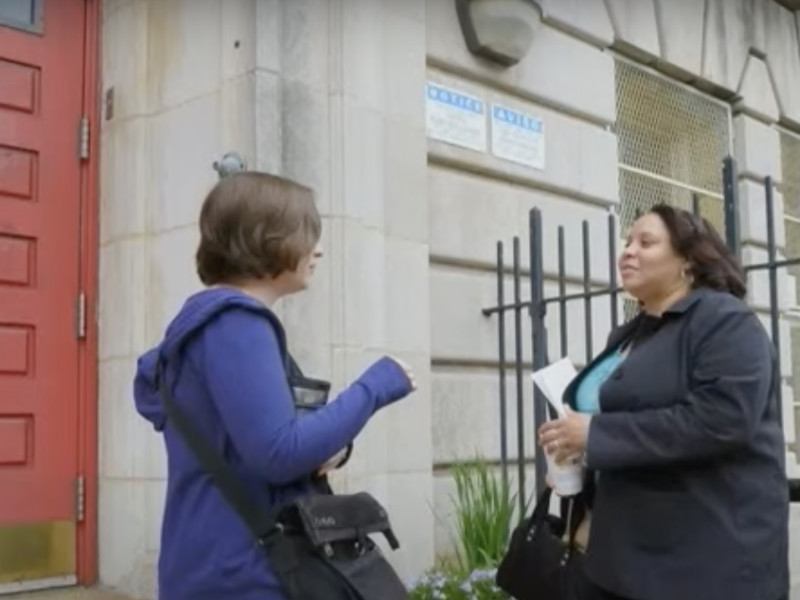
While many kindergarteners in New York will start taking tests, the Times reports that the decade-old promise of universal pre-k is far from being realized. Education may be falling off the docket in general, warns the head of the Harvard Graduate School of Education. Our chancellor, however, is keeping education in the local news, and this week, he talked to some budding young reporters.

Once-anonymous education blogger Eduwonkette unveiled herself dramatically, via a profile in New York Magazine. But a whole different kind of concealment is happening in a small Texas town, where teachers came to school this year with concealed guns. And the whistle-blowing Post exposed illegal activity and ethics violations all over the school system .

Low performing middle schools will get another burst of attention and funds after last year’s influx of cash seemed to boost test scores in the most of the targeted schools. Cash has also been spent on 18 new school buildings opening next week, although the Mayor says he’s lowered construction costs. And 10 city elementary schools are going to try out the Core Knowledge literacy curriculum - a content-based program that represents a departure from Bloomberg’s Balanced Literacy program.

It’s Friday, which, according to way too many city students, is apparently the day of the week to play hooky! Most of the little truants probably don’t have parents who are as on-top of their education as these parents claim to be. Involved parents or not, every student could benefit from a better physical education program, read more the Riverdale Press.

Enjoy the long weekend and don’t forget to pack backpacks and sharpen pencils, it’s almost school time.

August 28, 2008

Weingarten shocked (shocked!) at tyke testing

Written by Helen @ 11:22 am
   

AFT and UFT president Randi Weingarten issued a strong denunciation of yesterday’s K-2 standardized testing proposal, saying (in part) “There’s a right place and a wrong place for testing, and this is the wrong place. Testing children at such an early age is bad practice and developmentally unsound. It puts academic pressure on children…[and] the potential exists for school administrators to use it to track students. It’s the wrong way to go in terms of evaluating students.”

Weingarten’s point on development is legitimate: A child of four has different abilities than a child of five — and kids entering kindergarten can be as much as 11 months apart in age, provided they share a birth year. But her protests of inappropriateness ring hollow, according to DOE chief spokesman, David Cantor. A SUNY/ Charter School Institute report on the UFT’s own charter elementary school, which enrolls students in kindergarten to second grade, says “the school administers a combination of standardized, diagnostic and interim assessments as well as unit tests” to its very young students, to assess progress and group children in classes — which sounds more than a little akin to the same tracking Weingarten paints as a negative in her statement.

As the volley of responses continues, parents may wonder if their child’s school has ‘volunteered’ for the pilot testing program. To find out, contact your parent coordinator or school principal; strong parent support or opposition may be pivotal in a school’s decision to test their youngest students — or not.

August 27, 2008

Two tales of testing

Written by Helen @ 11:02 am
   

Progress-report guru James Liebman made front-page news today with an email proposal to bring standardized testing to the kindergarten classroom. These test scores, the DOE says, wouldn’t affect student progress or promotion. Vocal opponents decry the plan (and the late-summer timing), but it seems more than a few schools are interested in participating. It’s important to realize that student progress, as measured by standardized test scores and mandated by No Child Left Behind, is the key to school survival. So whether the planned testing will actually help kids (in terms of shaping instruction) or help schools anticipate testing outcomes is an open question. It’s also important to note that kids in many of the city’s charter schools take tons of tests, many standardized, every week. In some charters, one day of the week is a designated testing day — regular testing is a frequent, accepted school-wide norm.

Buried inside the Times‘ first section, though, is a story on SAT scores that reinforces every progressive educator’s worst fears: Test scores show dramatic, persistent gaps between rich and poor, black and white, and children born to more- and less-educated families — chasms that have long been part of the pre-college testing landscape. With average student scores in the 1500 range (of a total of 2400), gaps of 303-383 points separate the races and the classes. One expert calls the class gap the “Achilles’ heel of the SAT. Kids from higher-income families uniformly do better than those from disadvantaged backgrounds.”

From one education pole to the other — kindergarten to pre-college — testing dominates the conversation. It’s true, our kids will be taking tests for years, until (with good luck and persistence) they’re out of college. But as more tests creep into the academic calendar, it’s worth asking out loud what’s lost when room is made for yet another measurement — and what benefits test-prep confers on the same kids who are advantaged by birth, race, or economic class. (For another take on test-prep, see Jeremy Miller’s chronicle of his a year as a Kaplan tutor in a NYC high school in the September issue of Harper’s.)

August 26, 2008

Family advocates AWOL on Public Advocate survey

Written by Helen @ 12:05 pm
   

Public Advocate Betsy Gotbaum’s office today released survey results on their efforts to reach Family Advocates during the week of August 12 to 15. Guess what? They very nearly struck out, with only about a third of calls answered by actual people, 12 of 32 districts unreachable despite multiple attempts, and a paltry 6 of 63 voicemail messages returned within five business days. The news won’t surprise many parents but may serve as a wake-up call for the Office of Family Engagement and Advocacy, which announced cuts in Family Advocate staffing last month.

Gotbaum’s staffers called all 32 school districts three times — twice during business hours (once in English, once in Spanish) and right after work, between 5 and 6 pm. Of the 96 calls placed, 30 percent yielded an actual human connection. During business hours, a third of calls were answered, as opposed to 3 of the 32 calls placed after 5 pm. Calls in Spanish (32) were answered in 12 instances — but only 7 resulted in substantive, Spanish-language conversations. Granted, mid-August is the deadest of doldrums in New York City, but the DOE was and is still placing students in schools, registering new arrivals, and working in advance of the new school year. Parents have questions year-round; their calls, in any language, shouldn’t go unanswered.

New Yorkers can call the Public Advocate’s schools hotline (212 669-7250) for help with logistics, transportation, and registration information and have a look at Insideschools’ Parent Resources for details on schools, registration, navigating the system and more.

August 25, 2008

DOE Kindergarten pilot: Phonics + content = reading

Written by Helen @ 4:13 pm
   

Chancellor Joel Klein has announced a new pilot program in 10 high-need grade schools to improve reading education, based on E.D. Hirsch’s Core Knowledge curriculum (for reference, see his popular 1988 manifesto, Cultural Literacy, and the series of parent-focused education books that followed).

The K-2 program integrates phonics and content (no stranger to many early-grade classrooms), with an emphasis on nonfiction and classical sources, like mythology, as well as fiction. Reading gains for students in the pilot program will be compared with students in ‘control’ groups, who will participate in the current DOE reading curriculum.

Education academics and in-the-trenches teachers have long criticized the de-emphasis of phonics in kindergarten and first-grade classrooms. In fact, many teachers routinely include phonics instruction, especially in classes with large numbers of students who are learning English, in addition to the mandated DOE reading curriculum.

Private funds have been raised to pay for the program, which will cost $2.4 million. New York is one of eight cities nationwide to use its classrooms as test labs for the program, which is designed to give students a foundation of knowledge along with reading mechanics and eventual proficiency. Other sites include a mix of rural and urban schools (with mixed academic needs) in Georgia, Florida, Indiana, Oklahoma, and the South Shore Charter Public School in Hull, Mass., where Dr. Hirsch’s son is the principal.

It’s not known whether parents can opt in or out of the program (or the control groups) or how the 10 high-need New York schools were chosen. All are in the “outer boroughs” — four in Queens, three in the Bronx, two in Brooklyn, and one in Staten Island.

August 22, 2008

Weekly news round-up: charters, asbestos, and incentives

Written by Lindsey Whitton Christ @ 5:53 pm
   

As parents and students begin gearing up for the new school year, the news this week was dominated by the standard – yet colossal and complicated – contemporary education debates, including charter schools, standardized testing, and incentives.

Mayor Bloomberg kicked off the week by announcing that 18 new charter schools would open in the city this fall. The Times opened a Q and A between readers and James D. Merriman IV, the chief executive of the New York City Center for Charter School Excellence. The Sun editorialized in favor of charter schools and private school vouchers. The Daily News wrote about Bay Ridge, Brooklyn parents who oppose a charter school moving into public school buildings.

A Newsday reporter who set out to prove that the Regents exams were easy by taking the U.S. History test unprepared scored a 97 and made his point. Meanwhile, students’ scores on the Advanced Placement tests were released, and the apparently mixed results of pay-for-scores programs vaulted the issue of monetary incentives back into the papers. Employees of the Princeton Review, a high-profile national testing company, made a serious computer error that resulted in 34,000 Florida public school students’ private information available to anyone online.

Several disheartening stories involved special education students: allegations of abuse in one city school, asbestos in another, and concerns over special education bus service for the fall. A disabled teacher sued, claiming his epilepsy cost him his job, and a national story about corporal punishment (legal in schools in 21 states but not New York) found that special education students – as well as minority and low income students – disproportionately felt the paddle.

And a couple of journalists used the end of the summer to ask key questions about the future. What will happen to No Child Left Behind, now that Bush is on his way out and a new president is on his way in? Will mayoral control be renewed by the state legislature, especially since Klein and Bloomberg have largely ignored politicians’ education opinions? And where does Obama really stand on education, as supporters of several different ­– and sometimes competing – initiatives claim to be in alignment with the candidate? Education mysteries abound.

Pre-K spots STILL open, per DOE

Written by Helen @ 5:39 pm
   

The DOE has updated its pre-K registers and says there are half- and full-day spots open at some city schools. Have a look at their updated directory (PDF) to see what’s available; registration begins next Thursday, the 28th, and wraps up on the first day of school.

Some parents have written in to say their kids didn’t get placements or were offered pre-K seats far from their homes. The frustrations are real (and the time before school is short). Here’s hoping that the Pre-K Borough Enrollment staff help resolve open questions (PDF) and that the DOE responds to the outspoken demand for seats in good schools by expanding pre-K opportunities.

Cash for school: The D.C. variation

Written by Helen @ 12:46 pm
   

Looks like Washington, D.C. schools head Michelle Rhee is borrowing another page from her mentor’s playbook; see this story for her proposal, modeled on Klein’s prototype, that students at 14 District middle schools earn up to $200 a month for steady attendance.

That’s some kind of walking-around money for young teens and forces some tough questions: What do we teach kids when we pay them to show up? And where’s the equity in rewarding some students but not others? What of the kids in schools who aren’t getting paid to come to school — do they strike for their ‘due wages’? Badger their parents for allowances that match the city’s incentive pay? The mind boggles.

Last-minute registration info. from the DOE

Written by Helen @ 12:43 pm
   

For students new to the city or returning to city schools after an out-of-school hiatus, the DOE is opening Registration Centers, beginning Monday August 25th. The centers will be open from 8am-3pm, but will be closed on Labor Day. A few caveats:

Registration centers can enroll all new high-school students and elementary and middle-school students without a zoned school. (Go to a registration center in the borough where you reside.) If you have a zoned elementary or middle school (call 311 or visit the DOE for information), register there beginning September 2, the first day of school.

Families of special-needs students who will be in collaborative-team-teaching (CTT), self-contained, or District 75 placements should visit their Borough Enrollment/Committee on Special Education office to register.

In order to register, parents and other guardians must bring proof of residence (see particulars here for what’s required). Also bring your child’s birth certificate (or passport), immunization record, and latest report card or transcript, if one is available. Special needs families are encouraged to bring their child’s IEP and/or 504 Accommodation Program if they’re available.

Registration centers will remain open until September 12th. And along with all the paperwork, don’t forget to bring your child — parents who show up sans students will not be permitted to complete the registration process.

Fewer dangerous city schools

Written by Helen @ 12:32 pm
   

The good news, from the DOE and the State, is that crime in the city’s schools is on the wane: Of 25 city schools described as persistently dangerous by the State last year, 15 were removed from the list in light of improved safety and lower crime. The downside is that 11 city schools remain on the danger list. New York City also added more schools (six) to the state’s list than any other area of the state.

In counterpoint, Comptroller William Thomson asserts that as many as one in five violent/criminal/safety incidents that occur in schools go improperly or incompletely reported. City leaders hope that a proposed amendment to the City Charter will improve school security by directing complaints of police misconduct to the Civilian Complaint Review Board (not the current norm) and requiring regular reporting on school violence to the DOE and NYPD.

In an article today, the Post documents a number of District 75 schools on the state’s list — D 75 schools enroll special need students with the most acute needs. Reports of persistent violence in D 75 schools, where staff ratios are far smaller than mainstream schools, raise difficult questions on all sides. And an AP story from am New York sets New York’s improvements against a national canvas, noting without irony that the other 49 states document a total of 21 persistently dangerous schools compared to New York State’s 19 (although reporting criteria vary from state to state).

Notably, despite pop-media visions of metal-detectors and box-cutter-wielding teens, “persistently dangerous” schools include elementary and middle schools, too. Under the provisions of NCLB, parents can request safety transfers for students enrolled at “dangerous” schools. But time is short before the start of school; those interested in seeking transfers should contact their school this week to explore the process.

Pre-K round ll news

Written by Helen @ 12:27 pm
   

Families who applied for pre-K seats in the second application round should have news by the end of this week; letters went out by mail yesterday afternoon, according to an email from the DOE’s Andy Jacob.

August 20, 2008

Hark, budding Iagos and Hermiones

Written by Helen @ 3:36 pm
   

If your teen’s looking for some last-minute summer culture, contact Mudbone about their Shakespeare workshops at the Public Theater (this week) and in the Bronx (this Sunday, the 24th

Money for high marks

Written by Helen @ 9:20 am
   

In a signature transposition of business practice into the education environment, the Klein administration at the DOE has installed a range of mechanisms to pay people — teachers, principals, and students, at selected schools — for performance. Today’s Times story challenges the merits of a $2 million REACH incentive program (for REwarding ACHievement). Guess what? The results are a mixed bag.

Turns out more high-school students took Advanced Placement exams, which can earn college credit for high-scoring students. Fewer students passed, but a fraction more scored at the highest level, 5.

Promoters beg more time to show stronger results; critics say there are better ways to spend that kind of (private) money, despite similar programs’ rising popularity in schools nationwide. And you can bet that man-about-town Joel Klein will face sharp questions on the program in his three public appearances today, at a REACH briefing, an NAACP event in Brooklyn and a Teach for America welcome-teachers evening program. But a quote at the end of the story caught our eye: Kati Haycock, director of the DC-based Education Trust, says that “rich kids get paid for high grades all the time and for high test scores by their parents.”

Do you pay your kids for good grades? Do you reward effort (trying hard) or outcomes (the grade itself)? And what’s the line between motivation and bribe — between incentive and payoff? We don’t think parents have deep pockets for report-card shakedowns, but we could be wrong…

August 19, 2008

Charter chatter, Q & As

Written by Helen @ 11:16 am
   

Citing competition as the key to success, Mayor Bloomberg says that pressure from charter schools force traditional public schools to improve. But advocates like Leonie Haimson of Class Size Matters beg to differ: the small classes that are the charter norm are all too elusive in mainstream public education, despite long-fought battles. And one has to ask a question that’s tough to ask aloud: Are middle-class parents fighting as hard for access to charters as families in neighborhoods long poorly served by city schools?

Maybe that’s one of the questions that will be answered on the New York Times Charter School Q&A thread. And for families of high-school students and rising eighth-graders, who will be facing the high-school selection process this year, the DOE is hosting a Q&A with Evaristo Jimenez, head of high school enrollment.

As one commenter implored yesterday, speak up! If parents don’t ask the hard questions to advance their child’s education, who will?

August 18, 2008

News, local and other

Written by Helen @ 12:05 pm
   

It’s safe bet that most readers saw yesterday’s New York Times magazine cover story, detailing the vast educational experiment underway in New Orleans. In a similar vein, today at noon, Mayor Michael Bloomberg will announce the opening of 18 new charter schools, which are subject to stringent oversight (read, lots of student testing to measure achievement) but not obliged to meet city-mandated curriculum guidelines — or or bound by union rules, as most charter school faculties aren’t UFT members.

Some schools, like the KIPP charters and Excellence Charter School of Bedford Stuyvesant, have great reputations, while others flounder and struggle. We’d love to hear from readers whose kids attend charter schools; are you happy with what and how your kids are learning? What’s happening in your child’s classroom?

And in the spirit of behind-the-headlines illumination, see this tiny AP item. Teachers in a Texas district get the official ok to pack heat in the classroom — ostensibly, to discourage school violence. Anyone else get awfully nervous at this kind of news?

August 15, 2008

Pre-K round II: News?

Written by Helen @ 11:58 am
   

A number of parents have been wondering whether others in the city have heard any placement news on their child’s round II pre-K application.

DOE said they’d let folks know by now (mid-August), but many don’t have news yet. To connect with other pre-K parents, visit our forums, click on the pre-K thread, and join the conversation. And let us know, please, where the news has arrived — and where it hasn’t.

August 14, 2008

G+T programs: What’s happening in your neighborhood?

Written by Helen @ 11:38 am
   

We’ve heard reports from parents across the city that some g+t programs in local schools have been shuttered for the coming school year — for a range of reasons, including low enrollment and g+t funding cutbacks by DOE planners. We’ve asked the DOE repeatedly for a current list of g+t district programs (they say it’s coming), but hear conflicting reports from parents, principals and administrators in the field. That’s why we’re asking readers to let us know of changes in their districts.

In District 6 in Washington Heights, for example, g+t programs that recently enrolled up to 80 kindergarten students have been pared back to one class (a second class, planned for a far-uptown school, was cancelled when too few families enrolled their children). We’ve heard of changes, too, in District 18 in Brooklyn and elsewhere.

Our readers are our eyes and ears on the street; please let us know what’s happening in your neighborhood.

G+T questions and answers

Written by Helen @ 8:55 am
   

In the end of June, we started gathering questions for the DOE on a wide range of subjects. It took a month to set up the interview, but on July 31st, we spoke with DOE administrators about gifted and talented admissions, among other issues. A short blog post gave highlights (and generated dozens of reader comments); for more, see the article in the current alert.

We still have open questions, of course, and have had assurances they will be answered. In particular, we’re waiting to hear about the sibling/non-sibling mix of each citywide g+t Kindergarten class (both in terms of seat count and test scores).

In terms of overall takeaway, the DOE heard the anger and confusion of parents stymied by gifted and talented admissions this year: They felt the heat, and they want very much to avoid similar experiences in coming years. All agree that this year’s process had flaws.
We have absolute assurances from Elizabeth Sciabarra and Anna Commitante that communication ahead of, during, and after admissions and placement decision-making will be clearer, more explicit and more frequent this year. But how these good intentions will inform actual practice can only be known as the year unfolds.

We look forward to brokering an ongoing conversation between parents and the DOE, and welcome reader responses, questions, observations and comments.

August 12, 2008

Spinning the numbers

Written by Helen @ 8:16 am
   

Interesting to see how the grad-rate report is presented by local media. Facts are facts, but how they’re spun reflects how they’re seen.

For starters, the Post notes the upward trend – but sets the NYC data against even greater apparent progress in long-troubled cities like Chicago and Los Angeles. The Sun describes “an uptick” in state and city scores (and a brief moment of mayoral pique), while the Daily News, incredibly, says “the gap between black and white students closed” — somehow overlooking the 21 percentage points that separate both groups’ graduation rates. The Times’ headlines the on-time graduation of “most” city students, for the biggest “hunh?” moment of the morning’s news. No argument, 52% is more — but most? Could a student who scored a 52 on a 100-point exam celebrate getting “most” of the questions right? (Would you accept that, as a parent? The DOE doesn’t think twice about calling a 52 a failure on a Regents exam.)

The mind reels, as do the perceptions of readers, decision-makers, and parents citywide.

August 11, 2008

Grad rates at last: Inching up, with caveats

Written by Helen @ 4:40 pm
   

The State and the City finally released the 2007 high school graduation rate today, and the news is both heartening and discouraging, on more than a few counts.

First, the good news: The overall graduation rate continues to nudge upward from the swamp where it had long languished. For the city as a whole, 52.2% of students who started high school in 2003 (the 2003 cohort) graduated in four years. Another 3.6% graduated in August, via credit recovery and other recuperative programs (mention of which flummoxed the Mayor briefly at a press conference today). If this seems lower than the 60% that was so widely celebrated last year, it is — in years past, the city included GED-earners in the grad rate, unlike the State’s more stringent criteria, which the city now shares.

More Asian and white students continue to earn diplomas than their African-American and Hispanic classmates (bad news) but the gap between the races is narrowing — slightly (good news, but not that good): Nearly 71% and nearly 69% of Asian and white students graduate in four years; only 43% of Hispanic kids earn their diploma in the same time, as do just over 47% of African-American students. So while it’s true that grad rates are rising for African-American and Hispanic kids, it will be a long, long time before the academic playing field is even approximately equal. And demographics notwithstanding, boys continue to lag behind girls in academic achievement. But back on the good-news side, New York leads the state’s biggest cities in academic gains. On the bad-news side, the cities still lag well behind the state’s overall grad rate of 79.2%.

Less enthusiastic results were posted for English Language Learners, who Chancellor Klein identifies as “our greatest challenge.” ELL grad rates dropped in recent years and now have risen three points, to 23.5% for four-year grads and 32.4% for kids who stay in high school for five years (no typo on those stats). Students with disabilities showed slight change in their graduation rate (from 19.4% in 2006 to 19.1% in 2007. Good news, no drop; bad news, scant improvement.

The general tenor of the announcement this afternoon was celebratory but clear-eyed; the Mayor, sporting a spectacular tan, praised all involved, from Klein (also summer-bronzed) and Weingarten down into the academic trenches — teachers, principals, APs, parents, and of course the students, especially the kids who stick with high school into a fifth or sixth year. “That they didn’t do it in four years is immaterial,” said the Mayor, who added that staying longer in high school is “demonstrative of someone who wants to take charge of their life,” and graciously crediting Jennifer Medina’s Times story today as proof.

Still, Bloomberg acknowledged, “despite this heartwarming progress,” there’s “enormous room for improvement.” Notably, 38% of students don’t graduate in four years, and nearly 14% drop out. “It’s going to be very hard to get them back,” he said. (About 10% stay enrolled in high school beyond four years.) The dropout rate contracted slightly since last year, from 15% to 14.7%; we’re waiting for follow-up from the DOE on students who were discharged from school — and don’t show up in DOE records as students or dropouts.

Students now in high school can earn one of three diplomas — local, Regents, or Advanced Regents. About two-thirds of NYC grads earn a Regents diploma, which is good news — but not so good for the third who get less-rigorous Local credentials, and moot entirely for the kids starting high school next month, who are not eligible to earn the local diploma at all. We’ve asked the DOE for diploma and grad-rate details on the new small high schools and Career and Technical Education schools, and for more specific demographic and gender information — and we’ll report back whenever we hear more.

Let us know if you have questions; the State published a thick deck of data slides, and we’ll post links to specifics if there’s interest.

Update: A correction for clarity: The overall state graduation rate cited above, of 79.2%, reflects the grad rate for schools outside the state’s five biggest cities, and not the state as a whole. Regrets for any confusion.

August 8, 2008

Special education coalition to advocate for transparency, reform

Written by Helen @ 9:35 am
   

Among the 1.1 million schoolchildren in NYC public schools, 181,000 students with special needs often face unique, daunting, and systemic challenges, and parents of special-needs kids often feel excluded from the mainstream education debate.

To that end, a new coalition (spearheaded by Advocates for Children) has been formed to advocate for special-needs families, share special-ed resources, and raise a collective voice for reform and greater equity in the special-needs community. Visit the ARISE website for more information.

State Senate invites parent voices

Written by Helen @ 9:28 am
   

On Tuesday August 12 from 5pm to 8pm, State Senator Martin Connor and members of the State Democratic School Governance Task Force will convene at Brooklyn’s Borough Hall, 209 Joralemon Street, to hear parents speak about mayoral control and the state of the city schools.

The Task Force wants to hear about crowded or well-run schools; if parent voices are heard by school leaders; and what’s working — and what’s not, from parents’ point of view.

In terms of speaking truth to power, this is a pretty direct channel to sometimes-remote lawmakers. And since mayoral control lives or dies in Albany, it’s likely a meeting worth attending. We’ll be there, in any event, and report back on what unfolds.

August 7, 2008

New tower, new middle school?

Written by Helen @ 9:06 am
   

Families in downtown Brooklyn have long lobbied DOE for new middle schools, especially as local elementaries revive (pace, PS 8’s new expansion plans) and the waterfront neighborhoods host new (and massive) housing developments. Now, the Daily News reports there’s more support for a new middle school in DUMBO, 45,000 square feet of spanking-new classroom space in a much-criticized project by the Walentas family Two Trees company, headed up by heir apparent, 33-year-old Jed Walentas. Even Schools Construction Authority president Sharon Greenberger has thrown her support behind the Dock St. tower middle school — and it’s safe to bet, the DOE approved her endorsement.

Walentas pere has been steadily, stealthily buying up waterfront and DUMBO parcels for the last two decades, with not a lot of love lost between him and local residents. Cynics wonder, in the quid-pro-quo world of real estate development, what the net gain is for his Dock St. tower, above and beyond the potential benefit to the community.

August 6, 2008

District 2 overcrowding: Rally this afternoon

Written by Helen @ 9:19 am
   

District 2, which encompasses some of Manhattan’s prime development turf, has chronically overcrowded elementary schools. Middle schools, often housed on the top floors of primary schools, add to the population pressure.

In a long letter to the Community Education Council, the DOE proposed short- and long-term responses to grade-school crowding — including moving fifth-graders at jammed schools to less-populous schools two miles uptown, strictly limiting zoning variances, shifting classes to underused space at local middle and elementary schools, as well as plans to add thousands of new school seats and (possible) zoning changes. Safe to say, the issue won’t be resolved in the next month, before school begins. For schools like PS 234, which is at 150% utilization, or PS 59, at 192%, close quarters doesn’t even begin to describe it.

Local parents and school advocates want the DOE to consider another short-term option not outlined in their D 2 ‘blueprint,’ which focuses on grade school crowding. A state-owned building at 75 Morton St., in the thick of the overcrowded zone, is on the auction block. Parents, teachers, principals, and local pols want the DOE to acquire the building for a new public middle school. (It’s fully ADA accessible, to boot.)

Today at 5:30pm, parents and activists will rally in front of 75 Morton. We hope the DOE’s School Construction Authority and Office of Portfolio Development are paying attention.

August 5, 2008

Four weeks and counting

Written by Helen @ 9:41 am
   

Four weeks from today, the city schools open for the new academic year. As impossible as it seems, it’s time to get ready for school.

Above and beyond the basics — lunchboxes, binders, glue-sticks, loose-leaf — NYC students, especially kids in middle and high school, often have to navigate the city’s transportation system to get to school and home again. Late summer is a perfect time to practice.

With your child, figure out the best way to get to school. (Have a look at subway and bus routes, and check here for commuting advice.) Some kids travel solo, others prefer going with a group. Informal commuting ‘clubs’ exist at some schools; contact your parent coordinator, who may be able to connect you nearby families.

Don’t just talk the talk; walk it (or ride it), and often. Take the trip to and from school with your child. Look for landmarks at transfer points, then (deep breath now) stay back and send them on their way, with a cell-phone for directions or for that most welcome ’safe and sound’ call. (Be sure to ask about your child’s school’s cell-phone policy during the year; many permit phones, provided they’re turned off during class hours.)

As hard as it can be to watch your child trundle down the subway steps alone, it’s a big first step toward discovering the city — and toward independence, too. It’s a big world out there; you can make moving through it easier for your child, with a little practice.

August 4, 2008

Follow-Up on DOE: G+T

Written by Helen @ 1:00 pm
   

Last week, Insideschools spoke with Anna Commitante (head of DOE G+T), Elizabeth Sciabarra (OSEPO head) and Marty Barr (OSEPO’s elementary-schools head) about gifted and talented programs, enrollment, and admissions policies. Here are highlights from our conversation; a longer article in the next alert will answer some new questions, too.

Centralized admissions will still be the mode for grade-school gifted and talented programs in 2009-2010. The two exams currently used to evaluate youngsters, the OLSAT and the Bracken School Readiness Test, will continue in use; there is no plan whatsoever to add a human, subjective eye to assess the effects of, say, a suddenly tongue-tied, shy, or stubborn four-year-old. The OLSAT carries triple the weight of the Bracken, because the former looks at aptitude and the latter, at actual knowledge (letters, numbers, colors, etc.).

Sibling priority enrollment meant, this year, that applicants with older sibs in the program or in the school building (a subject of significant confusion at PS 9, which also houses the Anderson School) were eligible for citywide g+t classes at lower test scores than kids who don’t have sibs in the first-choice school. The three citywide g+t schools, Anderson, NEST+m, and TAG, accepted siblings with scores from the 99th to the 96th percentile. Non-sib applicants were admitted at the 99th percentile at NEST and Anderson, with a few exceptions at TAG.

We asked how many of the newest crop of citywide g+t Kindergarten students were younger siblings vs. non-sibs; DOE rep Andy Jacob said he would get us the numbers, and we hope he will.

The question of opening a new citywide g+t school in an outer borough is under discussion, but has not yet been resolved. (We’ll know more in a few weeks, promises Liz Sciabarra.) Ditto, for whether gen-ed Kindergarten applications will be centralized or school-based. Pre-K applications will, however, continue to be centralized again this year — but the timeframe will be earlier, and communication, everyone promises, will be better, clearer, and more consistent.

As parents learned this year, some districts start g+t programming in Kindergarten, and others in first grade. While there’s no citywide mandate to regulate when g+t ’should’ start (or, for that matter, an official, citywide g+t curriculum, above and beyond grade standards), DOE planners now recognize that their guarantee to seat every qualified student was understood by many parents to mean, starting in Kindergarten, with new classes created where none existed before.

But new K classes were never part of the plan, said Marty Barr. The decision to hold over scores — the ‘exemptions’ parents got letters about — came about in the wake of parent protest. Most kids who qualify for g+t seats will receive them, but in first grade. (Qualifying students in Districts 7 and 14, however, were offered seats in alternate districts, because no g+t programs were offered within 7 and 14, forcing parents to consider commuting challenges and other daunting logistics.)

“It’s a communication issue,” said Sciabarra, who cited ‘lessons learned’ and a desire to “take the angst out” of admissions. “We have to do better at that.”

We couldn’t agree more.

(Readers seeking nitty-gritty answers to fine-tooth questions, watch for an expanded story in the upcoming alert — too much here to bog down the blog.)

GOP spin on NYC schools

Written by Helen @ 10:04 am
   

John McCain (or his ghostwriter) spun an impressively bold segue from public-school reform to private-school vouchers in this editorial in the Daily News. Touting the Mayor and the Chancellor, along with Rev. Al Sharpton, as visionary ed reformers, McCain cites their efforts as evidence of school failure — anyone else miss the logic here? — and promises private- and religious-school vouchers as his vision of public school reform.

Read Sharpton’s praise for McCain here, if you’re curious.

Even with the spin, the editorial asks a big, legitimate question: Sharpton, Klein et al are at the forefront of the Education Equality Project, which defines education as an essential civil right for all Americans. Barack Obama, whose daughters attend private school, hasn’t yet weighed in. As the AFT-endorsed candidate, we’d welcome his views.

August 1, 2008

‘Beat goes on’ Dept.

Written by Helen @ 10:33 am
   

Newsday asked today what we asked yesterday – but they’re getting about the same answers: Tom Dunn of NYSED said in an email the “target” date for report cards was late next week; in the article, bets are hedged to within the first two weeks of August.

And DOE belt-tightening doesn’t seem to extend to travel, according to a July 29th report from City Comptroller (and mayoral hopeful) William S. Thompson. Oversights on travel expenses are presently nil at the DOE, the report said, leading to violations in bidding procedure, expensive out-of-town-retreats that could’ve been held locally (with no travel or hotel expenses), and DOE staff getaways in the Catskills where about a third of invited (and paid-for) participants didn’t show.

The DOE didn’t argue with the report’s conclusions, and has “generally agreed” with the Comptroller’s recommendations for additional oversights (more accountability!) and standard-operating-procedure bidding in the future.

New blog on the block

Written by Helen @ 10:11 am
   

A new schools blog has launched here in Gotham City, with Philissa Cramer, well-known to all Insideschools faithfuls, and former teacher Kelly Vaughan, at the helm. Welcome to the fray –

Powered by WordPress