June 2, 2009

“Why are all the black kids sitting together in the cafeteria?”

Written by Toni @ 9:22 am
   

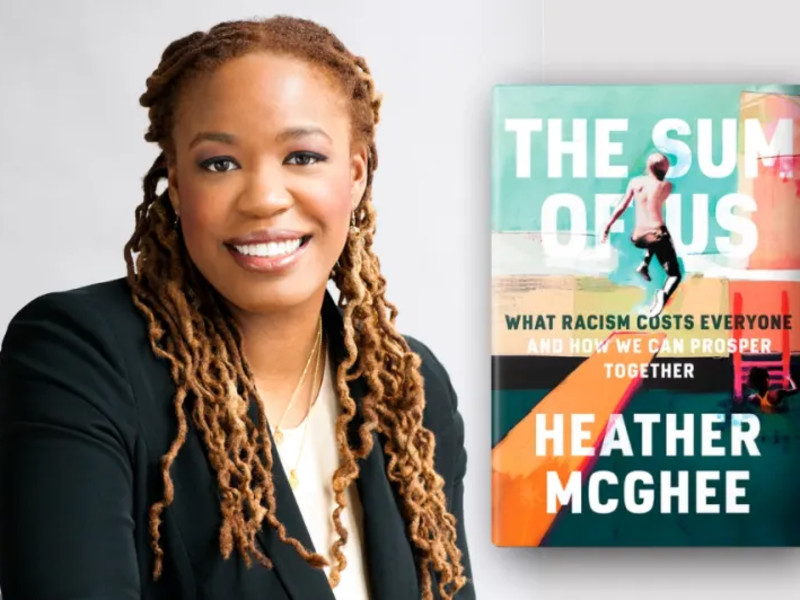
That tough question is the title of a book by Beverly Daniel Tatum, a psychologist with a focus on racial identity development. It’s also a question that a lot of us wonder about, even if we don’t ask it out loud. I’ve attended four diverse public schools in New York City and in all of them, self-segregation was common. I saw this in the cafeteria, on the street corners, in classrooms, and, most importantly, in the formation of lasting friendships. This has always seemed to me like a weakness of our schools, or even a partial failure of the integration project started in the 1950’s.

Tatum sees it differently. From a psychological standpoint, Tatum believes, the “black cafeteria table” is important. She believes that by the time black children hit puberty, if not before, they began searching for what it means to be black, especially if they are in a racially mixed school or community. Settings like the black cafeteria table, according to Tatum, offer a support group for black children who may feel isolated among their white peers — a place to find a postive black community and identity. Additionally, Tatum believes that a “race-concious parent” raising their black child in a mixed setting should actively seek out a strong black community.

Tatum describes this “racial immersion” as one of several stages in a person’s development. At some point during the book, I started wondering if she was advocating for the self-segregated cafeteria. What about integration? What I came to understand was that Tatum sees integration as the final step, once a person has become comfortable with their racial identity. This last point troubled me.

It seemed that Tatum thought of integration as a natural next step after one has become empowered in a racial identity and understands their “blackness in a black context.” In my experience, however, this progression often stops short of real integration. I believe that integration should start from an early age, and that mixed-race elementary schools should encourage integrated classrooms, friendships and cafeteria tables. It is important for everyone to find a community and an identity, but schools are the perfect place to encourage a kind of larger community that is not based only on race or background. When schools are segregated, we run the risk of never getting to Tatum’s final step: integration.

Tatum’s book helped me see a positive side to the “black cafeteria table.” But it’s also true that many kids – white, black, brown, and every shade in between–are simply not as comfortable breaking racial boundaries as they should be in the Age of Obama. Close interracial friendships are still relatively rare, even in a city as diverse as New York. That’s not the fault of the cafeteria table phenomenon, but if we don’t get around to full social integration by high school, when will we?

32 Comments »

  1. I am a black woman who attended diverse schools throughout the 80s and 90s. I found it important to integrate from a young age as well, but that’s my personal experience. I think being Black is a different experience for everyone and I would not suggest that my focus on integration from a young age will work for everyone else (actually, I’m not even sure how I could measure whether it has “worked” at all). I think schools need to focus on creating opportunities for integration but they shouldn’t force it if soem students don’t take to it. We all have to find our racial identity and our road to adulthood in our own way.

    Comment by StudentAdvocate — June 2, 2009 @ 10:30 am

  2. One could also ask: Why do all the white students sit together?

    Comment by slc — June 2, 2009 @ 12:31 pm

  3. This was a thoughtful piece, Toni. It’s an issue close to my heart as an African American woman who went first to predominantly Black elementary schools and then to predominantly upper class and White secondary private school, college and graduate school. I also researched a related issue for my doctoral dissertation. You might want to look up William Cross’ racial identity theory or Janet Helms’ racial identity theory to give you more insight into the process of racial identity formation. (FYI, there is also a White Racial Identity formation process).

    I hear your concerns, but I think “the black table” is a necessary part of Black racial identity formation for most. The outcome (when one successfully navigates the journey) really is a more solid, positive sense of oneself as a member of an often denigrated and devalued group in this society. This allows one to be genuine and open in relationships with others of diverse backgrounds.

    It’s much easier to come from a position of relative power and privilege (i.e. White America/Europe) and expect that everyone should feel comfortable in their own skin and blend in some Utopian melting pot. The reality is that, even in this “Age of Obama”, Black Americans are overwhelmingly viewed as “less than” by the world (yes, even by other brown and black folks). Can you imagine how hard it might be to sustain a positive sense of self in the midst of others who are supposedly superior to you? I don’t see how a school could really force social integration upon students who may not be ready for that.

    Comment by Bronx mom — June 2, 2009 @ 1:07 pm

  4. I agree with slc: to ask only the one question is short-sighted. I have been following with interest the coverage of Brooklyn’s PS 20 on the New York Times Clinton Hill local blog (fort-greene.blogs.nytimes.com/). The principal of the school, who is African American, was recently arrested for assaulting a white teacher. This has followed a long and bitter community debate about the principal’s ability to effectively lead his school, in which it has been evident that many of his defenders are minorities; many of those who choose not to enroll at PS 20 are white. But it’s not as simple as black vs. white; in the case of PS 20, formidable issues of class are involved, and many middle-class and affluent black parents send their children elsewhere.

    In my own child’s elementary school, which is quite diverse (in a good way), I know of relatively few interracial friendships, and most of those involve children (and/or parents) who are actually interracial. Asian kids are friends with asian, black with black, white with white. There is a powerful urge to stick with one’s own, and these young children seem to do so instinctively. I haven’t read Tatum’s book, but I do think we pass along our assumptions about race to our children, consciously or no, egged on by a society in which racial conflict often makes for good (i.e. selling) headlines, and quiet overtures are often ignored.

    Anyway, great post.

    Comment by district 13 parent — June 2, 2009 @ 1:11 pm

  5. While many adults work in diverse environments, most go home to less diverse homes, neighborhoods and social circles. So I don’t think kids are acting instinctively; they’re following the patterns of their parents. I’ve also found interesting that while great attention is placed on the minority table (e.g., black, football, theater kids) people often fail to observe the minority students not sitting at the table, but intergrated into the majority tables.

    Comment by Gideon — June 2, 2009 @ 1:49 pm

  6. District 13 parent…what is diverse in a “good way”?

    Comment by anonymous — June 2, 2009 @ 1:57 pm

  7. anon 1:57:
    By “diverse in a good way,” I meant a reasonably even racial balance between the students and a community of adults (administrators, many teachers and parents) that values that diversity. Does that make sense? I was trying to show that even in a school community in which diversity is considered a good thing, racially mixed classrooms don’t always lead to one-on-one friendship between children of different races. Sorry if I didn’t articulate it well.

    Comment by district 13 parent — June 2, 2009 @ 3:09 pm

  8. Individuals can differ quite a bit in their inclination to seek out groups of people who are more or less similar to themselves. That said, it seems perfectly natural to follow this behavior patten in any situation where you feel at risk. There is genuine security to be found in a group where you have some degree of anonymity based on your ability to “blend in.” It’s a form of defensive camouflage. Everyone remarks how young children appear to be comfortable in ethnically mixed groups, but as their social environment gets more competitive in middle and upper grades, they may self-segregate more. As I said, individuals differ, but I wouldn’t be surprised to find a correlation between personal risk-adversity (or perception of social threat) and ethnic self-segregation. If that’s true, creating physically and socially “safe” environments in schools may mitigate this effect somewhat. On the other hand, schools can’t replace the larger cultural context in which children live.

    Comment by Brosti — June 2, 2009 @ 4:35 pm

  9. It is natural to want to be with one’s own kind - race, class, economic, religious - integration makes things harder.

    Comment by Liz B. — June 2, 2009 @ 4:54 pm

  10. It all sounds like a nice idea, until you consider the practical outcomes of this sort of racial self-segregation. It would all work out, were it not for the fact that if you look at schools today, at higher grade levels, racial integration does not suddenly occur, or even gradually increase. It isn’t uncommon to see similar segregation even at colleges and universities and, perhaps most prominently, throughout people’s adult lives. The fact we have to recognize is that we still do not live in a racially integrated world, so if integration is the final step, we must be doing something wrong.

    An understanding of race is not innate. While there are some noticeable physical differences between people of different racial groups, the values that we assign to race have to be taught. The notion that somehow whites are superior, and blacks are inferior, is something that is only enforced by our willingness to believe it. At an early age these sorts of beliefs are weak to nonexistent, and the more young children interact with people of different racial backgrounds, the more they are proven untrue.

    Bronx mom says that it’s difficult to be positive about oneself around those who are superior to you. The problem here is that in a school setting, white students are not superior to black students. Simply being white does not grant a student any special privileges. The idea that somehow it does is something that can only be learned by observing those around them, and it is an idea that should not be encouraged.

    That is, if black students do not socialize with white students because, as Bronx mom suggests, white students are supposed to be superior, how is this a good thing? By promoting this kind of behavior, are we not simply promoting these beliefs? And if we do not do anything to try to break down this mentality, how are we ever going to have true racial equality?

    Or rather, if the message that is sent by different areas of society is that whites and blacks are unequal, isn’t radical racial integration the one way that we can truly move beyond this message?

    Comment by TTD — June 2, 2009 @ 5:23 pm

  11. I have a backgroud far different then most of your readers. I grew up in the legally segregated south. We moved to the defacto segregated north when I was in elementary school. Eventually I went to a mostly white high schools and college.

    I found that everyone spoke about integration but it was always the black children who had to integrate INTO the white community. There was never a since of equal movement for both parties.

    As a result I always felt like an outsider who had to translate and explain myself. Time and time again having to prove that I had the right to be there. It was akin to being a foreigner in my own country.

    Times have not really changed that much. My daughter( who is biracial) is in college and my niece is in graduate school.They both talk of similar experiences to mine.

    In New York City most of us see people of all races in the course of a day. This is not so in most of the country and even in some sectons of the city. There is still a lot of fear and rage that bubbles to the top.

    When I went to visit a buddhist temple on Staten Island I became terrified by the reaction of people in that community to just seeing me walking down the side walk. People came to their doors and watched us closely. We evetually walked in the road till we reached the temple.

    There is a black table because sometimes it takes to much energy to deal with it all and you just want to rest.

    Comment by Debra S. — June 2, 2009 @ 6:10 pm

  12. isn’t it possible for people to gain pride in their race while also developing friendships with people of other races and working toward integration? Does it have to be one or the other? Is seperation the only way to empower people in their racial identity?

    Comment by annonymous — June 2, 2009 @ 7:37 pm

  13. To TTD- I think that perhaps I was not clear in my choice of words. I did not mean to imply that White Americans ARE superior, simply that the stereotype of American/Euro whites embedded in our culture would have us believe that they are superior.

    Because of the deeply ingrained messages about race and it’s inherent value (or lack thereof)in American culture, Black youth are often subconsciously operating with that as a given (that White is good and Black is bad). For many Black Americans, this false premise has to be challenged, discarded and a secure sense of one’s (racial) self can be established. I would neither promote nor condemn self-segregation. I think it’s a necessary thing for some, but not for others.

    To Debra S.- I agree 100% Sometimes there’s no place like home.

    To anonymous #12- as someone who has been part of “The Black Table”, I can honestly say that not a single one of my peers has ever exclusively had friendships only with other African Americans. We all had friends of various racial and ethnic backgrounds, all while we worked on figuring out what it means to ourselves to be Black in America. And it should be noted, that White classmates were welcome to join us at the table and many did.

    Comment by Bronx mom — June 2, 2009 @ 8:05 pm

  14. Wow. My kids are in a public school in Queens & they have friends of all different races and religions. They all sit together in the cafeteria. They all play together in the playground. This is elementary school though… so I wonder if it changes.

    We’ll be moving to Manhattan for the next school year (and these are issues that actually concern me about moving to Manhattan. Manhattan is by no means “diverse” if you compare it to Queens.) so I guess I’ll never know if it’s neighborhood or age related….

    Comment by Queens Mom — June 3, 2009 @ 6:33 am

  15. To Queens Mom - I attended middle and high school in Manhattan and there was no “Black table” in the cafeteria. Interestingly, though, there was a predominantly Chinese table. I, as a Black student, sat with my Chinese-American friends almost every day, along with several students of other races. I agree that Manhattan is not as diverse as Queens (where I lived as a kid), but these things are very fluid and I wouldn’t worry that racial segregation is necessarily going to take over your child’s educational experience when you move to Manhattan. The important thing is to keep talking about it, which is something our school took very seriously by celebrating various cultural holidays and encouraging class discussion surrounding other student’s heritage and traditions.

    Comment by StudentAdvocate — June 3, 2009 @ 10:08 am

  16. The reason why white kids mostly sit with white kids and black kids mostly sit wit black kids in the cafeteria is probably that they want to eat lunch with their friends.

    The reality is that most kids have friends mostly of their own race. As someone who attended a Queens public elementary school in the 1960’s that was integrated but socially segregated, I find it sad that this is still true.

    If kids - not to mention adults - were enjoying the friendships of folks of other races more, cafeteria seating wouldn’t be a symbolically laden issue.

    Comment by Kennyb — June 3, 2009 @ 10:40 am

  17. Why is the question always framed as black students self-segregating? In the school I went to, it was the white students who made us feel unwanted in their cliques. We had no choice but to stick together. So why are people always saying that it’s the black kids who want to get away from the white kids in order to form “their identity”?

    Also, there is no one black identity. In terms of the music I listen to, the books I read, etc. I had a lot in common with the white kids who never seemed to think I could really be “one of them.”

    Comment by what's it really about — June 3, 2009 @ 10:59 am

  18. Also, in college (in NYC), the white kids constantly CONSTANTLY asked about my hair, whether I like Tupac or Biggie, whether I “really speak Ebonics” and made other extremely prejudiced comments - comments I would never throw their way.

    As a result, I spend most of my time with the other black kids. It was too much work to constantly be explaining “my culture” (whatever that means) to these kids. I was shocked that they had such little awareness of the broadness of black identities and that they could not COULD NOT for one minute treat me like a PERSON instead of a SPECIMEN.

    Comment by what's it really about — June 3, 2009 @ 11:03 am

  19. Its a sad day in America that we still need to address these issues,having a Black president still is not enough to unite the human race.

    Comment by Anonymous — June 3, 2009 @ 11:33 am

  20. As a member of the Air Force, I see a huge difference in integration between civilian and military (or heavily military) schools.

    In my on-base neighborhood and in our on-base schools, the kids are completely integrated.

    I suspect that it’s because most military children identify themselves as “military brats” above being “white, black, asian, hispanic, etc…)

    It also helps that the parents are integrated at the workplace and in neighborhoods as well.

    Comment by Rory — June 3, 2009 @ 12:47 pm

  21. School is a place where all kids should work and play with each other. Hopefully, it is a safe, nurturing environment-the perfect place to learn about yourself and others. There are many types of communities in a child’s life, which can effectively serve many valid purposes. But is we don’t foster integration in our schools, then where?

    Comment by Beth Handman — June 3, 2009 @ 12:55 pm

  22. Schools are the place where kids should all work and play together. There are many other communities in a child’s life that can serve many other valid purposes. Good schools provide a safe, nurturing environment-the perfect place for kids to learn about themselves and others. If integration is not fostered by the schools, then where??
    I agree with Toni!

    Comment by Anonymous — June 3, 2009 @ 1:00 pm

  23. MY SON AND DAUGHTER GO TO SCHOOL IN QUEENS. AND I DON’T SEE THEM HANG AROUND WITH ONLY ASIA. MY KIDS HAND OUT WITH KIDS DIFFERNT RACE .I GO TO SCHOOL IN THE BRONX WHEN I WAS YOUNG . I WAS THE ONLY CHINESE IN THAT SCHOOL. SO DOSE THAT MEAN I SIT BY MYSELF . I FEEL KIND OF LEFT OUT BUT I STILL HAVE FRINEDS IN ALL RACE,KIDS SHOULD NOT FEEL THIS WAY. THEY SHOULD ALL GET ALONG WITH EACH OTHER. I AM CHINESE AND I AM HAPPY TO HAVE A BLACK PRESIDENT.

    Comment by KELLY — June 3, 2009 @ 1:27 pm

  24. Hey,
    This post was so true. I am a black student attending an extremly diverse high school. Our school contains people from Poland, Yemen, Pakisatn, Ireland, America, Mexico etc. Yet, you can never break what people always learn. I for one do not sit with black kids at my school. I like to talk to everyone and anyone because it makes me feel more accomplished. I feel that sticking to your own race creates complications. You never get to experince what it feels like to hang out with someone who has nothing in common with you. My closet friends are from Pakisatn, America, Puerto Rico, Dominican Republic, Poland, and Japan. How’s that for a change?

    Comment by James — June 3, 2009 @ 1:55 pm

  25. That’s great for a change! To everyone- of course there are going to be exceptions, and that’s wonderful. I think Tatum was commenting more on a general pattern.
    A lot of people mentioned that this question is framed in terms of only the black side of the story, and I completely agree with that concern. It is definitely not a one-sided issue. One of the biggest barriers we are facing to integration is that people ALWAYS find a way to blame the other group. It is so much easier to say “they keep to themselves” than to realize that you do it too. So I agree, we need to be asking why all the white people are sitting together too.
    I wrote the blog mainly from one side because that was Tatum’s way of addressing the issue, and I was using her book as a center of the blog. Sorry if this came off as accusatory of any one race, it was definitely not meant to be.

    Comment by Toni — June 3, 2009 @ 10:41 pm

  26. Queens Mom- your comment made me re-think some things. My 4th grade son has been in racially/ethnically/economically diverse schools since preschool and that was definitely by choice. His closest friends have therefore always been of very diverse backgrounds, not just Black. My hope has always been that when he gets to high school or college, he will already be secure in his racial identity and will be confident and comfortable in any group. So far so good, but things change come middle school.

    Perhaps the answer for Toni is that, social integration shouldn’t just be starting in high school or middle school. Unfortunately in such a segregated city (at least in some parts of it), it’s hard to find truly integrated schools.

    Comment by Bronx mom — June 4, 2009 @ 9:04 am

  27. I think beginning integration from a very young age is crucial. However, I do see that while many kids become friends with people of different races in elementary school, race becomes a major factor in who they continue to be friends with-especially close friends with - as preteens and teenagers. In Tatum’s introduction, she mentions this exact problem. “When I ask White men and women how racism hurts them, they frequently talk about… the interracial friendships they had as children that were lost in adolescence or young adulthood without their ever understanding why.” (Tatum 14).
    We have seen that social integration does not naturally follow legal integration. Social integration is not passive, and it can’t be achieved just by putting kids in racially mixed settings. As kids get older they become more self-concious, more aware of differences between themselves and their peers, more afraid to contradict societal norms, more scarred by negative experiences and more hesitant to leave the comfort zone that they find with people of their own race. As a teenager, I can fight these natural tendencies in myself. As a teacher or parent, you can fight them by encouraging honest conversation and by creating safe, trusting atmospheres where integration can thrive.

    “And if I ever touched a life I hope that life knows
    that I know that touching was and still is and will always be
    the true revolution.” -Nikki Giovanni.

    Comment by Toni — June 4, 2009 @ 10:54 pm

  28. I don’t think it’s a race issue, but, a socio -economic racial hybrid issue. My kids (bi-racial, black and jewish) have friends of all different races. their friends are mostly jewish , white, or other biracial kids. I think it has more to do with where you live and where you go to school. We live in manhattan on the UWS. They aren’t treated any differently. And they are happy. I think that most of the problem comes from parents at home. If you tell your kids whites are privileged, and have at home biases, then they will automatically have a bias , insecurities, or resentment and segregate themselves. I am black, and went to Columbia Prep for my all of my life. I was fine, but, the scholarship kids segregated themselves, (white and black alike would sit together). My hubby went to Dalton and he saw the same thing. If you send your kids intothe world telling them that they are different or less than,then they’ll act like it, and seclude themselves.

    Just my 2 cents…

    Comment by uwsmom — June 12, 2009 @ 6:31 pm

  29. IMHO, the best way to change self-segregation is for the parents of the children to make efforts to socialize OUT of school with families of other races and ethnicities. From what I see, children play in school with the kids they see out of school, or with kids who look like their family and friends out of school. So if you’re a Black mother concerned with diversity, why not strike up a conversation with that nice blonde mother who smiled at you during pickup the other day? If you’re a White mother concerned with the same, how about inviting that sweet girl from Trinidad over to your house to play with your first grader? Go shopping together, head to the zoo, have a new family over for dinner. Ask a couple of times and don’t be afraid of rejection.

    Kids will quickly feel comfortable with friends from different backgrounds after going to each others’ houses, trying their foods, looking at the pictures of their grandparents, meeting their baby brothers, and playing together one-on-one. This comfort will carry over into school. I’ve seen it happen many times and it’s an enriching experience for all.

    Comment by Jean — June 13, 2009 @ 3:00 pm

  30. One definitely can ask..Why are all the white kids are sitting together???

    Comment by Dorothy — June 16, 2009 @ 9:00 am

  31. I think that certain schools facilitate inter-group friendships. I am white and Middle class, and at Murrow HS in the 1980s I had pals who were African-American and Asian-American, as well as white ethnics. But now I teach at a school that is solely African-American and Latino (well, 2 Arab-American kids too). And these kids sure aren’t hanging out with white kids. That is why I intend to send my children to a HS that is really diverse. And I have to be honest, but the really diverse schools tend to have better opportunities and academic scores.

    Comment by Midwood Mom — June 16, 2009 @ 12:11 pm

  32. #29, I agree with you. Kids become friends with the kids of thier mom’s friends.

    Comment by sjs — June 17, 2009 @ 10:05 pm

RSS feed for comments on this post. TrackBack URL

Leave a comment

Powered by WordPress