Kindergarten waitlists at a few schools
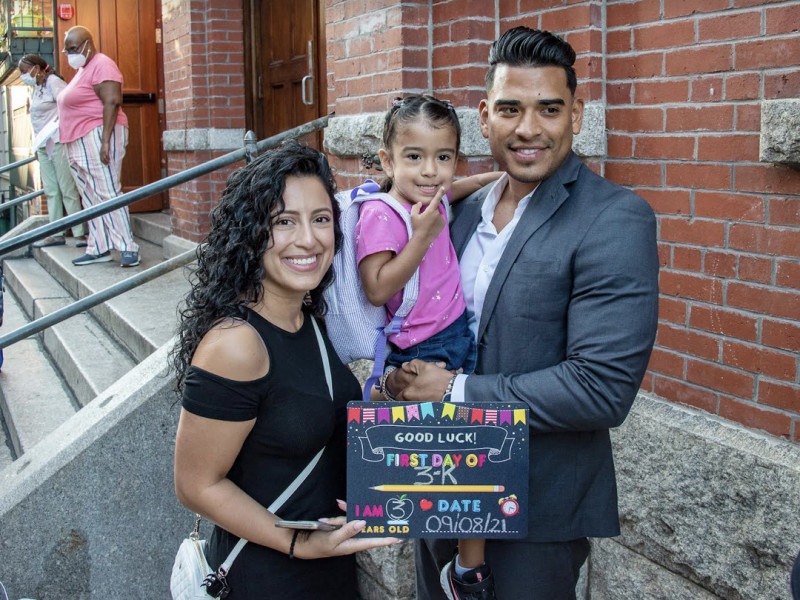
Kindergarten registration begins today and the early word is that some Manhattan and Brooklyn schools have waitlists for kindergarten, although they are somewhat shorter than last year.
The waitlist phenomenon occurs every spring after the first round of applications. Long lists tend to shrink or disappear after families move, choose a private, charter or a gifted and talented program. Still it causes some anxious moments for parents waiting to learn where their child will attend elementary school and there are always some schools that don't have space for all zoned students.
Some parents are still waiting to hear where their children have been placed. Because of a glitch with the Department of Education computer system, some letters announcing the placements weren't sent out until Friday.
Rezoning on the Upper East Side meant the zone for popular PS 290 shrunk and school officials worried they might not even fill all the seats. Instead there is a waitlist of about three dozen zoned students, said Parent Coordinator Sally Mason. PS 59, also on the Upper East Side, will be moving into a brand new building in September, but already has a wait list, the principal said. DNAInfo reports a waitlist of 28 students at PS 116 in the east 40s.
In downtown Manhattan, where several new schools have opened and zoning lines have been redrawn, popular PS 234 still has a waitlist of 38 zoned students. Last year there had a similar number but the school managed to place all of the students, said Parent Coordinator Magda Lenski. She said it was too early to predict what would happen this year. PS 41 in Greenwich Village, also has zoned children waitlisted. PS 3, which shares a zone with PS 41, last year added an additional kindergarten to acommodate the overflow from 41.
Poll: How many schools did you apply to?
Kindergarten registration begins March 26 after families learn this week where their children got accepted. Schools sent out notification letters via email and regular mail by March 23.
While the majority of public school children attend their zoned elementary schools, other families apply to schools the way 18-year-olds apply to college. They visit many, work out the odds of admission and may even have a list of "safetys," and "reaches".
The Education Department's system of choice allows parents to apply virtually anywhere, even though priority in admissions goes to students in the school's zone and district. The odds of getting accepted at a school outside of your neighborhood or district can be slim.
Because of overcrowding some zoned schools can't accommodate all their students, so parents in the know begin early to look and apply elsewhere. (The Education Department will assign students to another district school if there is no space at the zoned school.)
In addition to zoned schools, families may apply to magnet or dual language programs, unzoned schools and charter schools, which are public but independent of the DOE. Since there is no central application, parents go from school to school to apply. In mid-April, children who qualify for gifted and talented programs will apply to another school, or several schools.
We're wondering, how many schools did you apply to for your 5-year-old? And, although it's not in the poll, we're curious to know how many acceptances you get! Take our poll and comment below!
Using exams to judge teachers, schools
Sparks flew at the Brooklyn Secondary School for Collaborative Studies on Monday night as the chief academic officer defended the city's heavy reliance on standardized exams to judge schools, principals and teachers.
Deputy Chancellor Shael Polakow-Suransky was under fire all night from the crowd in the packed school auditorium in Carroll Gardens. The two principals on the panel who said they believed the testing regime had damaged education in city schools.
The former head of the Office of Accountability kept his cool and acknowledged that the current state exams did not do a good job at measuring "critical thinking," but he denied that the exams were overly influential and said that better tests were coming. Why, then, has the Bloomberg administration made such a public spectacle of the A through F grading system, which is mostly based on student progress on the exams, if they aren't very good? Polakow-Suransky never answered that question.
You can read more about the event, which was moderated by Insideschools reporter Meredith Kolodner, on GothamSchools and SchoolBook. Watch a video clip of the meeting from the Grassroots Education Movement:
Going too far with the candy culture
I stood frozen in front of the principal's white board—it's the first thing you see when you arrive at my son's elementary school.
The principal writes an inspiring message on it every day. A point of etiquette. A new vocabulary word. Or something sweet and simple like welcome back from a vacation or a cheery observation about the weather. All the kids read it. The parents, too. Today, this was the message:
We will be going to go around with a jar of treats, the class which estimates closest to the correct number wins the jar!!!
What are we talking about here? Hundreds of treats? Thousands? I can't take it anymore. My son's school has been co-opted by Willy Wonka.
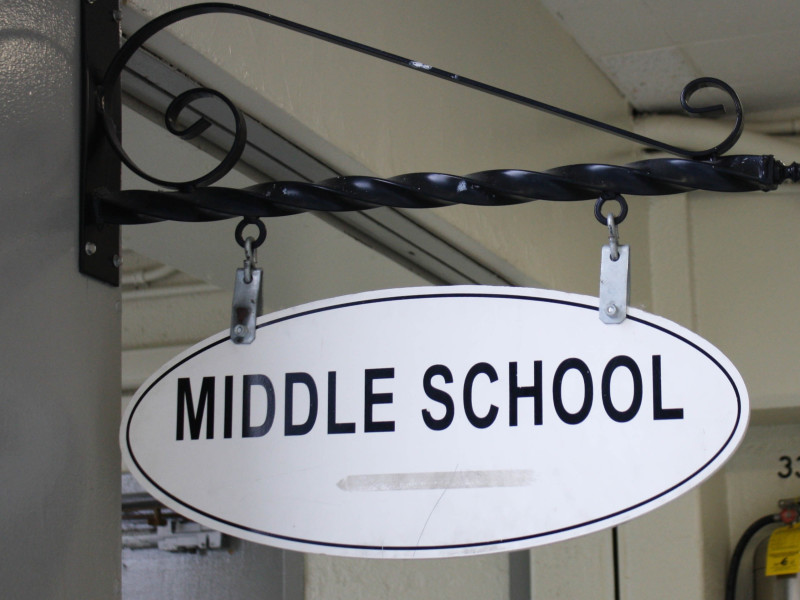
Apply now for new middle schools
Nearly a dozen new middle schools will open in the Bronx and Brooklyn next fall. New school applications are available now from elementary school guidance counselors in districts 7, 9, 10, 11, 12, 13, 16, 17, 19, 23 and 32. Students who apply to a new school may get an offer from two schools -- one they applied to in the main round and a new school. They'll get both offers in the same letter and then will be able to choose, enrollment officials said. That letter will come out some time in May.
A list and description of the new middle schools is on the Department of Education's website. A few, like PS/IS 5 in the Bronx, PS/IS 8 in Brooklyn Heights and Community Roots Charter School in Fort Greene, are successful elementary schools which are expanding to include middle school grades. Those will be good options, which will give priority to continuing students. The Urban Assembly Unison School in Clinton Hill and Young Women's Leadership in the Bronx, are created by organizations that have effectively run other schools and are good bets as well.
Other schools are virtually "replacement schools," moving into buildings where previous middle schools have failed and are being closed by the DOE.
Applications for new middle schools are due March 26.
Elementary Dad: Cameras to spy on kids?
In an effort to prevent the sexual abuse of children, my daughter’s elementary school now requires parents to wear little white nametags when we visit classrooms. I’m pleased to report that Operation Nametag has been a success: No charges of child abuse have been filed since it went into effect.
Well, no new charges. The school is still reeling from the arrest in February of a paraprofessional who has been charged with attempting to molest an 8-year-old boy. As the criminal case creeps through the legal system, parents at my daughter’s school are sad, fearful, confused and, above all, angry that the school can’t guarantee their children’s safety.
I personally don’t expect such a guarantee. I agree with Helen Keller, who wrote, “Security is mostly a superstition. It does not exist in nature, nor do the children of men as a whole experience it.” But Helen and I hold the minority view. Other parents are proposing a number of reforms that they insist will make my daughter’s school a safer place.
Sadly, many of the ideas are terrible.
UWS parents take on Harlem Success...again
Some Manhattan parents are scrambling to stop a plan to move 150 Harlem Success Academy 5th-graders into a building on the Upper West Side. Critics fear the plan could make the Success Academy students, most of whom live in Central and East Harlem, eligible to attend Upper West Side middle schools once they reach 6th grade. Others say the move may jeopardize federal magnet programs at two of the small elementary schools in the building.
E-mail alerts about the proposal went out Thursday to many parents of students in District 3, which spans Manhattan’s west side from 59th to 122nd streets. The e-mails urged parents to attend a March 15 public hearing and speak out in opposition to the plan.
According to one e-mail, the Harlem Success Academy students are largely from Districts 4 and 5, but the plan would transfer them into District 3 during 5th grade. “Once they are housed in a D3 building, they become eligible for D3 middle schools,” read the e-mail. “Our strong D3 middle schools could become an appealing option for these out-of-district families at a time when we are already facing a serious middle school seat crunch.”
Will overcrowding undermine special education reform?
A change in special education enrollment will likely have some already overcrowded schools coping with a large influx of kindergarten students in the fall.
In past years, most special education students were placed in schools that had space or offered the kinds of classes that could serve them. This year, in an effort to allow more special education students to attend their local schools, most will be enrolled at their community school.
The problem is that some schools that had big kindergarten wait lists last year also had a very low percentage of special needs students, compared with nearby schools. That means the new plan for sending more special education children to their zoned schools could bring even more kindergarteners to the doors of packed schools this fall.
Get some answers at pre-k info sessions
I thought I was courting disaster when I took my four-year-old to Brooklyn's two-hour long pre-k information session Monday night after a full day at pre-school. But with the assistance of an extra large slice of pizza and a cupcake-making app, we made it through without meltdown.
There are upcoming sessions in each borough -- the next one is Thursday in Manhattan -- and you will learn more at them than you can from simply downloading the directory. Officials used a Power Point presentation in a darkened auditorium at Sunset Park High School to explain what a typical day in pre-k looks like, how to apply, and they stuck around for questions afterwards.
There was, however, some jargon about "aligning to common core standards" and other policy efforts that weren't explained in a way that was easy to understand. The Power Point presentation didn't exactly explain how pre-k was "the first step to college and career readiness," but officials were friendly, knowledgeable and more down to earth when answering specific questions. And it was a relief to hear a DOE representative tell us that "when you give children lots of time to run around and play, it helps them intellectually too."
School starts on September 6 in 2012
The first day of school for students next fall will be Thursday, Sept. 6, according to the Department of Education calendar now online. Classroom teachers begin two days early, on Tuesday, Sept. 4.
Pre-K and kindergarten students begin with shortened school days. The first full day for kindergarten students is Friday, Sept. 7; for pre-K, it is Monday, Sept. 10.
The school year will end with a half-day on Wednesday, June 26.
The calendar lists dates for all school holidays as well as professional development dates for teachers when students will not attend. The 3rd-8th grade math and reading test dates are not including. They come out on a different calendar.