November 5, 2009

Going Green: How can schools make New York a greener apple?

Written by Jennifer @ 10:45 am

Sustainability is one of those subjects that children and adults can learn about together. Sometimes children make the biggest difference!

At the Division of School Facilities’ Sustainability Committee meeting earlier this fall, Jamie Cloud, the inspiring founder of the Cloud Institute, talked about Jessie-Ruth Corkins, a girl in Vermont who saved her school $90,000 and changed the way the whole state of Vermont heats its school buildings — all before she graduated from high school. Jessie-Ruth was young, in 4th grade, when Vermont instituted its Sustainability Curriculum mandates, Jamie said, it was not that surprising that by the time she entered high school she had taken responsibility for the world she lived in and tried to make it a better place.

That’s what kids do, because they don’t know what’s supposed to be impossible. Some people ask how teachers can find time to teach sustainability concepts among all the other education mandates. “There’s never going to be more time in the day,” said Cloud. “But people have to ask, are we going to educate for sustainability, or for unsustainability?”

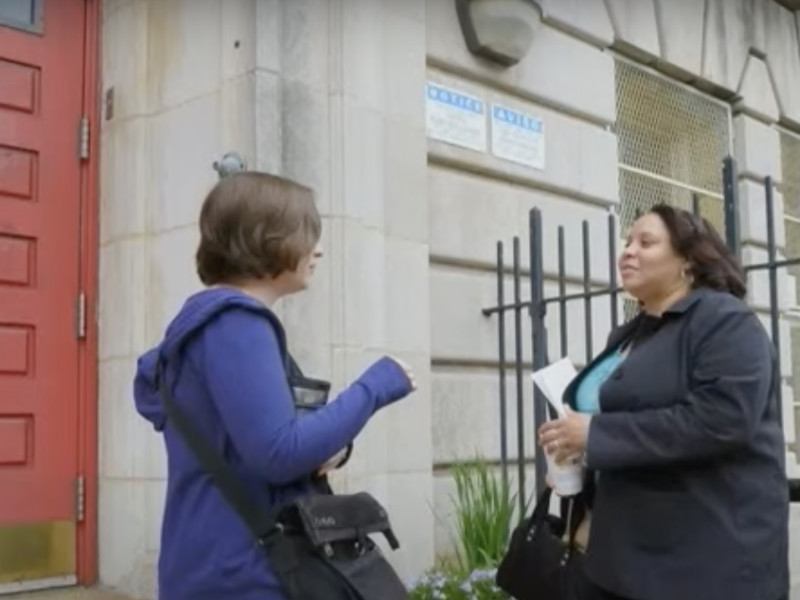
Pamela French, a New York parent and the founder of A Greener Apple video series, takes sustainability straight to the streets with the question: “How would you make New York a greener apple?” She asked this question of students, parents, and educators at the Green Schools Alliance’s Green Schools NYC Fair, held last spring at the Collegiate School. Enjoy her piece below and let us know how you would make New York a greener apple in the comments!

October 22, 2009

Going Green: Seeds of sustainability grow on STEM

Written by Jennifer @ 2:14 pm

The Department of Education  is beginning to focus on reducing energy use, mandating use of green cleaning products, and improving recycling rates at schools. These efforts are important because  the future of life as we know it is threatened by climate change, and New York as a coastal city is particularly vulnerable to the effects of climate change.

The next step is to bring children into this loop, so that we can help raise the next generation of climate stewards. Connecting children to ideas of how to sustain life on the planet, and why that is important, is called “sustainability education.” One entry point for sustainability is a newish concept called STEM education, which calls for renewed commitment to education in science, technology, engineering and mathematics  fields. President Obama has connected STEM education to “the progress and prosperity of future generations.”

Where does New York City get its water? What can kids do to help the planet? What is the difference between climate and weather? How does a green roof work? Why do we turn off the lights when we leave the room and why recycle? All these concepts relate to a concept called “sustainability education. (more…)

October 8, 2009

Clean and Green: Reducing schools’ carbon footprints

Written by Jennifer @ 9:22 am

Lowering the amount of carbon dioxide your school emits is an important way to fight climate change. The amount of CO2 a school emits is called its “carbon footprint.” Replacing the filter on a heating and cooling system (HVAC) can reduce a school’s carbon footprint. So can letting the sun do its work and turning off lights when there is enough daylight that artificial light is not needed.

These and other ideas for energy management are on the Division of School Facilities’ website called DSF Green.The site also advises schools to set computers and other office equipment to save energy, such as sleeping when idle. Not to mention the energy savings from shutting off equipment like escalators and electric pool heaters when not needed.

Parents can help schools save energy by asking whether energy saving policies are in place, and by pointing out resources, such as DSF Green, where facilities managers can make sure best practices are being followed. (more…)

October 1, 2009

Charter school siting: Who decides?

Written by Jennifer @ 10:36 am

Should the Panel for Education Policy (PEP) be given final approval over whether charter schools can be sited in buildings with existing schools? I thought that was the intention of the state legislators who passed the law to renew mayoral control in August, but apparently the Department of Education has a different interpretation.

The new mayoral control law tries to increase public input in the system. One change mandates that the DOE post proposed Chancellor’s Regulations for a 45-day public comment period and that the PEP vote on regulations at a public meeting.

On Sept. 26, the DOE issued several proposed regulations; among them is A-190, Significant Changes in School Utilization. Changes in school utilization include decisions to phase out schools, change their location, or move other schools into the building. A-190 seeks to restrict changes considered “significant” and subject to a PEP vote at a public meeting.

A-190 defines the term “affected school” as “the individual instructional organization identified for direct action in the proposal.” It explicitly excludes other schools and programs co-located in that school building. (more…)

September 25, 2009

Clean and Green: Website helps NYC schools go green

Written by Jennifer @ 11:33 am

Parents, teachers, facilities managers, and students can share ideas and information about schools going green on a new citywide website, Green Schools NYC. Green schools experts can post links, ideas, and information, while people looking for ideas and advice on greening schools can find them on the site, or ask experts for information.

The more users who  join the website, the more useful it will be for both experts and newbies. Already participating on the site are parents and teachers at schools that have worm composting projects (that give kids a science lesson while reducing food waste) and parents at schools who are throwing green-themed fall festivals.

The Links and Resources page contains links to local organizations that provide programs, advice, and curriculum on schools going green, including one where children visit farms and cook meals with freshly picked vegetables. The new site makes it easy to post documents, such as the Back To School Green Schools Supplies memo posted by a mom at PS 334, which can be downloaded and adapted by other schools. (more…)

September 15, 2009

Clean and Green: Climate in the classroom

Written by Jennifer @ 10:40 am

The United Nations declared next week as Climate Week. What does have to do with your child and school? The United Nations Foundation is encouraging teachers to bring climate change curriculum into classrooms next week, September 20-26, when the UN’s General Assembly will be discussing world climate policy.

By engaging students on the topic, schools can contribute their voices to a bigger call for global climate action.The school climate curriculum project is known as Cool Your School. The website includes lesson plans for children of all ages. It explains, in language kids can relate to, why this subject is important for our future. A second site, Unite for Climate, gives older children more chances to be part of a solution, such as participating in 350.org and the Green Cup Challenge.

The United Nations Foundation is hoping teachers will especially focus on climate curriculum on Sept. 21, the opening day of the UN’s General Assembly, to connect children with government leaders from across the world who will be gathering in New York City and addressing climate change.

Ask your child’s teacher or principal whether they are  incorporating climate curriculum into the week’s lesson plans and let us know!

September 10, 2009

Clean and Green: Only green cleaning products allowed

Written by Jennifer @ 10:59 am

Principals throughout the city were reminded last week, in a letter from Chancellor Klein, that only “environmentally sensitive cleaning and maintenance products” may be used in public schools. Since 2005, New York State has mandated that schools use green cleaning supplies that create healthier environments for children.

The Principal’s Weekly newsletter noted that principals and parents often purchase cleaning supplies for the classroom. “Please be sure your teachers are aware that state law requires them to use only Green Seal Certified or Eco Logo approved surface cleaners and hand cleaners,” it said.

Let us know what’s happening at your school? Does your teacher’s wish list of needed supplies specify “green” products?

August 3, 2009

Clean and Green: District 3 schools unite to go green

Written by Jennifer @ 10:32 am

In a lively kickoff meeting last week, District 3 parents, Department of Education officials, and others met to see how to help their schools go green. The DOE announced a commitment to cutting schools’ carbon footprints in April when it joined the Green Schools Alliance. Since public schools consume 25% of New York’s municipal energy, greening the schools is the only way to meet the city’s goal of cutting carbon emissions by 30%.

Every school has a “sustainability coordinator” as of spring 2009; most are teachers whose chief role is to involve students in greening efforts. Most of the six schools represented at the meeting were already actively working on going green. Parents talked about the challenges of enforcing recycling and promised to share lists of green school supplies. John T. Shea, the DOE’s chief sustainability officer and head of the Division of School Facilities, came to answer questions. Liza Potter, community partnerships coordinator at the new Urban Assembly School for Green Careers (opening this fall in the Brandeis building) said her students could help produce information for a D3 Green Schools website. (more…)

June 10, 2009

Hearing on new Manhattan high school on Thursday

Written by Jennifer @ 11:45 am

“I was looking for a challenging but not overly intense, neighborhood high school experience,” said an Upper West Side mom. “There just aren’t enough seats.”

This Thursday, June 11 from 6-7:30 p.m. the Department of Education is holding a public hearing in the building that now houses Brandeis High School, to gather feedback from the community on what kind of school they would like to see occupy the remaining 800 to 1,000 seats in the Brandeis High School building on West 84th Street.

Brandeis High School will be phased out starting in 2009; no new 9th graders will enroll, although current students will be permitted to attend until they graduate. In its place, three new schools will open in the building in September 2009: The Urban Assembly High School for Green Careers, the Innovation Diploma Plus school, a transfer school for kids 16 to 20 years old, and the Global Learning Collaborative. The three schools together still leave room for one more high school — thus, the Thursday meeting.

One idea to be presented by District 3 parents and others is the new Frank McCourt High School of Journalism, Writing and Literature, a new school of 800 to 1,000 students. Says their Facebook page writeup: “The Frank McCourt High School of Journalism, Writing & Literature is a new, college preparatory high school with a focus on creative and expository writing, journalism, digital communication, and literature. The school will also provide learning opportunities in Spanish (and eventually French) for students who are bilingual and/or biliterate.“

Planners say that the school will reflect the Upper West Side neighborhood: diverse in all ways and home to so many great writers and thinkers. The school’s rigorous, project-based curriculum will be strengthened through partnerships with neighborhood institutions, including Columbia University’s Graduate School of Journalism, Symphony Space, and Fordham University. Teachers drawn from New York’s literary, journalism, and digital media community will guide and inspire students to become great storytellers and literary critics.

“The school will open with a 9th grade of about 200 students and will add one additional grade per year for a target enrollment of 800 to 1,000 students. A full complement of math, science, and social studies curriculum, as well as extracurricular clubs and sports, will round out this exciting learning community. Admissions will be based both on grades and a portfolio application, with the goal of enrolling a spectrum of engaged students.”

Want to learn more? The hearing’s on Thursday, June 11, starting at 6pm, in the Brandeis building, 145 West 84th Street, with details and more anticipated on Facebook.

May 15, 2009

Democracy, aborted

Written by Jennifer @ 11:08 am

How gerrymandered can an election get? Parents inquiring why the Community Education Council advisory vote results were not yet posted have discovered — once again — that the Department of Education has unilaterally decided to change the rules of CEC elections midstream.

Originally, the result of the parent advisory vote was to be posted publicly on the powertotheparents website in early May, according to that site’s home page. Instead, last week the DOE instructed the election vendor to withhold results of the parent advisory “straw poll” vote, which was intended to guide the real vote, until after the official selectors cast their votes, according to a Power to the Parents staffer.

The official CEC voting process is already convoluted: three PTA officials from each school each cast only two votes for candidates for the 12-member CECs. Deadlines for candidate sign-up, the straw poll, and the official voting have all been changed repeatedly this year at the DOE’s direction. In the latest change, the CEC voting deadline was extended to midnight tonight.

Still, I look forward to finding out who will be elected to my CEC for the coming two-year term. As the new mayoral control law is considered, it will be up to next year’s crew to promote parents’ voices in the system. Preventing the DOE from manipulating community elections is one of many reasons why parent advocates would like to see administration of the CECs be made independent from the DOE — perhaps placed under the Public Advocate’s office.

As part of the rewrite of mayoral control legislation, CEC3 supports a public November CEC election held alongside other public elections. The current system is devised, controlled, and constantly changed in a murky and undemocratic manner by DOE. “Power to the parents,” it’s not.

EDITOR’S UPDATE: Representatives of other CEC’s are also speaking out about issues surrounding the election. Here is a letter sent on May 19 from the District 31 CEC to Jacqui Lipson, the CEC administrative coordinator at the DOE, raising concerns similar to those Jennifer wrote about in this post:

(more…)

April 29, 2009

Preventing parents from helping children

Written by Jennifer @ 11:01 am

The hundreds of kindergarteners on waiting lists for schools all over the city are not the only sign of crowding in the schools, as many schools fear being forced to open extra classes in rooms that are now used for art and music. Rather than looking for the source of these failures in enrollment projections or capital planning, the Department of Education is going on the offensive against parents. In this case, their target is parents and parent associations who fund part-time arts, chess, and assistant teachers to make up for DOE shortfalls. The new DOE approach threatens to end services for hundreds if not thousands of children.

In a series of letters and school visits, the DOE has asserted that parents must hand their money over to DOE, subject to DOE rules about timing and amounts, before that money can be used to pay for part time aides and enrichment. A few years ago Klein abolished Project Arts, the program that used to reserve funds to ensure that all public school kids would receive music, dance, and visual arts. Now the DOE is trying to crack down on parents’ efforts to provide access to these fundamentals of a decent education. (more…)

April 22, 2009

Schools track energy use to fight global warming

Written by Jennifer @ 2:19 pm

Since today is Earth Day, it seems a good time to mention that all New York City public schools are now members of the Green Schools Alliance, a national organization helping schools to cut their carbon footprints.

Last Saturday, more than 650 students gathered at a conference at the Collegiate School to trade strategies (there will be another one in the fall). City Council member Gale Brewer, who attended, said of the conference “it was huge!”

John Shea, Executive Director of the DOE’s Division of School Facilities, is working on benchmarking energy use — basically, taking baseline measurements — at the city’s public schools. So far, over 850 schools have been benchmarked. Green Schools Alliance will post information online so communities can see how much energy their school uses, and everyone–students, parents, custodians, administrators–can work on saving energy for their school.

What can you do to help your school go green? Make sure your school is using recycled paper, recycling the paper it uses, turning off lights and computers when they are not needed, and reviewing its energy audit. Encourage teachers and administrators to communicate with parents by email and on school listservs to conserve resources. My kid’s school is looking into switching from Styrofoam lunch trays to corn-fiber-based trays and using biodegradable garbage bags, even though they cost a bit more. Ask your principal. Ask other parents. See if your building’s custodian might report to the PTA on the school’s energy audit, and what savings can be found in your building. Want more ideas? See the Green Schools Alliance website.

On this Earth Day, and every day, it’s good to remember that no matter what our educational struggles may be, we all have to live on the same planet.

April 3, 2009

DOE backs down on lawsuit

Written by Jennifer @ 7:09 am

The Department of Education has decided to back down on its planned closing of three neighborhood schools and creation of charter zones without Community Education Council approval, the subject of a recent lawsuit filed by the United Federation of Teachers and the New York Civil Liberties Union. (Details and analysis here.)

This is a great first step toward better DOE compliance with parent engagement laws in the future. But more than that, the DOE should be curious: why do so many parent leaders think that there are problems with how charters are sited? Might there be something legitimate to our concerns? Wouldn’t it be interesting to find out, by holding a public discussion (whether or not such a discussion is mandated by law)?

I look forward to seeing some signs that the DOE is prepared to be a better listener, because it’s not very efficient to play out our disagreements in court.

March 25, 2009

DOE ‘charter zones’ provoke legal response

Written by Jennifer @ 1:54 pm

The expansion of charter schools into zoned school buildings took a legal turn yesterday as the United Federation of Teachers and the New York Civil Liberties Union jointly filed suit to block the DOE from emptying school zones of their schools without public process or approval from Community District Education Councils.

DOE has long been pushing the limits of parent tolerance of its authoritarian use of power. When they closed PS241 and proposed only one school, a charter, to take over its building, we realized that for the first time in our district a zone would be empty of any zoned school. This seemed like a zoning change, but according to the law that outlines mayoral control, only CECs have the authority to approve zoning changes. To members of CEC3, DOE’s unilateral action seemed illegal. But we are not lawyers, so we reached out to lawyers we knew, and organizations with lawyers on staff, and asked how it looked to them.

The responses came one after another: the DOE’s action did seem illegal. We also discovered that some citywide organizations were hearing the same story from CECs in other districts. Parents in those districts had the same experience of zones being emptied of their neighborhood schools without CEC approval, and had come to the same conclusion as we had: a legal response seemed warranted. It took citywide organizations with legal resources, like the United Federation of Teachers (UFT) and New York Civil Liberties Union, to organize the legal response. In pushing the envelope, DOE was testing the limits of its authority until someone came along willing to provide a firm response.

Fortunately, the sunset of the mayoral control laws this June provides a good opportunity to ask the hard questions, and demand the discipline that the DOE so clearly needs. I am a named plaintiff in the lawsuit because the CECs were the ones legally mandated to approve zoning changes. In the announcement, I am quoted as saying ““This is about the rule of law and community participation. The law requires local involvement in zoning changes through the approval of Community Education Councils. By closing these schools, the DOE is not only breaking the law, it is subverting the democratic process.”

If DOE’s plans have a sound basis, they should be able to withstand the “withering scrutiny” of honest public hearings and the CEC approval process — which is grounded in the very same “power to the parents” DOE says it is encouraging, in the upcoming CEC elections.

March 13, 2009

DOE’s new concept: charter zones

Written by Jennifer @ 7:55 am

A funny thing is happening in school districts around the city: the Department of Education is trying to pioneer our town’s first Charter Zones.

The DOE recently announced that it will close four neighborhood schools—PS 241 in District 3, PS 194 in District 5, PS 150 in District 23, and PS 72 in District 19—and then announced proposals to replace each of the schools with new charters, rather than new neighborhood schools. Now here is a question: does emptying a zone of all zoned schools constitute a change in the zone?

According to New York State Education Law, authority to approve changes in zoning lines rests in the hands of Community District Education Councils. In addition, the Legislature expressly required DOE to consult with a CDEC before the closing of any school in that district. With these provisions, the Legislature intended to protect parents’ rights and voices in decisions that directly impact their children’s schools, and to ensure parents’ engagement on issues that affect the quality of their children’s education.

Numerous organizations and elected officials, including the Alliance for Quality Education, as well as CDECs from various parts of the city, are starting to come together over the DOE’s practice of ignoring state law. A number of CDECs have passed resolutions, which is what CDECs do when they get mad. Here’s one from CDEC3 jointly with the District 3 President’s Council, one from CDEC26, and another from CDEC15.

On WNYC’s Brian Lehrer show yesterday, Chancellor Klein said of District 3 “we work closely with them, actually we did a rezoning up there with them that I think was very successful.” (Maybe Brian will bring on some District 3 parent leaders to tell their own stories next time.) Personally, I wonder why the Chancellor decided, within days after that “very successful” zoning process was concluded, to slam the door shut on legally mandated parent involvement.

March 3, 2009

Cheerleading as policy: a good idea?

Written by Jennifer @ 11:46 am

As every parent knows, it’s a blessing and a joy when your child is in a school she loves that also meets her educational needs. I’ve had that experience for my kids, and when I heard parents extolling Harlem Success Academy charter schools at their rally last Wednesday at PS 241, that same sense of satisfaction shone through.

I’ve heard that sense of school satisfaction from parents at numerous public schools in District 3. Yet to hear the Harlem Success parents say it, theirs are the only children who have chess and music and kids who love reading. This is not true. It’s also not true that PS 241, which the DOE has decided to close and hand over its real estate, is a failing school. It met its requirements for adequate yearly progress this year, according to the State Education Department, working in a difficult situation. It may be a weak school at present—the review of 241 at Inside schools ties its weakness to DOE policies, which resulted in a loss of major foundation funding in 2003—but that doesn’t mean giving its space away to Harlem Success is the best decision for the district.

The Community Education Council and President’s Council of District 3 have called for the DOE to stop making school-closing and charter-siting decisions without consulting the elected parent leadership. Tomas Hunt, Senior Policy Analyst in the office of Public Advocate Betsy Gotbaum, says “some unsavoriness of this sort is happening all over the city.”

Only last year, the DOE criticized District 3 schools for having too much crossover between zones—parents exercising too much choice. Now, Eva Moskowitz and her supporters assert that parents have not been made aware of their choices, and that’s why the public schools need to be turned over to her chain of charters. Her message: Give HSA the real estate quickly, even before Moskowitz’s first schools’ achievements have been measured, and don’t ask too many questions.

If we want to go the charter school route, why support one franchise over the others? Has anybody invited Kipp Academy or Democracy Prep, or potential new charters like the French American Academy, to apply to occupy PS 241’s beautiful building? DOE officials told our District Leadership Team that proposals had been submitted for new public schools, as well, but the DLT’s request to see these proposals went unanswered. Parent leaders would like to be part of such a discussion as the basis for responsible policy. The DOE has avoided public consultation on the use of school buildings, even though such consultation is mandated by state law. The Charter Schools Institute at SUNY seems more than willing to give their approval based on the patently staged cheerleading exhibition at PS 241 last week. That is not great policy-making.

Meanwhile, members of Harlem Parents United continued to attack those who disagree with them: A press release issued yesterday castigated District 5’s CEC as “so-called” elected parent leaders (”supposed to represent all parents in our community”) for “trying to deny parent voice” by slowing the spread of charter schools. Kyesha Bennett, who represents Harlem Parents United, is a Harlem Success parent, shoring up the perception that HSA wants to dominate the Harlem schools conversation. Note: In a democracy, elected officials are chosen by a majority of voters, which is how they’re elected. Other voters are entitled to have their own opinions. Rarely if ever do elected officials share the views of every single constituent.

February 23, 2009

CEC Q&A: promoting democracy at home

Written by Jennifer @ 3:29 pm

CEC veteran and regular contributor Jennifer Freeman takes nuts-and-bolts questions about CECs in advance of the upcoming CEC elections.

Q: Why should people run for their Community Education Council?

A: CEC members are advocates for parents on local, district-level education issues, such as how school buildings are used and how DOE policies affect schools in each district. Being a CEC member is a way of giving back to your community.

Right now there’s a debate going on about the role of CECs, District Leadership Teams, and the Panel for Education Policy, all of which are drastically weakened versions of the community school boards and Board of Ed that existed before mayoral control became law. It may be that some powers and duties will be strengthened during the coming term. In any case, the new candidates could be a part of the debate.

Q: How do CEC members get their voices heard?

A: Since public policy is made by individuals, getting to know people at DOE gives you a chance to influence that policy. As a member of your CEC, you get to sit in a room every once in a while with 30 to 40 other parent advocates and speak directly to the chancellor. (Even the state education committee doesn’t have this kind of access.) You also have opportunities to meet and talk with parent leaders from across the city. You can get to know your community superintendent and DOE officials by working with them at meetings. If you seek information from the DOE, your calls are likely to be answered.

Q: How do people run for CEC positions?

A: Parents of current public school students can nominate themselves through March 14 via an online process created and administered by the Department of Education. DOE says the process will be online starting Monday, February 23rd at the new website they are calling “powertotheparents.org.” Candidates will have the chance to present their ideas at one candidate forum, and elections will be held in mid-May.

The DOE has hired a small nonprofit organization called Grassroots Initiative to try to get more parents to step up and run. Jeff Merritt, Grassroots’ founder, used to work for the federal government helping recruit candidates and set up elections in new democracies such as Croatia and Albania. Back in the States, he founded Grassroots Initiative to help open up opportunities for people to participate in our democracy at home, starting by running for local office. Merritt’s goal is to help make the CEC selection process more inclusive and participatory. He said he will reach out in the coming weeks to parent leaders and community activists in each district and seek a wide variety of people to run for the councils. “Information will be distributed through elected officials, community-based organizations, houses of worship, libraries, on-the-street outreach, advertising, email, direct mail, and, to some extent, through the schools,” he said.

February 12, 2009

Parents gain (straw) power

Written by Jennifer @ 8:28 am

In June 2008, the Community Education Council of District 3 passed a resolution recommending that future CEC members be chosen through public elections, as had been true for local School Board members, in order to increase public participation and fairness. The DOE did not respond to our proposal or seek any further feedback.

Yet this week the Department of Education announced that it has changed the CEC selection process “based on feedback from parent leaders.” The real change: the DOE is putting the process online this year, which will save about half a million dollars. Parents will receive notification by mail from the DOE explaining how to access the new website and ‘vote’ — which won’t really count, as the vote is described by the DOE as a straw poll intended to guide the actual, real elections. Many of the changes were pure spin, some of which was very funny, for those with a skeptical streak:

1. The name of the website that will handle the online voting for CEC members, who are nearly powerless since their predecessor group was deliberately gutted by the mayoral control law, is “powertotheparents.org.” That’s a good one.

2. DOE Office of Family Engagement and Advocacy (OFEA) chief Martine Guerrier chose over-the-top exuberance for the tone of her quote, perhaps to compensate for the lack of any authentic increase in parent power. “We are changing the way we partner with parent associations and redefining the relationship between families and their elected representatives,” Guerrier gushed. Very amusing!

3. The DOE is making a big fuss over a “straw vote” in which parents are invited to state their choice of CEC members in an online poll, which will have no bearing whatsoever on the actual vote (by district PTA officers). Why this illusion of influence would make parents feel more engaged or empowered is a mystery, so that one is perhaps not as funny.

Actual increases in the CECs’ powers and duties, and real improvements in the election process, can only be made by the state legislature, when it revisits the mayoral control legislation this June. So why all this hoopla? The smoke-and-mirrors approach fits with the DOE’s apparently fervent desire to avoid actual consultation with parents, preferring instead pretend “consultation.” Do they think no one will notice the difference? Can the leadership be so tone deaf that they thought this would truly make parents feel empowered? Once again I’m left with the impression that education in this city might be improved if fewer efforts were directed at public spin, and more at public projects — like keeping kindergartens open.

Editor’s Note: Curious about the website powertotheparents.org, I asked the DOE for details: The $500,000 project is being provided by two outside consulting groups, one to engineer the technical platform and the other to do outreach and marketing. The site will launch in late February. Whether the site will evolve from the CEC straw-poll process to exist as an actual, robust exchange for parents to reach DOE leaders is not yet known. (The name itself seems to reflect all the calls for parent involvement voiced at recent mayoral control hearings, but strong skepticism persists as to whether the nomenclature reflects anything of true substance.) - HZ

February 5, 2009

Community Education Council basics

Written by Jennifer @ 8:21 am

I’ve been asked to provide some basics about what Community Education Councils are, and what they do. New CEC elections for all 32 school districts are coming up soon; a future post will discuss the time line and procedure. But some CEC spots are open right now. To find out if there are any vacancies in your district and how to apply, please contact Jacqui Lipson at jlipson@schools.nyc.gov.

What are CECs?: Until mayoral control, Community School Boards, comprised of local groups of elected advisors, were responsible for educational policy and spending decisions for each of New York City’s 32 community school districts. These boards were abolished in 2003, and replaced by the Community Education Councils.CECs have eleven members, two of whom are appointed by the borough president. (See below for details on the selection process.) CEC parent members serve two-year terms, after which they may run once more if they still have kids in elementary or middle school. Check here for the DOE’s FAQ about CECs.

Governor Pataki signed CECs into law in July 2003, at which time he was quoted as saying “Today’s creation of the new community governance structure will complete the final step in implementing those sweeping reforms of the city’s education system by ensuring that parents, community residents and citizens have a voice in how our children are educated.” Yet many parents and other residents continue to express concern that their voices are not well-represented in DOE policymaking.

How are CEC members chosen? In a process overseen by the DOE, CEC candidates nominate themselves and are voted on by PTA officers from their district. Many elected officials, education advocates and CEC members would like to see CEC members instead be elected in a public process, similar to the way Community School Boards were elected, but in November, as part of a larger election. To make this happen the State legislature will have to write it into the mayoral control law when it comes up for renewal this June.

What do CECs do? CECs bring parent issues and interests to the DOE at the district level. They gather information, convene meetings where parents can express their views, and pass resolutions. In most cases the role is advisory—a rare exception is that the DOE cannot change school zone lines without CEC approval. The powers and duties include approving of school zone lines and promoting student achievement. CECs generally meet twice a month during the school year, less in the summer. One meeting is public and open to all, and the other is a working session for CEC members. Issues CECs address include overcrowding and space utilization, kindergarten admission processes, and capital plan funding of school repairs.CECs discuss and debate with the DOE. This past year, our CEC dealt with zoning issues and helped schools respond to the new capital plan. We are now looking at how charter schools share space in public school buildings. We also held a mayoral control forum: most parents thought the law gives too little voice to parents.

Should you serve on a CEC?: Like most volunteer work, serving on a CEC is both gratifying and frustrating, mainly because the organization’s role in actual decision-making is almost purely advisory. But the satisfaction of achieving something once in a while for your child and community is real, and in the meantime you get to be part of the education debate, which is always lively in this town. I myself am off CEC3 come June, as my child will be graduating from middle school. The most experienced person on our CEC, Teresa Arboleda, is term-limited out. So if you have a child in District 3 Schools, please think about serving. All districts will have openings this year. You’ll be helping your kids, their schools — and their friends and your neighbors.

January 23, 2009

Toddling toward transparency

Written by Jennifer @ 3:36 pm

A new day dawned in our nation’s capital on Tuesday, and I was in D.C. to share the hope. President Obama has made improving communication, transparency, and participation in government a day-one theme of his administration.

Back in our beloved Gotham City, the Department of Education is echoing the transparency theme. Asking for public input is a relatively new theme at DOE. That’s got to be a positive, right? There is even a new Community Input page on the DOE website. Since the effort is still in its infancy we can expect a few stumbles. For instance, the District 3 rezoning link today says that process is still under consideration and invites public comment, but that process was completed in November 2008.

Is it also to be expected at this stage that “transparency” and “openness” will mean different things to different people? Charter school siting, another controversial issue, was the topic of a letter sent to CEC members across the city this week. The letter said that principals had been informed if their buildings were being considered for a charter school or program, but the DOE refused to tell CEC members which schools had been informed. DOE invited CEC members to check on a website where school siting decisions are supposed to be posted. While the DOE seemed to be making an effort to reach out, many CEC members did not agree that being told what website will show completed siting decisions constitutes “consultation.”

The DOE’s first steps toward increased transparency and community involvement may seem unsteady and reluctant, but in the spirit of the moment, let’s hope that they are toddling in the right direction. If I were the State Legislature, I would use the mayoral control law renewal process as an opportunity to help DOE reach toward the Obama standard.

January 8, 2009

Mayoral control: Parent voices

Written by Jennifer @ 11:05 pm

To the extent that parents’ voices are represented in the New York City education system these days, Community Education Councils are charged with representing them at the school district level. The Community Education Council of District 3 passed a resolution last June on mayoral control, saying that the system would be greatly improved with more transparency, checks, and balances.

CEC3’s specific recommendations — reflecting weeks of hearings, surveys, and discussions with parents and other community members in our district — include: more disclosure, transparency, and independent analysis of DOE data; a stronger and more independent Panel on Education Policy, with members appointed to fixed terms; and more high level decision making roles filled by professional educators, including a mandate that either the Chancellor or the top official in charge of teaching and learning be an experienced educator.

Other parent groups are also working on recommendations on how to improve the mayoral control law when it comes under review next June. The Parents’ Commission on Mayoral Control & School Governance, a group consisting of two dozen parent activists, has been working all fall on a legislative proposal set to be released next month.

Unfortunately, some seem to be taking a “with-us-or-against-us” stance on the law, rather than welcoming discussion on how it might be improved. Last week both the Post and the Daily News guffawed in a bullying manner at State Assembly speaker Sheldon Silver for saying that the mayoral control law will need to be “tweaked.” Leonie Haimson of Class Size Matters pointed out that the attacks, in which both papers made nearly identical points on the same day, seemed coordinated by City Hall.

The experiences of my children provide a sanity check for me on how well the system is working. The seventeen (17) school days on which my child will be taking standardized tests this year seems excessive. (The teachers and administrators at our school agree.) Our afterschool program funding for next year is uncertain. The amazing staff at our school put on a talent show last month. They danced and sang and told jokes to raise money to compensate for some of the mayor’s midyear funding cuts. I don’t know what they will do for an encore when further cuts are implemented next fall. We can hope, wish, and pray that the Department of Education spends less money on its testing bureaucracy and ensures that sufficient operational funding gets to the kids, but we have few avenues to influence these decisions. If the mayoral law is amended in a thoughtful manner, the system might be improved for all its participants.

December 22, 2008

Discussing school closings, District 3 attempts dialog

Written by Jennifer @ 8:37 am

Last Thursday in District 3, the Department of Education and parents attempted haltingly to hold a conversation about what schools should replace the closing MS44 and PS241. I say “attempted” because parents mostly wanted to vent —about how small gains at those schools were not recognized, and about the challenges the schools faced, like the 35% population of PS 241 students who were both special needs kids and English Language Learners, mostly recent immigrants from Africa. DOE officials John White and Martine Guerrier wanted parents to limit their comments to what they valued about the old schools and what they hoped to see in a new school.

Regarding MS44, speakers emphasized a desire for diversity: the new school should be general ed, serving students from the entire academic spectrum. In fact, several parents expressed the opinion that education in the district overall might improve if all middle schools in the district took a portion of the lowest performing students.

For most of the meeting DOE officials declined to share their own vision of possible schools to replace PS241 and MS44, but by the end of the night, Office of Family Engagement and Advocacy head Martine Guerrier promised to bring to the next meeting a couple of examples of the kinds of schools that DOE thinks might fit in the community, as a basis for discussion.

I met the mother of a second grader at PS241 who was wondering how to get her daughter the best possible education in the face of a closing school. Who did she have to know? What tricks or special favors could be wrangled on her behalf?

Her daughter got top grades on her tests, the mom told me. Sounds like she would be an asset to any school, I said. You don’t need to ask for favors–let the schools you want her to attend know that you have a great student and your family wants to be part of their school community. No need to ask for favors—they should be honored to take her in.

The mom’s face lit up like the Christmas star. “No one ever told me such a positive way of looking at my goals,” she said. With an attitude like that and the will to be her child’s advocate, she was already more than halfway there.

December 5, 2008

Community engagement and closed schools

Written by Jennifer @ 11:13 am

While working with DOE to develop last month’s resolution, District 3 CEC members heard that MS44 was on a list of schools under consideration for closure, but that no final decision had yet been made. Members of the Community Education Council toured the MS44 building just a few weeks ago, to see for themselves whether there was enough space for the Anderson School to share the building with both the Computer School and MS44.

Phasing out and eventually closing MS44 and opening another middle school in its place has no direct bearing on overcrowding in District 3, though it would help if the seats in the school were filled (MS44 was officially listed at 56% capacity in 2007). But should the DOE have told the community sooner, and included the community in its decision? That would have been a positive addition to the District 3 discussions.

I have been advocating to the DOE that they develop a “middle way” of communicating — somewhere between “we do not see a need at this time” and “we made that decision yesterday.” Discussing decisions that are still in process can be messy, to be sure. But if the decision process is sound, more engagement with the community can lead to a more robust DOE, stronger community organizations, and a more positive collaboration between the city and its constituents.

Speaking of strong community organizations, State Assemblymember Danny O’Donnell sent an odd letter last week to a dozen elected officials lambasting the DOE for letting the important topics covered in last month’s resolution be addressed by CEC3, rather than handled solely by DOE fiat. The letter was notable because O’Donnell is one of the few New York City members of the state legislature’s education committee, which is directly in charge of the legislation on mayoral control coming up for renewal next spring. If O’Donnell has a problem with strong community processes, I have a problem with that.

November 25, 2008

D3 Overcrowding: Buck passes to DOE

Written by Jennifer @ 12:10 pm

The Community Education Council of District 3 officially released its resolution to address overcrowding in District 3 today. The buck is now passed to the Department of Education, which ultimately controls what actions will be taken. (DOE cannot redraw zone lines without CEC approval, but all other recommendations in the CEC resolution are up to the DOE to implement.) The DOE is expected to issue a statement soon describing what it plans to do.

The DOE is also fielding an appeals process from residents of the buildings that were newly excluded from the PS199 zone in the last week of the process. The goal of the appeal is to make sure this group of residents get the same chance as other members of the public to respond to the resolution.

Meanwhile, the Community Education Council of District 2 continues to work on overcrowding issues of its own. The DOE issued a Blueprint for District 2 enrollment and capacity last spring. CEC2’s response emphasized concern over whether overcrowding in that district is being adequately addressed in DOE proposals.

No rest for the weary: Members of CEC3 will be present today when Manhattan Borough President Scott Stringer’s Task Force on Overcrowding meets to discuss its recently released capital planning report. The D3 CEC has also committed to investigating school space issues above 110th street, starting in 2009. And of course, CEC3, like CECs all over the city, will be the point organization for collecting schools’ comments on capital projects and repairs included in the DOE’s new 5-year capital plan. Reading the capital projects part shouldn’t take too long, as there are no construction projects currently planned for the next five years in District 3. But don’t count on it: There’s always the possibility that things could change.

November 17, 2008

Race Card At Play In Overcrowding Discussion

Written by Jennifer @ 4:55 pm

by Jennifer Freeman, a member of the Community Education Council in District 3

Last Wednesday’s Community Education Council meeting on school overcrowding in District 3, attended by hundreds of people, morphed into an impromptu rally about diversity.

CEC3’s process for addressing overcrowding in District 3 is drawing to a close. Next Wednesday, the Community Education Council members will submit final votes on a resolution that involves both school relocations and redrawing zone lines.

Last week, some parents and educators who do not want the Center School to move tried re-framing the overcrowding issue in racial terms. This led to an odd tableau of Upper West Side democracy, in which white audience members exercised their right to free speech by heckling a CEC member of color whose entire career has been devoted to increasing educational opportunities for minority students.

The confrontation sidestepped the fact that the CEC’s resolution takes on a different issue, overcrowding, and is founded in values that benefit the entire community, including keeping siblings together at one school where possible, maximizing opportunities for the youngest students to attend school close to home, and maintaining District 3’s kindergarten lottery, which gives kids the chance to go to any school in the district, as long as seats are available. The kindergarten lottery has been used to increase diversity, for instance by recruiting native Spanish speakers to dual language programs.

CEC3 members have long sought ways to preserve and increase diversity. Last year, they attended hearings and expressed concerns about diversity when the Department Of Education changed the Gifted & Talented admissions process. A recent report in the New York Times showed that these concerns were prescient: the new, centrally administered admissions system seems to have reduced the population of children of color in G&T classes this year. The City Council’s education committee under Robert Jackson is looking at why this might have happened.

This coming Wednesday, people planning to attend the District 3 CEC meeting on overcrowding may have to pass through a demonstration about race, as Center School parents continue to try to divert attention away from the overcrowding issue and make a last minute argument that moving their school several blocks north, to a larger space in a building that will gain diversity from its presence, is somehow bad for the district.

I uphold the right to free speech by all parents and community members, and support the vibrant participation that this process has stimulated in District 3, but the resolution addressed a crisis of overcrowding, and has potential to improve the education of hundreds of children in the district for years to come. Let’s keep our eyes on that prize.

November 3, 2008

Who’s living in fairyland?

Written by Jennifer @ 11:10 am

By Jennifer Freeman

A recent Daily News editorial dismissed the need for more open discussion of city schools’ capital needs. The editorial blast was aimed at a recent report, A Better Capital Plan (full disclosure: I am a contributing author). The report documented that more school seats were built during the last six years of the Giuliani administration than during Mayor Bloomberg’s entire tenure to date.

The report’s signal offense was to recommend that the DOE honestly and accurately identify in its soon-to-be-released capital plan how much money would be needed to provide small classes for all public school students in New York, rather than minimizing new school construction needs.

The Daily News editorial writers claimed that the report’s authors were out of touch with reality, that they must live in a fairyland the News derisively called “Gliffenglob.” But mentioning a need is not the same as claiming that unlimited money exists to address it. Maybe the editorial writers are in their own fairyland, where the atmosphere’s thick with murky and massaged numbers, and breathing pure reality would be fatal.

Schoolchildren of the city would be better served if the DOE openly identifies true new school construction needs, even if the costs of those projects is large. The fact of a troubled economy offers no shelter; they did not face the size of the need even in economic boom times, when impact fees paid by the developers of new residential buildings might have helped. In the more honest and transparent–more accountable–system advocated by the Better Capital Plan report, at least the public would know what we are up against.

October 24, 2008

City Council hears about new school sites

Written by Jennifer @ 9:13 am

by Jennifer Freeman

The City Council hearings on school siting today should be lively. In some districts DOE says it sees a need for new schools but cannot find proper sites, while other districts have potential sites but DOE finds no current need.

For people who seek truth in language, consider the word “current.” DOE officials continue to say that they do not think a new school building is currently needed in District 3. Parents, elected officials, and other District 3 community leaders continue to say they think we do need to build a school, and that the DOE should take advantage of a prime school site in a proposed new development called Riverside South. But what if we are all actually saying the same thing?

Schools generally take about eight to nine years to build. The Office of Student Enrollment, OSEPO, says that it does not plan for children until they register for seats in public schools. So the DOE has built a kind of failure into its model, making it difficult to take advantage of one of the best sources of new school sites–spaces designed as part of multi-use developments, planned BEFORE those developments are built and before school children live there.

In District 3 a few years ago, the developer Extell set aside space for a school in a big new development, but the DOE turned it down. Currently, Extell has set aside a new space for a school in its proposed development known as Riverside South– now a parking lot around 60th St. and West End Ave.

DOE officials have said that if the families moving into all the new District 3 developments have the number of kids predicted by planning experts, the district will need a new school. But a site like Riverside South is not likely to magically reappear when the DOE is ready to play catch-up, in five or ten years. The time to move on the site is now.

When I was a young person just developing political consciousness, I was impressed to learn that when a politician says he “currently” has no plans to do something (seek a new term in office, for example) he could turn around and do it the next day without contradiction. I’m going to be optimistic and hope that what the Department of Education is actually saying, in code, that it really does want to build a new school in Riverside South and is just waiting for the developer to make a financial deal, like the one the DOE announced in District 2 . Perhaps, linguistic differences aside, we are all standing on the same shore and seeing the need for a new school on the horizon.

October 7, 2008

Plan ahead, not behind

Written by Jennifer @ 8:50 am

by Jennifer Freeman

Can you call an activity “planning” if it consists of playing catch-up with old problems (years of chronic underfunding of school construction) while ignoring new ones (massive residential high-rise construction)? The inspiring crowd of parents and elected officials who rallied on the steps of City Hall last Friday to call for “A Better Capital Plan” thought not. Students from P.S. 3 held up signs with messages such as “We are not packing peanuts!”

Manhattan Borough President Scott Stringer presided over the rally. Elected officials stood up one after another to recognize that the Department of Education urgently needs to improve the way it makes capital plans.Stringer has issued two reports showing that school seats in Manhattan have not kept pace with residential building in the city: In District 3 alone, over 7,000 apartments have been built since 2003, or are currently under construction. Many are multi-bedroom apartments clearly aimed at families with children. Yet not one city dollar has been allocated to the district for new schools.

Last June at a CEC meeting, DOE officials told District 3 parents that there was no population boom: kids in new high rises would fill the void from a loss of population in older buildings. Overall, we were told, the district had shrunk by over 700 children since 2001. But it turns out that figure referred to the number of District 3 children now attending charter schools. Even though these are public schools located in District 3 that use space in District 3 public school buildings, they are not technically considered “in the district.”

In September 2008, the DOE put out figures saying that enrollment in Upper West Side schools (below 110th Street) had risen by 84 children from 2005-06–although enrollment increases posted on schools’ DOE websites added to 166. DOE also used outdated “historical” class size to count potentially free seats if DOE changed enrollment rules, instead of using the smaller “target” class size numbers, as mandated by the Campaign for Fiscal Equity (CFE) lawsuit.

In recent weeks, the DOE acknowledged that District 3 schools might not be able to absorb all the kids expected once those thousands of new apartments are occupied. But they switched rationales in order to keep arguing against any construction in the new 5-year plan. The new story:

- Other districts are in even worse shape.

- In these tumultuous economic times, the future is even murkier than usual, so it would be imprudent to commit new funds.

In its new 5-year capital plan, due out this November, the DOE should practice planning ahead, not just cleaning up old messes. Planning means making predictions of the near future and acting on them.

The DOE has often said “you can only improve what you can measure.” DOE should measure the need for new school seats without massaging the numbers. A clearer, more accurate picture of school needs would be the first step towards solving the problems of District 3, and other crowded districts as well.

September 24, 2008

DOE District 3 rezoning proposal: Check the numbers

Written by Jennifer @ 10:18 am

The NY Sun yesterday cited DOE enrollment numbers, concluding that “P.S. 87 on 78th Street would be at 50% capacity if only neighborhood students zoned for the school attended.” The way that this number turns out to be false reveals a lot about the DOE’s preliminary rezoning proposal.

If you kicked out all kids attending the school last year in grades K-5 who didn’t live in the zone, according to DOE data, the school would indeed be at 50% capacity. But DOE analysis misses a basic trend: each year, the percentage of in-zone kids has been rising. While 60 lottery seats were offered in 2007-08, only 35 lottery seats were offered for PS 87 kindergarteners for 2008-09.

Of those 35 seats, at least 16 went to siblings. Several others went to children with special needs who are assigned to PS 87 for CTT (collaborative team teaching) classes and other services. So of 175 kindergarten kids, fewer than a dozen, or about 7 percent, are non-sibling, non-special ed “out of zone” children.

The DOE is implying that it can gain scores of seats at PS 87 by limiting the lottery and expanding the catchment zone. But with fewer out of zone kids entering the school every year, redrawing PS 87’s zone lines won’t be much help in solving district overcrowding (as opposed to building a new school). Last night, parents from most grade schools on the Upper West Side met to discuss the DOE’s preliminary rezoning proposal. While each school community has its own unique circumstances, some unifying themes emerged:

· Parents want sibling preference to be grandfathered in during any transition period;

· Schools with successful G&T or dual language programs want to be able to maintain them;

· Zone lines raised more questions than they solved; parents called on DOE to be more specific about metrics used to estimate the influx of children from new housing.

In the coming days, District 3’s Community Education Council will look carefully at both the numbers and the underlying assumptions of DOE’s proposals. We will scrutinize DOE’s brand-new concept of “Target Zone Utilization,”to determine whether this number, which has no history or alignment with other educational goals, is an appropriate benchmark from which to build a plan.

Personally, I take hope from DOE comments that last week’s initial proposal was just a starting point, a basis for conversation, and that District 3 families will be able to shape a DOE proposal that is based on realistic numbers leading to a real solution to overcrowding in our schools. Maybe I am naive, or masochistic, but I’m really not upset. At least not yet.

Updates: DOE rep Will Havemann said that DOE representatives would, on the CEC’s invitation, come to additional meetings to hear parent and community comment on the rezoning proposal.

The CEC will next meet on October 2, at the JOA Complex (154 West 93d Street), at 6:30 pm. Parents and community members are welcome to attend, but organizers say there will be no opportunity for public comment. -hz

Powered by WordPress