In 2002, Mayor Mike Bloomberg won the right to control New York City public schools for seven years. The state law is due to expire on June 30, and unless the New York State Legislature acts, the mayor will lose much of his ability to direct the school system, including the all-important power to appoint the chancellor and to control votes on the Panel for Educational Policy. As the deadline looms, legislators are vetting different proposals while opponents of mayoral control continue to rally for changes to the existing system.
Prior to mayoral control, public schools were run by a seven-member Board of Education (BOE) typically composed of prominent New Yorkers, some of whom were professional educators and education activists. Each borough president appointed one BOE member, and the mayor appointed the remaining two. Under the current system, a Panel for Educational Policy (PEP) has 13 members, eight appointed by the mayor, and one by each borough president. The PEP members serve at the will of the mayor or the borough presidents who appointed them. The mayor also chooses the chancellor, and all superintendents of the 32 community school districts. There are also 32 local school boards, called Community District Education Councils (CECs) and citywide special education and high school education councils, which are elected by a school's PTA officials.
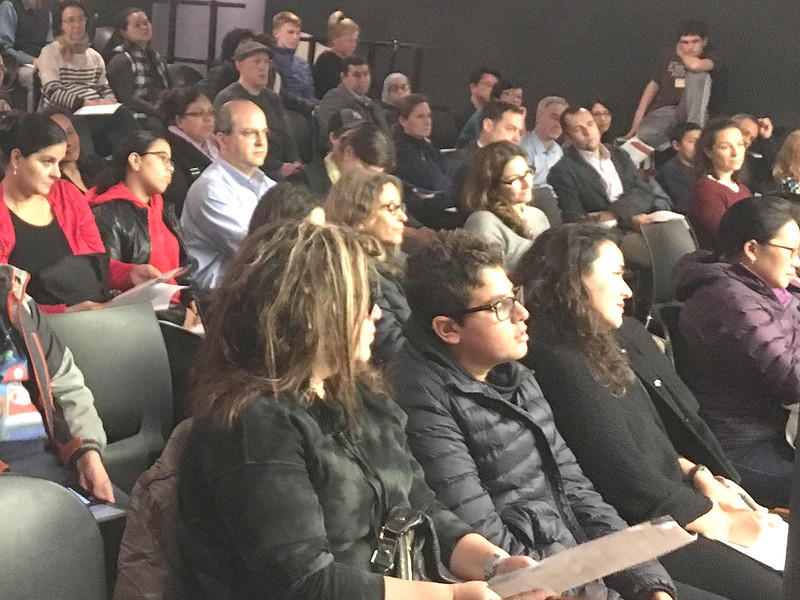
The issue has mobilized education stakeholders to testify and rally in support of their point of view. While most educators and school advocates don't want to return to 2002, many want to tighten the reins on the mayor's power and restore parents' role in policy making. What and how much should be controlled by the mayor depends on which mayoral control coalition you speak to, but there is consensus on the need for more parent voice and more transparency about achievement data and Department of Education finances. Below is a round-up of some of the most active advocates on the issue, with a sampling of their recommendations. You can read their full reports and agendas at their websites.
LearnNY, a coalition of 75 education, community, and religious organizations, a prominent supporter of mayoral control and the group most closely aligned with the mayor, would like more opportunities for parent input, outside audits of DOE finances to ensure money is spent effectively, and an independent analysis of achievement data, according to its website.
Public Advocate Betsy Gotbaum's Commission on School Governance issued a report saying that parents and community school districts need a more meaningful role in shaping education policy through local councils with real responsibilities and a PEP whose members serve fixed terms, rather than at the pleasure of the mayor. The commission also advocates strengthening School Leadership Teams and the creation of an outside office to verify accuracy and meaning of test results, graduation rates and other measures of school performance. Kim Sweet, executive director of Advocates for Children, and Clara Hemphill and Jacquie Wayans, Insideschools.org contributors, were members of the commission.
The United Federation of Teachers governance task force, in February issued recommendations calling for a strengthening of SLTs, and a restructuring and renaming of the Panel for Educational Policy. In a May editorial in the New York Post, UFT head Randi Weingarten calls for preserving mayoral control with more "checks and balances," but she appears to have backed off on the UFT's previous position that the mayor should not appoint the majority of members on the PEP. Her editorial calls for "fixed terms" for PEP members and "more public discussion" at meetings.
The Council of Supervisors and Administrators (CSA), the principals' union, calls for reinstating the role of superintendents as supervisor and evaluators of principals, and a public process to interview and recommend candidates for those positions.
The Campaign for Better Schools, a coalition of 27 organizations including Advocates for Children, wants to modify the way the PEP members are appointed. Instead of the mayor appointing the majority of members, the Campaign wants the City Council or other elected officials to appoint the majority, with the mayor appointing the minority. Members would have set terms and elect their own chair to set the agenda. The chancellor should not be a voting member, in the Campaign's view. The group also calls for an independent "Center for Parent and Student Service and Empowerment" to train and support parents and students; strengthening the powers of the School Leadership Teams and Community Education Councils; and establishing a process for community input in opening and closing of schools.
The Parent Commission on School Governance, which includes parent leaders such as Leonie Haimson of Class Size Matters and Patricia Connelly, of the Citywide Council on Special Education, as well as many Community Education Council members, proposes a system in which there are checks and balances to override the "irrational exercise of authority" and where parents are guaranteed a real voice in the education of their children. The commission's report also calls for "a better management structure and representation for special education students." The Commission's proposals have now been introduced in the Assembly as the Education Through Partnership Act, or A8550.
The Independent Commission on Public Education (ICOPE) says that the New York City public education system, both under the current system of mayoral control and under previous regimes, has failed to meet human rights standards. In ICOPE's view, the entire system must be redesigned through a structured collaborative planning process that includes all stakeholders and is authorized by the state legislature.
Now it's up to the state legislature to retain, abolish or re-write the law. Cathy Nolan, chair of the Assembly Standing Committee on Education told Insideschools this week that there will be "more conversation" before legislators are "ready to write a bill." According to the Daily News, Sheldon Silver, Speaker of the Assembly has offered a plan that would allow the mayor to maintain control of the PEP but two of his eight appointments would have to be parents of city schoolchildren. The full plan includes ways to increase parent and district powers. Meanwhile, the New York Post reports that other Democratic lawmakers are calling for fixed term limits for appointees to PEP.
Other politicians proposing mayoral control legislation include Manhattan Borough President Scott Stringer and Brooklyn Assemblyman James Brennan. Stringer proposes legislation giving more power to parents and to the community education councils on which they serve. Brennan proposes legislation which would require the mayor to choose appointees to the PEP from a list of candidates drawn up by a nominating panel. His bill also proposes term limits for members of the panel. A report issued by Brennan charges that there has been mismanagement and wasted funds under mayoral control.
PolitikerNY.org, a blog about politics, says "Even though David Paterson and legislative leaders agree with the central tenet of mayoral control of schools, it looks like holdouts in the State Senate will once again try to bring the wheels of government to a standstill, and may very well succeed in doing so."
David Bloomfield, Professor of Education at Brooklyn College and a parent member of the Citywide Council on High Schools, writes in support of the current structure but wants to expand the role of the PEP by making it more transparent, and include approval of contracts and school closures, among other things. He would grant the CEC's the power to recommend a slate of candidates for community superintendent and strengthen the parent voice through the Chancellor's Parent Advisory Council.
You can read transcripts of the Assembly Education Committee's five borough hearings on the subject and you can weigh in with your opinion, by contacting Assemblymember Nolan. The Senate Committee on Education, is chaired by Suzi Oppenheimer, a Westchester assembly member.
Check our calendar for additional debates and opportunities to testify.
What do you think about Mayoral Control? Take our poll, and grade the mayor on his job with public schools.
Please post comments