Last week, the Department of Education announced that they would be seeking to develop "richer assessments of learning" over the next few years to complement the standardized tests. In his explanation, the DOE's Director of Accountability, Shael Suranksky quoted President Obama: "It's about being smarter about our assessments. It's about measuring not only whether our kids can master the basics, but whether they can solve challenging tasks, do they have the skills like critical thinking and teamwork and entrepreneurship."
Suransky went on to say that a new collaboration with the Gates Foundation will lead to more opportunities to engage in performance-based assessments (where students "perform" their learning in more open- ended ways).
At Arts & Letters we are already doing such assessments. In fact, on that same day, at Arts & Letters, we completed our third day of "Roundtables," a practice adapted from many small schools across the city and the country.
Roundtables are based on a simple belief: students should have the opportunity to share, reflect on, and discuss the work they have done during the semester, and they should do it with an audience who knows and cares about them. Visitors should see what goes on all day in our public schools. This is one way that we show how deep and complex learning really is.
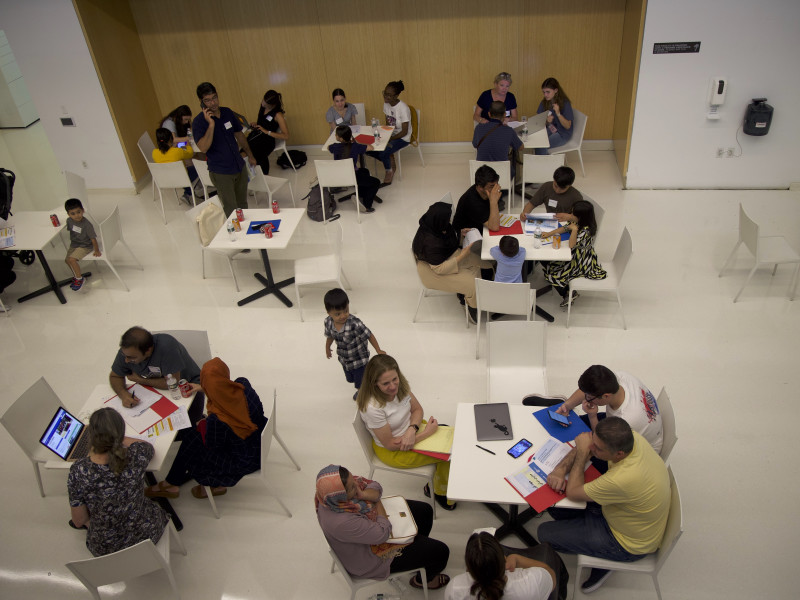
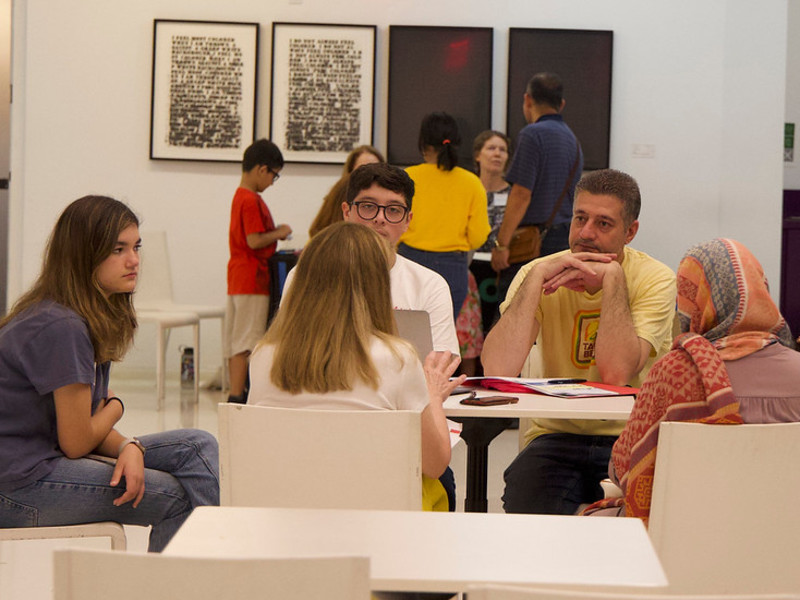
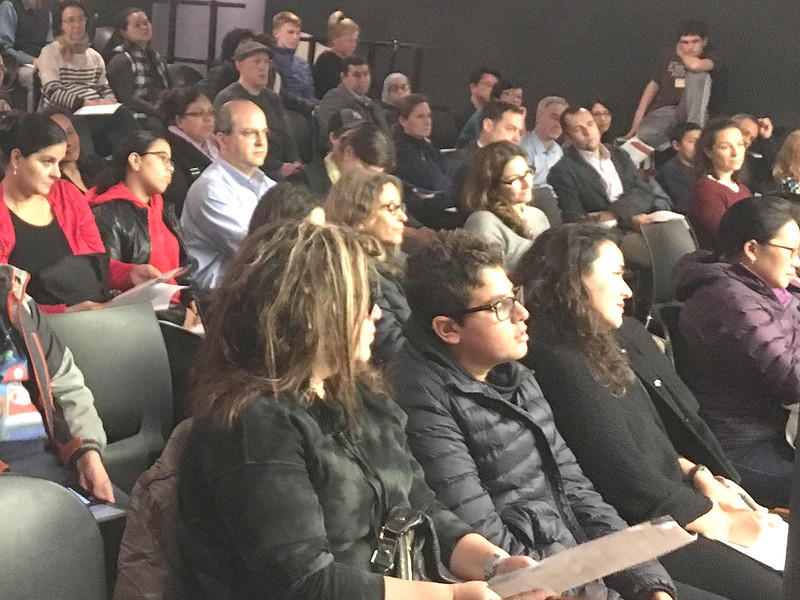
At Roundtables, teachers and community members -- including parents -- come to school and sit at tables with three or four students. Students present their thinking and their work, and answer specific questions on various topics. Was Jamestown a place of freedom? How do I solve an algebraic inequality? How do I simulate a volcanic eruption in three different types of volcanoes? These and other questions are provided by our teachers, who prompt visitors to probe our students to show their thinking and their achievements.
While we know that standardized test scores are an important way to measure school and student performance, they aren't the only way. We also want to be sure that our students have high-stakes experiences of a different kind: demonstrating what they know to teachers, and oftentimes, to their parents.
Roundtables give parents and community members a very clear idea of what has (and sometimes what has not) been learned. Visitors may uncover a misunderstanding about a thesis statement, or witness--at the same table--a student who is truly excelling and a student who has done limited work.
For educators, Roundtables help us improve instruction to meet our students' varying needs. We may see how students with special needs struggle to organize their thoughts, or how students who excel must force themselves to slow down enough to record their thinking. Finally, Roundtables show us which students (and teachers!) are having difficulty and which are making great strides. They give teachers and students alike an opportunity to show one another their work and to receive feedback.
Our Roundtables have taken time to implement and will take time to improve. After hosting three Roundtables, we see they are just beginning to truly take shape. Our teachers and students spend a great deal of time reviewing their work, organizing it in binders, and reflecting on which pieces best represent their successes and challenges. It is time-consuming, but highly productive.
My hope is that as the Department of Education develops richer assessments, they will honor that good things take time and patience for effective implementation and reflection.
Please post comments