Clara Hemphill
Watch our kindergarten workshop online
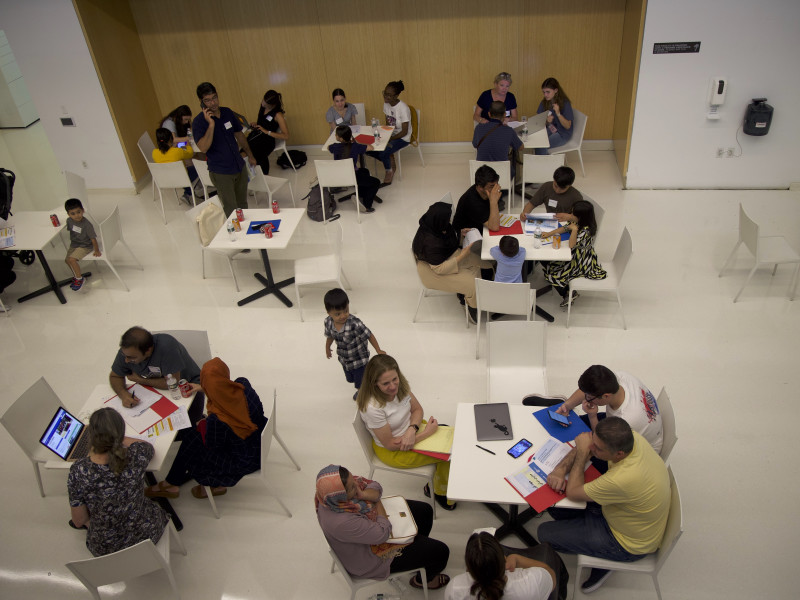
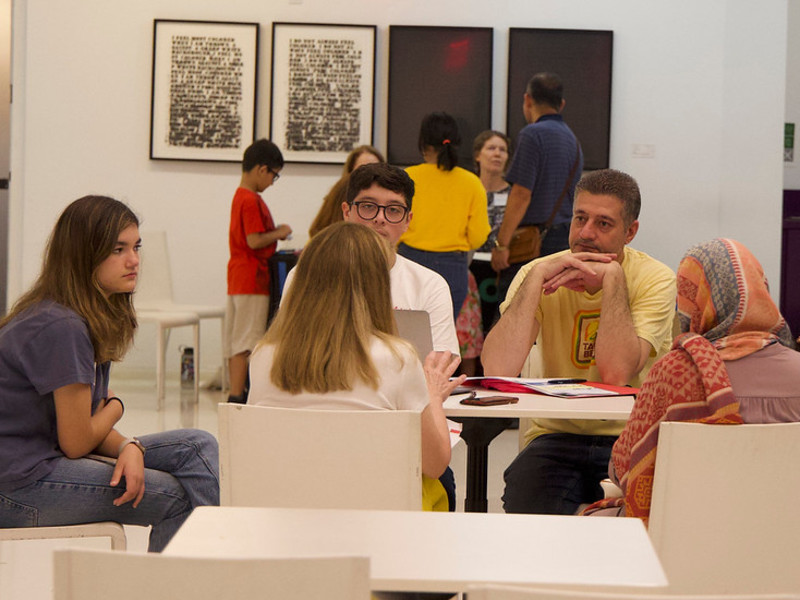
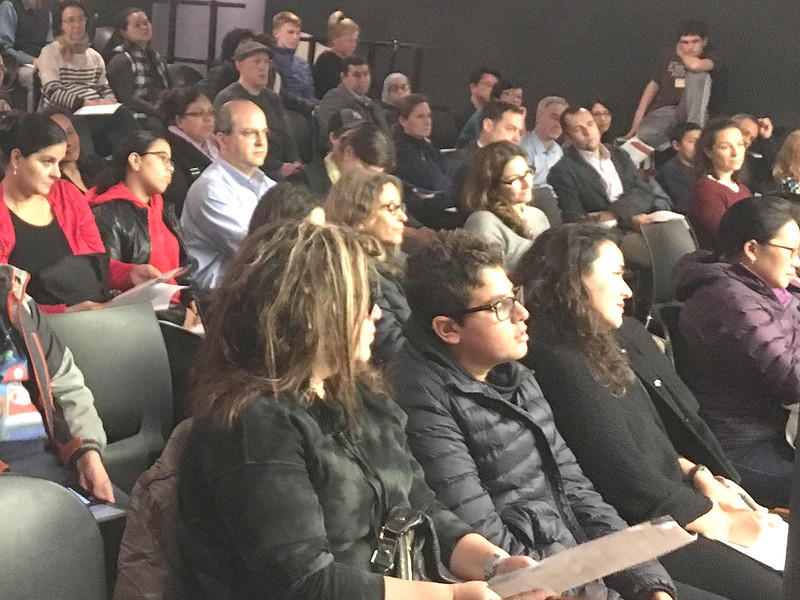
If you missed our forum on "How to apply to public elementary school," you can watch it below. (Please bear with us for the 30 second ad before the video starts).
If you'd like to see more events like this, please email our co-sponsor, City Council Speaker Christine Quinn.
If you prefer words to video, here's a summary of my talk from the event:
Starting kindergarten is an exciting time for you and your child. But it can be a scary time as well. We're here to try to help you relax. There are a lot of lovely kindergartens out there and we'll help you find one for your child. We'll tell you about different kinds of schools available to you. But first, let's look at a video that will give you an idea of what to look for in a school:
Now I'm going to tell you about the different kinds of schools.
You can apply to as many schools as you like, your zoned neighborhood school, or another neighborhood school that might have space, or a special program such as a dual language program or a charter school.
One thing I want to make clear: Your child is entitled to a seat in kindergarten the year he turns 5. You are not required to send him until he is 6, but he is entitled to a spot in kindergarten if you want it. If you wait too long—if you just show up in August—your neighborhood school may not have any room and your child will be sent to another school. But they have to find a place for your child someplace.
Neighborhood schools:
Most kids in the city go to their zoned neighborhood schools. The advantages: it's close to home. It can build a sense of community. Kids get tired travelling. If you are considering a good school close to home or a great school miles away, I'd choose the good school close to home. Tours are going on now. Not all schools offer them. If you can't go on a tour, go to a PTA meeting or talk to parents at drop off in the morning.
No school is perfect. Think about "What can you fix, and what's impossible to fix?" My kids' school only had phys ed once a week, but we signed them up for West Side Soccer League on the weekends. Other things are harder to fix: if the principal is really unfriendly to parents, for example.
Most neighborhood schools have room for all their zoned kids. There are pockets of overcrowding: PS 41, PS 234 in Manhattan, District 24 (Elmhurst, Maspeth) in Queens and possibly District 20 (Sunset Park and Bay Ridge).
It used to be that parents just registered their children at their neighborhood school, but now there is a 2-step process. You "apply" between now and March 2. Don't bring your child, just your documents. Then you hear where you child has been "accepted" and you "register" –bring your child—sometime after March 26.
Now is the time to consider other options as well.
Unzoned schools:
Some schools are open to children from across a whole district or even across the city. These schools don't require an exam. Some of these were set up as alternatives to traditional neighborhood schools. Some are progressive schools, where children learn by doing, with lots of blocks, no text books, and fun-to-read picture books. Your child may call teachers by first name. Here are some unzoned schools: Ella Baker, Central Park East and the Neighborhood School in Manhattan, Bronx New School, Brooklyn New School.
The deadline to apply to these schools is March 2.
Dual language programs:
Dual language immersion programs have classes in which half the students are native speakers of English, and half speak another language (Spanish, Chinese or French, for example). Classes are taught in each language on alternative days or weeks, and the children are expected to become fluent in both. These programs shouldn't be confused with bilingual or English as a Second Language classes, designed to teach English to non-English speakers. Some dual language programs are PS 75, PS 87, PS 20, and PS 84 in Manhattan and PS 84 in Brooklyn.
The deadline to apply to these schools is March 2.
Magnet programs:
Magnet programs are designed to foster racial integration. They receive federal or state funding for special programs (such as art, drama or law) to make the school attractive to children of different races who might not otherwise attend, and they admit children from outside their immediate neighborhood. PS 145 on the Upper West Side and PS 201 in Queens are two magnet schools.
The deadline to apply to these schools is April 20. Lainie Leber from will tell us more about magnet programs on the Upper West Side and Queens.
Charter schools:
Charter schools are public schools, but they are not run by the Department of Education. Admission is by lottery. Each school has its own deadline, but all are by April 1.
They are mostly in low-income neighborhoods where parents were fed up with their other options. Now there are a few in middle class neighborhoods as well. Honestly, charter schools are a mixed bag. Some are great, some are a mess. It used to be they had to find their own space, now Mayor Bloomberg gives them space in ordinary public schools. There's a lot of resentment over shared space.
There are two kinds of charter schools, what we call "mom and pops," versus the networks. The "mom and pops" are individual schools, mostly organized by community groups. For example, the Hellenic Charter School in Park Slope teaches Greek. The networks are a group of charters all managed by the same organization and all with the same philosophy. For example, Harlem Success Academy has a number of schools in the Bronx and Manhattan and they are opening some in Brooklyn as well.
Charter schools can have very different approaches to education. Some are very traditional, like the Achievement First schools, with lots of rules, uniforms, teachers who are given very precise instruction about how and what to teach. Others are more progressive, like Renaissance Charter School in Queens or Community Roots in Brooklyn.
There are 30 new charter schools opening next fall, if they are approved and can find space.
Later, we'll be hearing from Sonya Hooks from the City's charter school office.
Gifted programs:
The deadline for gifted programs for fall 2012 has already passed. I'm going to let Robin Aronow talk to you more about gifted programs. But let me give you my thoughts. In most cases, I don't think gifted programs are necessary for very young children. A lot of what you need to learn in elementary school is social rather than cognitive. What you want is a teacher who can challenge different abilities in one class: If you see one child is reading an easy book like "Frog and Toad", while another is reading a chapter book like "Charlotte's Web", that's a good sign. By middle school (or even the upper elementary grades), it is very hard to teach different levels in same class: gifted programs make sense here. Also, gifted programs make sense if your neighborhood school is really not very good.
Special education:
We are lucky to have Randi Levine from Advocates for Children here to answer your questions about special education. But let me give you some general outlines and tips. I advise everyone to look at special education services in a school, whether or not you think your child needs them. That's because it will give you a clue about how the school will treat your child if he ever hits a bump—if he has trouble learning to read, or if there's a family crisis and he needs counseling. You want a school that includes special needs children in the regular activities of the school, not one that segregates them in the basement.
About 17,000 kindergartners will be getting special education services this fall, everything from speech therapy, to counseling, to a placement in an extra-small class with a specially trained teacher. If your child is one of them, you are entitled to apply to schools just like anyone else, and you'll find out what school he is assigned to just like everyone else.
In the past, some schools offered particular services--like help for deaf kids-- and some did not, and if your child needed the services he had to go to another school. Now, the Department of Education wants to make sure that every school can serve every child. This is one of those ideas that is good in theory but is causing lots of problems in practice.
If your child needs a small class (self-contained) or a class with two teachers (CTT or ICT), you used to apply through a central office and now you are applying at your neighborhood school. Some of the schools are prepared for this, some aren't. Basically, you are expected to apply for school before you know what your child needs and before you know what the school offers.
The Department of Education is holding workshops at the end of the month. If your child has special needs, it's a good idea to go.
Queens schools that (may) have room
Most children in Queens attend their neighborhood elementary schools, and there isn’t a lot of room for shopping around. However, if you are dissatisfied with your zoned school, here are some possibilities.
PS 85, Judge Charles Vallone School, in Astoria has a gifted program with a science focus open to children citywide.
The Queens College School for Math, Science and Technology on the Queens College Campus admits children by lottery from across the borough.
City gives out wrong info about school zones
The Department of Education has not updated its zone maps to reflect zoning changes on the Upper East Side, lower Manhattan and the Bensonhurst section of Brooklyn, so parents who call 311 to find out the name of their neighborhood school to register their kindergartners may get inaccurate information, Insideschools has learned. Schools affected on the Upper East Side are PS 158, PS 290, PS 151 and a new school, PS 527 which will open in September on East 91st Street in the Our Lady of Grace building. Schools affected in lower Manhattan are PS 89, PS 276, PS 397 and a new school, Peck Slip, which will open in the DOE headquarters in September.
In Brooklyn, PS 180, PS 164, PS 105, PS 69, PS 160, PS 163 and PS 200 in District 20 were also rezoned.
Manhattan schools that (might) have room
We’ve heard a lot of scary stories about kindergarten waitlists at very popular schools, but what about good schools that aren’t hopelessly oversubscribed? Insideschools has compiled a list of Manhattan schools that accept children from outside their immediate neighborhoods. We’ll be posting similar lists for other boroughs soon.
For this list, we have concentrated on schools that don’t require a "gifted and talented" exam. All a parent has to do is apply between now and March 2--and hope there are seats available. Call the schools directly for details. These schools fall in a couple of categories:
--Magnet programs. These schools receive federal money to develop a theme, such as science or technology. They give first preference to children who live in their attendance zone, but usually have room for children from across a district. Some also have room for children outside the district.
--Dual language programs. These programs are designed to make children fluent readers and writers of English and another language: Spanish, French or Chinese. Instruction alternates between the two languages. Typically, half the children speak English at home and half speak the other language. Zoned children get preference, but others may apply.
--Unzoned schools. These schools accept children from a particular district. A few accept children from all five boroughs.
--Good neighborhood schools. Children who are zoned for the school get preference, but sometimes there are extra seats, even though you may not find out until August.
--Charter schools. These accept children by lottery. (You have until April to apply.)
Lower East Side
In District 1 on the Lower East Side, there are no zoned neighborhood schools. Everybody has to make a choice. Preference goes to children who live in the district, but there are sometimes spots for out-of-district children, including Brooklynites.
Long-time favorites are The Neighborhood School, The Earth School, and PS 184—which will most likely fill up with District 1 kids this year. (Note: out-of-district families who are willing to wait until August may snag a seat). Out-of-district children may have a better chance at the Children’s Workshop School and East Village Community School. Also consider PS 20, which has a nice dual language program in English and Mandarin. PS 63 is gaining in popularity. The Girls Preparatory Charter School offers a single-sex option.
Downtown, the Village and Midtown
Forget PS 234 or PS 41 if you live out of zone. Those popular schools have long wait-lists even for their zoned kids. There are some other options, however. PS 150 and Midtown West are sought-after unzoned schools for District 2. PS 33 and PS 11 are zoned schools that may have room for other kids who live in District 2. A new school, Peck Slip or PS 343, will be opening in the Department of Education headquarters in the Tweed Courthouse. See the District 2 CEC website for details. New schools often have space for out-of-zone kids in their first year.
Upper East Side
The good news: the Upper East Side will have some new buildings, easing overcrowding. PS 267 and PS 59 are moving into new buildings in the fall, and PS 267 may have room for out-of-zone kids. A third school, PS 527, will open in the former parochial school, Our Lady of Good Council, at 323 East 91st Street. It, too, may have space for out-of-zone students. See the District 2 CEC website for details.
Ella Baker is a progressive K-8 school that has long accepted children from all five boroughs.
Upper West Side
PS 199 won’t have room for out-of-zone kindergartners, but other District 3 schools may. Consider English-Spanish dual language programs at PS 84, PS 87, PS 163 and PS 75. In addition, PS 84 has a French-English dual language program. These schools mostly limit admission to District 3 students, but French-speakers from out of district may be eligible for PS 84.
Manhattan School for Children accepts children from across District 3.
PS 145, which has a federal magnet grant, has room for out-of-zone children, as does PS 165.
As for charter schools, people seem to either love or hate the Harlem Success Academy Charter School and its sister school Upper West Success Academy. Both give preference to District 3 residents.
East Harlem
The birthplace of school choice, District 4 in East Harlem has welcomed out-of-zone and out-of-district children for decades. Central Park East I, Central Park East II and River East are small progressive schools. The Bilingual Bilcultural School, PS 57 and PS 171 are also popular choices, but they give preference to kids who live in the zone.
Central Harlem
Thurgood Marshall Academy Lower School, Harlem Success Academy 2 , and Harlem Success Academy 5 are good unzoned options in District 5.
Upper Manhattan
District 6 offers a number of choices for parents who want to look beyond their neighborhood school, including Muscota New School, Amistad Dual Language School, Hamilton Heights School, Washington Heights Academy and PS 178, The Professor Juan Bosch School.
For more on these and other tips on how to apply to elementary school, attend the Insideschools workshop in Manhattan on Feb. 7.
About our data
At Insideschools, we aim to provide up-to-date data on New York City public schools. This data includes official statistics from New York City and New York State and is available on the Department of Education website as well as the New York State Report Card site. Charter school data not included in city statistics was provided by The Charter School Center. Below is a list of the main sources for data along with what we post on our site from each source:
Progress Report - Attendance, graduation rate, college ready, college enrollment, high school ready
NYC School Survey - percentage of student who feel safe, percentage of teachers who trust principal
School Demographics and Accountability Snapshot - Enrollment, free and reduced lunch, percent of English language learners, percent of students receiving special education services, ethnicity
Achievement Results - ELA and math scores for grades 3-8
Period Attendance Reporting - Attendance, enrollment for new schools
Class Size Report schools.nyc.gov/AboutUs/data/
Elementary school directory gifted and talented, dual language, and magnet programs.
Elementary and middle school zone maps:
http://nycopendata.socrata.com/Education/School-Zones-2011-2012/dqkt-8x6u
School overcrowding: School Construction Authority utilization reports
All other data was provided by the Department of Education by special request.
Watch our video on specialized high schools
If you're in 7th grade, it's not too soon to start start studying for the specialized high school exam. We've posted a new video with tips on how to apply to the specialized high schools.
Why kids want to save an "F" school
By all accounts, Legacy School for Integrated Studies is one of the worst high schools in the city. Barely 40 percent of the kids graduate on time, and most of those who do aren't prepared for college. Attendance is poor and the kids' reading and math skills are way below par. The Department of Education has announced plans to shut it down. So why would 100 parents and students rally to keep the school open?
The Department of Education sent a representative to a public hearing at the school last Wednesday night to explain that the school had failed and should be "phased out," the DOE's term for letting a school die a slow death by not admitting any new students and closing it once the current students have graduated or drifted away. But the crowd was not convinced. Sure things were bad under the previous principal, parents and students agreed. But a new principal, Joan Mosley, named in 2010, was turning things around.
New middle school reviews & video
Middle school applications are due Friday! We have a new video with tips on how to apply and 15 new reviews to help you make your choices.
Manhattan
Manhattan East, the Institute for Collaborative Education and the tiny Professional Performing Arts School accept applications from children in all five boroughs.
We visited two new schools this fall, PS 276 in Battery Park City and the Renaissance School of the Arts in East Harlem. Columbia Secondary School in Harlem is making a strong comeback after the tragic drowning of a child last year. MS 167 on the Upper East Side continues to attract neighborhood kids as well as students from across District 2. Salk School of Science is another popular District 2 choice; MS 54 attracts students from across District 3.
Brooklyn
In Brooklyn, MS 35 in Bedford Stuyvesant is a turnaround story. We also visited MS 51, PS 282, and MS 88 in Park Slope and the North Star Academy in Prospect Heights.
Queens
In Bayside, MS 74 has a strong art program and a growing emphasis on writing.
Bronx
MS 118 in the Bronx draws bright students from across District 10.
MS 181 in Co-op city has both gifted programs and special education for children from across District 11.
Watch the latest video: How to apply to middle school here.
Seven more schools to close
The Department of Education announced Friday that it plans to close seven more schools for poor performance, including two Bronx vocational schools, Samuel Gompers Career and Technical High School and Grace Dodge Career and Technical High School and one large Manhattan high school, Washington Irving. The announcement brings to 19 the number of closures announced this week. Pending approval by the Panel on Education Policy, the schools will not accept new students, although current students will be allowed to stay until graduation. New schools, with new leadership and new staff, will be housed in the old buildings.
About 16 low-performing schools were saved from the ax, including Lehman High School in the Bronx and the High School for Graphic Communication Arts. Although these schools were threatened with being closed, the Department of Education has decided to develop what it calls a “targeted action plan” to improve them instead.
Our latest high school reviews and video
We've produced a video on Career and Technical Education, plus a dozen new high school profiles, just in time for the high school application deadline on Friday.
Manhattan
The High School for Environmental Sciences offers traditional academics and internships with a green theme.
The Columbia Secondary School for Math, Science and Engineering has a new principal and seems to have bounced back after a tumultuous year.
Near Wall Street, the High School of Economics and Finance offers students paid internships and the chance to write a business plan. Next door, the High School of Leadership and Public Service has a new principal.
Brooklyn
Brooklyn Latin offers students an International Baccalaureate diploma as well as the chance to study--surprise surprise--Latin.
The High School of Telecommunication Arts and Technology has big-school offerings and small-school attention.
Queens
The Baccalaureate School for Global Education combines a laid-back atmosphere and high-powered academics.
Math, Science Research and Technology Magnet High School has the best record of academic achievement of the small schools in the former Andrew Jackson High School.
Bronx
Marble Hill High School for International Studies, housed in the John F. Kennedy Educational Campus, has rigorous coursework that goes beyond city or state requirements
Pelham Prep Academy is the oldest and most established of the small schools in Christopher Columbus High School.
Staten Island
Staten Island Technical School offers four years of Russian and lots of school spirit.
At C.S.I. High School for International Studies, students may student Chinese, Japanese or Spanish.