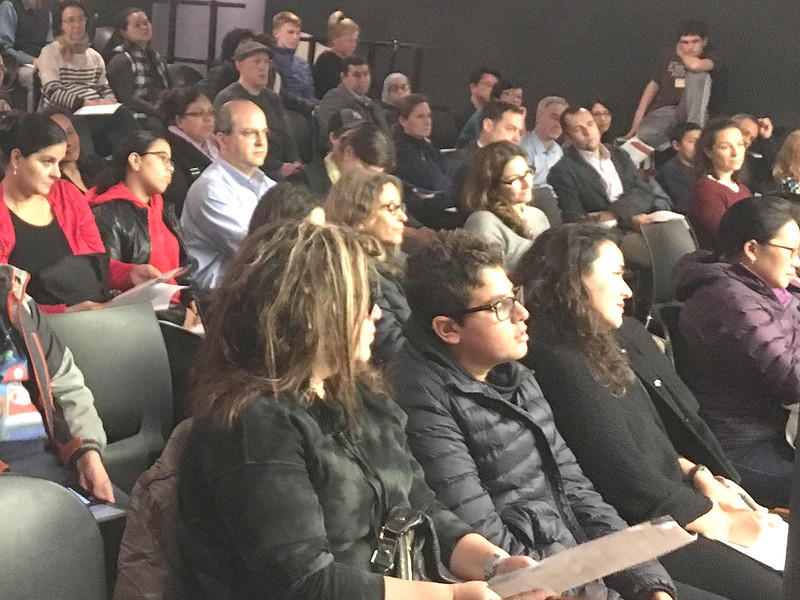
Since 2002, under the leadership of Mayor Michael Bloomberg, the city has closed more than two dozen large, unruly high schools and replaced them with small high schools, each enrolling fewer than 600 students. Many hoped the more intimate environment of the smaller schools would allow more students to thrive. A 68-page report released today during a conference at The New School, gives the small schools reform effort mixed reviews.
Small schools offer a more personalized setting, where staff knows students’ names and attendance and graduation rates are higher than at large schools, the report documents. It cautions, however, that teachers and principals at small high schools leave their jobs at a higher rate, and that attendance and graduation rates drop the longer schools stay open. The report, the culmination of an 18 month investigation by the Center for New York City Affairs, also finds that the opening of small schools and the closing of large schools, has “had a harmful impact on thousands of students,” who still attend large high schools. Those schools have had to absorb increasing numbers of high-needs students.
Schools Chancellor Joel Klein, who spoke at the meeting, disputed some of the report’s findings. He pointed out that, over the past few years, the “graduation rate went up in all schools,” not just the new small schools. He defended the practice of closing failing high schools. “[Placing] low-performing students together in large high schools, is impersonal and it’s not going to work.”
Some large high schools have found success by emulating the small schools model within their buildings. Stephen Duch, principal of Hillcrest High School, in Queens, said his neighborhood school improved by dividing students into seven smaller learning communities.
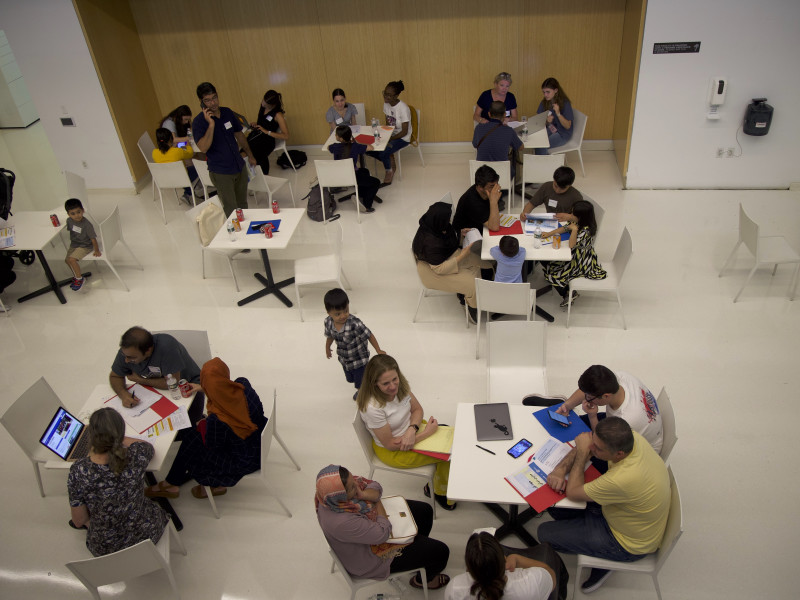
Duch sat on the panel of education experts who spoke about some of the complex issues underlying large urban school districts and the convoluted high school admission and choice process in New York City. Clara Hemphill, one of the report’s authors and former Insideschools.org director, moderated the panel. According to Hemphill, “parents who are well-educated and speak English are better off to navigate the system.”
Pedro Noguera, a New York University professor and public school parent said that while middle class parents “will do everything they can to get their kids into a good school,” the “poor kids are being left out of the better schools.”
He also raised the civil rights issue of segregation in public schools. “Racial integration does not get talked about at all,” Noguera said. ”Looking at black and Latino males, not has much changed. They’re overrepresented in the failing schools,” many of which are large schools in poor neighborhoods, he said.
Eric Nadelstern, Chief Schools Officer at the Department of Education said, “Simply the act of closing those large failing schools made schools less segregated. Our schools have never been more integrated than before.”
The report recommends that the DOE do more to help large high schools be successful; create more midsize high schools, which post similar rates of graduation and attendance as small schools; offer more support to special education students and English Language Learners, and not “assume that all 13-year-olds have good judgment” when selecting a high school.
Editor’s Note: Insideschools’ blogger Helen Zelon was one of the report’s authors.