
Get more from InsideSchools
P.S. 198 Isador E. Ida Straus

Share this school
Manhattan NY 10128
Our Insights
What’s Special
Creative lessons help children develop independence
The Downside
Limited afterschool for pre-k and kindergarten
PS 198 has an approach to learning that combines challenging academics with techniques designed to help children develop independence and self-control. An able principal and strong staff work together to serve a wide range of children, some from public housing developments, others from posh apartments on Fifth Avenue.
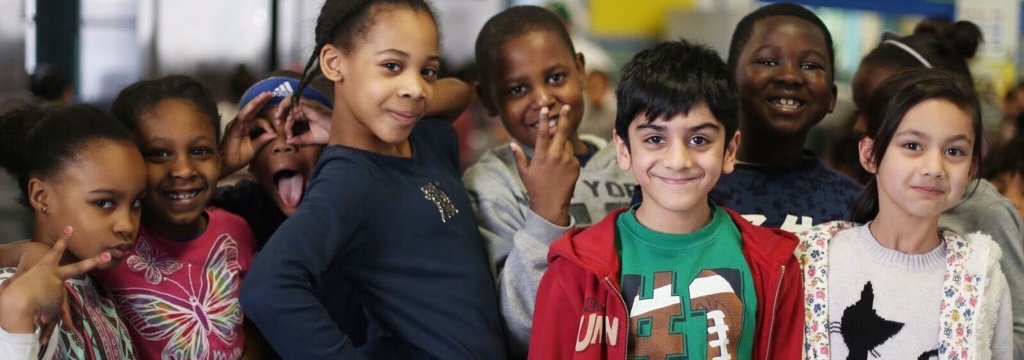
The tone is gentle and calm throughout. Children seemed happy and engaged in every class we visited. In pre-kindergarten, some children painted with poster paint, molded clay or built with blocks on their own while others worked with teachers learning colors and shapes. Second graders learned about magnetism and made their own magnetic goop with iron filings, cornstarch and water. Fourth graders discussed symbolism in The Tiger Rising, the story of a Kentucky boy who finds a tiger in a cage behind the motel where he lives with his dad. Kindergartners have choice time every daya time to pick an activity and work independently. Children go outside to play not just at recess but also at other times during the day.
"Our teachers work very hard to build independence from a very young age," said Katherine MacManus, who became principal in 2016.
Teachers pay particular attention to helping children recognize and manage their emotions and to develop skills that will help them make friends. Children who might feel restless or angry are encouraged to select an activity to calm themselves: do 10 jumping jacks, or count to 10, take a yoga pose called downward dog, or sit in a calm corner on a squishy chair and clutch a small rubber ball.
Children learn to gauge their own state of mind and energy level by saying their engine is running too slow, too fast or just right. Children learn words like aggressive, passive and assertiveand and learn that the best way to deal with others is to be assertive. These techniques, teachers say, work better than the prizes for good behavior that many schools offer.
"It's not enough to just reward children, we also need to teach them the social skills that help them make meaningful connections," says MacManus, who taught special education at the well-regarded PS 59 and served as assistant principal at PS 198. "We want them to have the intrinsic reward of positive interactions with others."
The school shares a building with PS 77, Lower Lab School, a district-wide gifted program. Within PS 198, each grade from K-5 has three classes: general education, gifted and talented (G&T), and Integrated Co-Teaching (ICT), which have two teachers and a mix of special needs and general education pupils. Macmanus says the relations between Lab and PS 198 are good, with many shared activities and a joint student council.
The demographics have changed rapidly in recent years. Once a school serving mostly Black and Latino children, PS 198 has increasing numbers of White and Asian children. More than three-quarters of the children qualified for free lunch in 2006; by 2016 barely one-third did. A gifted and talented program, opened in 2010, draws children from across the district; around the same time the PS 198 attendance zone was made smaller, and fewer children from public housing were assigned to the school.
Stanley Issacs Community Center offers a Beacon afterschool program untli 6 pm for grades 1-5. The school's website also describes chess classes and science programs afterschool for kindergarten through 5th grade, but pick up times range from 2:45 pm to 3:45 pm and classes are not held every day that school is open.
SPECIAL EDUCATION: The school has ICT, SETSS and self-contained classes. English-as-a-second-language teachers work with students in their classrooms and on a pull-out basis.
ADMISSIONS: Zoned elementary school. Admission to districtwide G&T program is determined through the citywide G&T assessment process. (Clara Hemphill, November 2016)
Read moreSchool Stats
Is this school safe and well-run?
From the 2024-2025 NYC School Survey
From this school's most recent Quality Review Report
From the 2024-25 School Quality Report
How do students perform academically?
From the New York State 2024-2025 Assessment Database
What is the Pre-K like?
From the NYC Program Assessment (CLASS and ECERS-R) Database through 2019-2020
Who does this school serve?
From the 2024-25 Demographic Snapshot
From the 2024-25 School Quality Guide
From the 2020 School Directories
How does this school serve special populations?
From the New York State 2024-2025 Assessment Database
Contact & Location
Location
 ,
,  to 96th St;
  ,
,  to 86th St
Contact
Other Details
Zone for the 2019-2020 school year. Call school to confirm.
Was this information helpful?
Get more from InsideSchools
You may also like …
Hunter College Elementary School
New York, NY 10128
P.S. 77 Lower Lab School
Manhattan, NY 10128

Comments